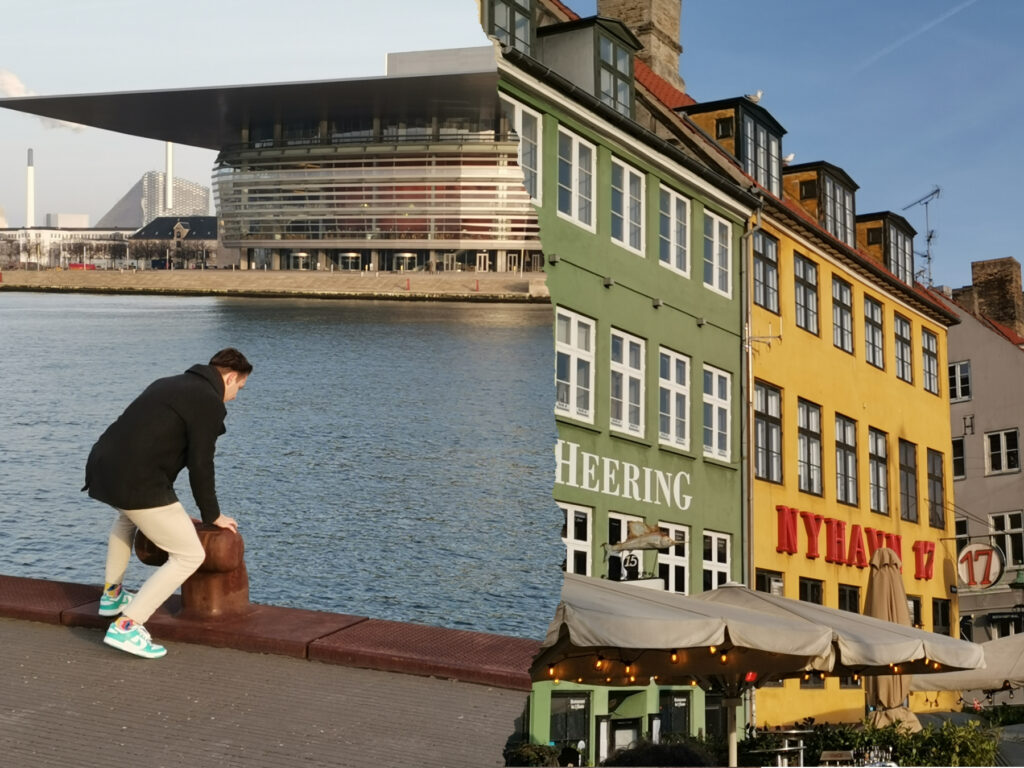

After five months at home, I was starting to get a little tired of the same old routine. Spring break was coming up, and together with Rolo – my loyal travel buddy (shout-out to him!) – we started plotting where to go this time. But unlike our usual “what flies out of Košice?”, this time we decided to go further.
We found cheap flights to Copenhagen. An easy choice. But as it often goes, cheap tickets don’t mean a cheap destination… and that realization hit us later. The flight was from Budapest, departing sometime after 10 a.m., so we really had only one option to get there on time – an overnight bus ride.
An overnight ride, an early wake-up, and a flight into Scandinavian reality
For the trip to Budapest, we went with the classic – Flixbus. It runs directly from Košice (or even further from Prešov) and also from Bratislava. Budapest is kind of our “middle point” between East and West – the perfect launchpad for budget flights. The journey takes about three hours, and since we had a morning flight, the only reasonable option was the night bus. Around 2 or 3 a.m., we left the Košice bus station and headed straight for the airport.
If you’ve ever flown out of Budapest, you’ll know it’s a clear and hassle-free airport. Nothing massive like Vienna or Istanbul, but exactly what you need – clean, well-marked, and staffed with helpful people. And the best part: you can actually eat like a human being there, unlike Košice’s “airport” with its one sad snack bar. Bonus? From Budapest, you can fly to exciting places all around the world – that’s one reason we picked it.
The flight to Copenhagen went smoothly, and by around 12:30 p.m. we were already landing on Danish soil. And a little fun fact – it wasn’t just me and Rolo on this trip. His sisters joined us too, so it turned into a small “family getaway.” Shout-out to them!
An airport hall like a shopping mall and our first steps into the heart of Copenhagen
Our backpacks – the loyal sidekicks of every proper adventure – were our only luggage, so after landing we didn’t waste any time and headed straight into the city. The goal? To enjoy a long weekend from Thursday to Sunday, with Sunday morning reserved just for relaxing before heading back.
The airport in Copenhagen greeted us with a massive terminal hall. For me, it was the largest I’d ever been in (not counting London Stansted). Spacious areas, modern design, cleanliness, and functionality – exactly what you’d expect from Denmark. A stream of people instinctively led us toward the ticket machines. And that’s when we got our first wake-up call into Scandinavian reality: a 72-hour public transport pass cost around €30 – for comparison, that’s three months of public transport in Košice for a student. After a short debate and some mental math, we decided to buy individual tickets – one ride came out to about €3.
Luckily, we scored good accommodation – right next to the train station that connected both the airport and the city center.
Fun fact: those very same trains run all the way to Malmö, Sweden, via the iconic Øresund Bridge – so all it takes is one ride, and you’re in a whole new country within an hour.
What did we see first?
Our first steps in the city took us straight by metro to Kongens Nytorv – one of the largest and most important squares in central Copenhagen. The name translates to “The King’s New Square” and it was established back in 1670 by King Christian V. At the center of the square stands an equestrian statue of the king himself, surrounded by a circular green park. This spot serves as a central hub of the city, and from here begins the famous Strøget – one of the longest pedestrian shopping streets in Europe.
The square is surrounded by elegant historic buildings such as the Royal Danish Theatre and the luxurious Hotel d’Angleterre. It also acts as the gateway to the iconic Nyhavn, which I’ll tell you more about in just a moment…


Colorful Houses, a Fairytale Harbor, and a Postcard-Perfect View
You’ve surely seen those iconic photos from Copenhagen – colorful buildings reflecting in the water, sailboats moored in the harbor, and crowds of people sipping coffee or beer by the waterfront. That place is Nyhavn, or “New Harbor,” and it’s probably the most photographed spot in all of Denmark. Originally built in the 17th century as a bustling commercial and maritime hub, today it’s the cozy heart of the city – packed with cafés, restaurants, and tourists armed with cameras.
A fun fact: the legendary storyteller Hans Christian Andersen lived and worked right here – in houses number 20, 67, and 18. The author of The Little Mermaid, The Emperor’s New Clothes, and The Snow Queen left his fairytale imprint on this very harbor. So when you walk through Nyhavn, you’re literally walking in the footsteps of fairytales.
As we strolled along the charming waterfront, we were naturally drawn closer to the sea. And suddenly, right before us, rose the sleek glass-and-steel Royal Danish Playhouse (Skuespilhuset) – a modern architectural gem offering stunning views across the harbor.


There we were greeted by another architectural marvel – the Copenhagen Opera House (Operaen). This monumental, futuristic building with its massive overhanging roof stretches out over the water like a spaceship. It’s one of the most modern opera houses in the world, completed in 2005, and also one of the most expensive cultural buildings in Europe – costing over $500 million. The Opera and the Royal Playhouse stand opposite each other across the harbor, and the contrast between their sleek designs and the old-world charm of Nyhavn creates a truly striking experience.
Before we knew it, we were standing on Ofelia Plads – a large public pier that also cleverly hides an underground parking garage beneath it (probably for the theater). What might look like a simple boardwalk is actually a smart blend of design and functionality – a hallmark of Scandinavian architecture.


Royal Palaces, Statues, and… That Famous Little Mermaid
We had one clear goal left for the day – to finally see the iconic Little Mermaid (Den Lille Havfrue) in person. But before that, we made a stop at Amalienborg Slot, the official residence of the Danish royal family. Yes, Denmark is a constitutional monarchy, and while the queen holds mostly symbolic power, the palace is still an active royal home.
The entire complex consists of four identical Rococo-style palaces arranged around an open octagonal square. In the center proudly stands an equestrian statue of King Frederick V, the founder of Amalienborg. The Latin inscription on the statue – “Friderico Quinto Clementi Pacifico Artium Tutori Grata Foelix” – translates roughly to “Grateful and happy (Danish) nation to Frederick V, peaceful protector of the arts.”
It’s worth lingering on the square for a bit – take some photos, sit on the curb, and if you’re lucky with timing, you can even catch the Changing of the Guard, held every day at 12:00 PM. Think of it as a Nordic version of Buckingham Palace – a bit smaller in scale and ceremony, but just as elegant.


We then continued toward the sea – heading straight for The Little Mermaid, which might surprise you with her size. She’s actually quite small – just 125 cm tall, a bronze statue perched on a rock by the shore, as if she’s wondering whether to return to the depths. Inspired by Hans Christian Andersen’s famous fairytale, she was unveiled back in 1913. It’s the most visited attraction in Copenhagen, but not everyone falls in love with her – some find her “too small,” while others admire her beauty in simplicity.
What’s even more interesting is where she’s located – the statue sits at the edge of Kastellet, a historic 17th-century star-shaped fortress. You cross a bridge to enter a fenced area where people jog, cycle, or just relax while enjoying waterfront views. At the heart of the park lies a reservoir (or moat), which enhances the feeling of being inside an old military zone. While the military still maintains a presence there, the area today is more about peace than protection. Just before entering the park, you’ll also find St. Alban’s Church (Sankt Albans Kirke) – a striking Anglican church that adds even more charm to the walk.
And by the way – it was freezing. It was the end of February, the wind from the sea was brutal, but nothing could stop us. The view of the mermaid, the passing cyclists, and even the industrial backdrop with smokestacks and cargo ships only amplified the contrast between fairytale and reality.

The Mermaid, Bicycles, Beer, and the End of Day One
While the Little Mermaid may be the symbol of Copenhagen, the reality isn’t quite as dreamy as one might imagine. The statue itself is beautiful – peaceful and delicate, perched on a rock gazing out to sea – but when you look around… well, there’s no romantic cove or palm-lined beach. Instead, you’re greeted by smokestacks, ships, and an industrial port that reminds you Copenhagen is also a bustling commercial hub. Quite the contrast to the fairy tale she comes from.
Luckily, that contrast doesn’t spoil the city’s vibe – Copenhagen runs on bicycles. Everywhere you look, there are bike lanes, racks, and people riding – in suits, in hoodies, in the cold – all gliding smoothly on two wheels. The city is flat, making it perfect for cycling, and thanks to wide sidewalks and smart infrastructure, it’s a dream to get around. We were genuinely impressed by how well it all works – you have to see it to believe it!
We wrapped up our day in proper Danish style – with a Carlsberg beer. Yep, that classic Pilsner-style lager brewed right here in Copenhagen. The city and Carlsberg go hand in hand, and sipping one on its home turf somehow makes it taste better – or maybe that’s just the magic of travel talking. Either way, it was the perfect end to an epic first day.


In the evening, we finally made it to our accommodation, dropped our backpacks, stretched our legs, and started planning the next day. And trust me – it was packed from start to finish. (Spoiler alert: it took us longer than expected to even find the entrance.) But hey, when you’ve got an ISIC card and student instincts, you know how to save money and make it work.
But that’s a story for the next episode – so don’t forget to follow me on Instagram and sign up for the newsletter, so you won’t miss a thing. You can find the previous blog about Nice HERE.
Cross your boundaries – that’s where the treasure you’re seeking is hidden.
Flying Easterner
 Follow me on Instagram!


References:
Ligiano Casino https://alenka.capital/info/go/?go=https://icu.re/carolezahel952
References:
Legiano Casino PayPal calvaryofhope.org
References:
KingMaker Casino Konto einzahlen https://301.tv/
References:
KingMaker Casino Bonuscode upangmarga.go.id
References:
KingMaker Casino Sofortüberweisung https://wsurl.link/
References:
KingMaker Casino Einzahlung per Giropay https://k1t.kr/
References:
KingMaker Casino Auszahlungsdauer rufox.ru
References:
Kingmaker casino apple pay einzahlung https://login.libproxy.berkeley.edu
References:
KingMaker Casino Treuebonus http://inlinehokej.sh10w2.esports.cz
References:
Kingmaker casino einzahlung bonus aktivieren images.google.mv
References:
KingMaker Casino sicher einzahlen http://images.google.com.ec/
References:
Kingmaker Casino Anmeldung http://16.pexeburay.com/index/d1?diff=0&utm_clickid=34gcso08k8w4w40c&aurl=https://de.trustpilot.com/review/beyondjewellery.de
References:
Legiano Casino Auszahlung Dauer maps.google.ad
References:
KingMaker Casino Einzahlung mit Revolut toolbarqueries.google.com.uy
References:
Legiano Casino Spiele https://www.oschina.net/action/GoToLink?url=https://telegra.ph/Leguano-Jobs-7-Juni-2026-Stellenangebote-auf-Indeed-06-07
References:
Legiano Casino Promo Code https://trac.cslab.ece.ntua.gr
References:
Kingmaker casino sofortüberweisung einzahlung clients1.google.com.sv
References:
Legiano Casino Bonusbedingungen cse.google.ml
References:
KingMaker Casino Registrierungsbonus http://www.swadba.by
References:
Legiano Casino Jackpot https://myesc.escardio.org/Account/ESCRegister?ReturnUrl=https://telegra.ph/100–bis-zu-500–200-Freispiele-06-07-2
References:
Legiano Casino Auszahlung Dauer https://old.urso.ru/
References:
KingMaker einzahlung mastercard electrik.org
References:
Kingmaker casino erste einzahlung bonus krs-sro.ru
References:
KingMaker mindesteinzahlung bonus http://www.google.is
References:
KingMaker einzahlungsmethoden https://bravo.astroempires.com
References:
Legiano Casino Mindestauszahlung http://portal.novo-sibirsk.ru/dynamics.aspx?PortalId=2&WebId=8464c989-7fd8-4a32-8021-7df585dca817&PageUrl=/SitePages/feedback.aspx&Color=B00000&Source=https://forum.exciteme.ca/author/curlerspring87/
References:
Legiano Casino Freispiele http://images.google.pn/
References:
Monro Casino WebApp playground.ru
References:
Hitnspin casino sign up bonus https://myseldon.com/away?to=https://wikisoporte.fcaglp.unlp.edu.ar/api.php?action=https://de.trustpilot.com/review/der-wikinger-shop.de
References:
Hitnspin casino slots m.t.napoto.cafe24.com
References:
Monro Casino Verifizierung https://showbiza.com
References:
Hitnspin casino freispiele http://images.google.cg/url?sa=t&url=http://wikimapia.org/external_link?url=https://de.trustpilot.com/review/der-wikinger-shop.de
References:
Hitnspin casino ohne anmeldung https://forum.truck.ru/away.php?site=https://www.haphong.edu.vn/profile/ditlevsenthubuckley8593/profile
References:
Hit n spin casino 25 euro code https://liveangarsk.ru/
References:
Hitnspin deutschland https://pdaf.awi.de/
References:
Hitnspin casino login http://lginis.yoo7.com/
References:
Hitnspin aktionscode researchesanswered.akamaized.net
References:
Hitnspin casino ohne anmeldung http://zanostroy.ru/
References:
Hitnspin casino paysafecard http://stove.ru
References:
Hitnspin anmelden https://mt-travel.ru/bitrix/rk.php?goto=https://stougaard-burton.federatedjournals.com/hitnspin-casino-test-objektive-casino-bewertung-and-erfahrungen
References:
Hitnspin casino live spiele http://cmbe-console.worldoftanks.com/frame/?language=en&login_url=http://bmp.pw/laurindabevill&project=wotx&realm=wgcb&service=frm
References:
Hitnspin casino test https://fishforum.ru/proxy.php?link=https://alstr.in/sonsolano3442
References:
Hitnspin casino login https://shopify.ixspy.com/
References:
Lollybet Casino Erfahrungen http://images.google.ru/url?q=http://wiki.sukhoi.ru/api.php?action=https://lollybet.com.de/
References:
Lollybet Willkommensbonus blackmod.net
References:
Lollybet Gutschein http://kisska.net
References:
Lollybet Casino VIP https://wiki.zr.ru/api.php?action=https://www.sporeus.com/author/friendliquid4/
References:
Lollybet Slots https://auth.acog.org/createaccount?returnUrl=https://images.google.gp/url?q=https://lollybet.com.de/&authRequestId=7375b828-4944-4c92-9556-472b6c2cba85
References:
Hitnspin login http://aktsh.ru/go.php?url=https://bookmarkdaily.site/item/hitnspin-bonus-attraktive-aktionen-f-r-deutsche-spieler
References:
Hitnspin casino live http://cse.google.ae/
References:
Hitnspin casino registrierung http://clients1.google.by
References:
Hitnspin bonus ohne einzahlung http://domfialki.ru/bitrix/click.php?goto=https://flashjournal.site/item/der-hitnspin-willkommensbonus-alle-infos
References:
Hitnspin casino spielautomaten http://alt1.toolbarqueries.google.com.tr/url?q=https://dobryakschool.ru/user/brarobin5/
References:
Hitnspin casino no deposit bonus http://cse.google.lu/url?sa=i&url=https://uznove.uz/user/syrupoyster87/
References:
Hitnspin casino echtgeld http://clients1.google.com.pr/
References:
Hitnspin casino paysafecard http://clients1.google.co.zm
References:
Hitnspin casino paysafecard http://agrosila-holding.ru/bitrix/redirect.php?event1=&event2=&event3=&goto=https://va.airtech.dev/forums/users/harborviolin9/
References:
Hitnspin free spins http://images.google.com.bh/url?sa=t&url=https://mcclanahan-phelps-2.blogbright.net/alle-infos
References:
Payid online pokies https://git.ddns.net/
References:
Online pokies real money payid fairviewumc.church
References:
Pokies net australia payid withdrawal https://pracaeuropa.pl/companies/best-payid-casinos-australia-2026/
References:
Australian pokies payid https://hiwifi.denq.us:8418/candelariafols
References:
Australia online pokies payid https://sellyourcnc.com/author/evemcguinne/
References:
Lollybet Erfahrungen https://www.google.cat/url?sa=t&url=https://0zon.cc/craigysj354686/
References:
Lollybet Casino Bonus http://images.google.md/url?q=https://brandhelix.click/callumgregorio
References:
Lollybet Casino Gutschein http://www.google.com.mt/url?sa=t&url=https://biokita.id/rachelroth
References:
Lollybet Casino Mobile https://forums.wynncraft.com/proxy.php?link=https://cre.pr/lenore80548859
References:
Lollybet Casino Login https://toolbarqueries.google.ca/url?q=https://sbfpageing.com/x2gbo
References:
Comanche red river casino https://www.jobindustrie.ma/companies/casinos-mit-schneller-auszahlung-2026-im-test/
References:
Video poker https://ashkert.am/%D5%A1%D5%B7%D5%AF%D5%A5%D6%80%D5%BF%D5%AB-%D5%B0%D5%A1%D5%B4%D5%A1%D6%80/instant-casino-deutschland-%ef%b8%8f-exklusiver-promo-code-und-vip-programm/
References:
Ellis island casino https://worlancer.com/profile/katherinavela
References:
Australia online pokies payid http://oa.hist.edu.cn:8888/Services/Identification/Server/Login.aspx?service=https://instantcasinodeutschland.de/fr-fr/
References:
Payid online pokies http://listserv.uga.edu/scripts/wa-UGA.exe?MD=partner&M_S=%E5%90%8D%E9%8C%B6%E7%89%8C%E5%AD%90&A2URL=https://instantcasinodeutschland.de/fr-fr/
References:
Online pokies with payid http://cem200.ahlamontada.net/go/aHR0cHM6Ly9pbnN0YW50Y2FzaW5vZGV1dHNjaGxhbmQuZGUvZnItZnIv
References:
Online pokies with payid australia real money http://kismettekstil.com/ru/Home/ChangeCulture/en?returnUrl=https://instantcasinodeutschland.de/fr-fr/
References:
Payid online pokies australia https://imslp.org/api.php?action=https://instantcasinodeutschland.de/fr-fr/
References:
Candy Casino Login https://s3.amazonaws.com/new-casino/Vulkan-Vegas-Casino-Auszahlung.html
References:
Milky Way Casino Einzahlung https://olmigroup.ru/bitrix/redirect.php?goto=https://s3.amazonaws.com/new-casino/Luna-Casino-Einzahlung.html
References:
Malina Casino Auszahlung https://werkstraat.com/companies/bonus-3000-300-fs
References:
Erwin Casino Login https://scienceplus.abes.fr/describe/?url=http%3A%2F%2Fshort.thejat.in%2Fjackie0889642
References:
Candy96 Casino legit https://garagesale.es/author/sampanlunch0
References:
Winnita Casino Bewertung https://strongholdglobalgroup.com/employer/schnell-anmelden-sicher-einloggen
References:
Intense Casino Auszahlung http://trick.sextgem.com/tool/wap?site=www.jidelniplan.cz/registrace?returnUrl=https://forum.thd.vg/proxy.php?link=https://instantcasinodeutschland.de/http://trick.sextgem.com/tool/wap?site=www.jidelniplan.cz/registrace?returnUrl=https://forum.thd.vg/proxy.php?link=https://instantcasinodeutschland.de/</a
References:
Holland Casino Auszahlung https://freesexcams69.chaturbate.com/external_link/?url=http://forum.okna-salamander.ru/proxy.php?link=https://instantcasinodeutschland.de/
References:
Circus Casino Bewertung https://orienteering.sport/go-to/?url_to=http://maps.google.co.zw/url?q=https://instantcasinodeutschland.de/
References:
Goldbet Casino Bonus ohne Einzahlung https://masteram.us/away?url=https%3A%2F%2Fwikimapia.org%2Fexternal_link%3Furl%3Dhttp%3A%2F%2Fimages.google.tk%2Furl%3Fq%3Dhttps%3A%2F%2Finstantcasinodeutschland.de%2F</a
References:
Casino Kingdom Auszahlung https://www.avtomobilistam.ru:443/redir.php?go=https://voffice.lawyers.bh/ionasingletary
References:
Zet Casino Bonus https://cas.tamu.edu/cas/logout?service=https://smartbusinesscards.in/antoniettastre
References:
Stratosphere Casino Bonus ohne Einzahlung https://login.fagbokforlaget.no/Registration/Pin?returnUrl=https://smartcard.phoenixopia.com/patricialasset
References:
Amunra Casino Bonus ohne Einzahlung http://www.nwnights.ru/redirect/voffice.lawyers.bh%2Fsusannahglynde
References:
Quickwin Casino Bewertung https://catalog.mrrl.org/webbridge~S1/showresource/top?returnurl=vk.com%2Fpublic57950894&rec=b1246965&resurl=https%3A%2F%2Fprofilewala.in%2Fjuliettobin10</a
References:
Admiral Casino App https://dompoeta.ru/avtorskie-anonsy?url=https://dinfo.in.net/coryvww2689387
References:
Amonbet Casino Bewertung https://viblo.asia/embed?url=https://body-positivity.org/groups/1go-casino-bonus-freispiele-2026/
References:
Rolletto Casino Erfahrungen https://perevodvsem.ru/proxy.php?link=https://www.jobteck.co.in/companies/1go-casino-bonus-im-test-2026-bis-zu-500-euro-300-freispiele/
References:
Mega Medusa Casino Login https://digitalcollections.clemson.edu/single-item-view/?oid=CUIR:5496365C70BFE4B0A5363BD9120E3932&b=https%3A%2F%2Fbody-positivity.org%2Fgroups%2F1go-casino-bonus-freispiele-2026%2F
References:
Irwin Casino Login http://www.fcterc.gov.ng/?URL=https://punbb.skynettechnologies.us/profile.php?id=414487
References:
Mega Medusa Casino Auszahlung https://en.lador.co.kr/member/login.html?noMemberOrder=&returnUrl=https%3A%2F%2Fjobteck.com%2Fcompanies%2F1go-casino-bonus-2026-50-freispiele-ohne-einzahlung%2F</a
References:
Holland Casino Bonus https://www.connectionstrings.com/user/logon/?cancelUrl=https://jandlfabricating.com/employer/1go-casino-bonus-2026-50-freispiele-ohne-einzahlung/
References:
Steak Casino Bewertung https://ophot.net/bbs/board.php?bo_table=notice&wr_id=127613
References:
Nv1 Casino Bonus ohne Einzahlung https://chitsime.org/companies/online-casino-mit-trustly-2026-%e1%90%85-beste-trustly-casinos-top10/
References:
Pandido Casino App https://jobs.khtp.com.my/employer/92112/1go-casino-no-deposit-7-000-spiele-2026/
References:
Cash casino calgary https://1gocasinotest.onlinespielhallende.workers.dev/
References:
777 Casino App https://thehrguardians.com/employer/instant-casino-test-2026-unser-erfahrungsbericht-aus-deutschland/
References:
Casino Of Gold Login https://remotetechcareers.com/companies/1go-casino-erfahrungen-2026-ehrliche-bewertung-und-test/
References:
Venlo Casino Bewertung https://nairashop.com.ng/real-estate-properties/rooms-houses-apartment-for-rent/anambra_89458