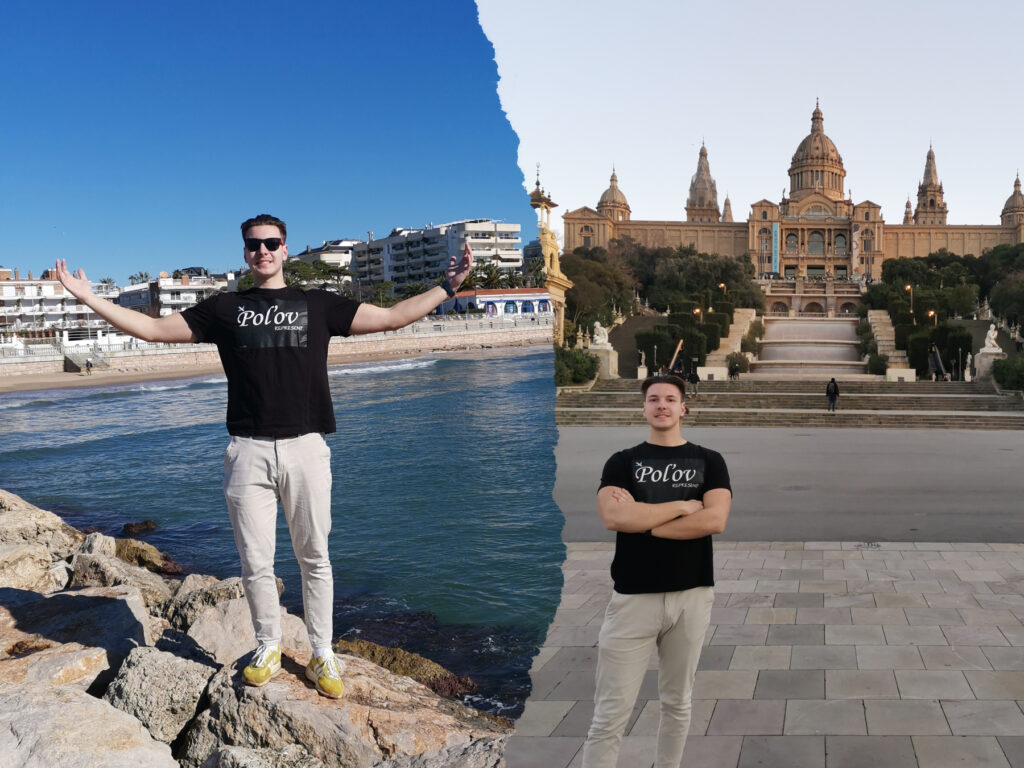

After a demanding first day in Barcelona, I decided I deserved a little change of scenery. I wanted to see something beyond the big-city hustle, breathe in some fresh sea air, and walk along a beach where you can’t get swallowed by crowds. So the choice was clear — the town of Sitges. A small seaside getaway just a short hop from Barcelona, perfectly reachable by trains that run there regularly throughout the day.
Barcelona Sants
Around nine in the morning, I found myself at Barcelona Sants, the city’s main railway station and one of the biggest transport hubs in all of Spain. From here, regional trains, express trains, and even high-speed AVE trains shoot off across the country — to Madrid, Valencia, and even all the way to the French border.
The station is modern, easy to navigate, and spread over several levels — the classic platforms above and the underground Rodalies platforms below, which connect Barcelona with its surrounding towns.
Luckily, the guy working there was super nice — he helped me buy a ticket, showed me which platform to go to, and I just ran downstairs where the trains were already waiting. My return ticket cost around €10, which is honestly perfect for a full-day seaside trip.
Less than half an hour later, I was stepping off the train in Sitges — a town I knew only by reputation: beautiful beaches, long piers, and a relaxed atmosphere. I had no specific expectations, just the desire to stroll along the coast and soak in that typical Spanish seaside vibe.
On my way from the station to the sea, I stopped by an outdoor workout park, did a few dips just to warm up — it was pretty chilly in the morning, and when you suddenly find yourself “on a beach out of nowhere,” your body politely reminds you it’s not in full Costa Brava mode yet.
But once the Spanish sun came out, everything changed. Even late February can feel like a soft preview of summer here.


Sitges — Small, Stylish & Full of Heart
Sitges is one of the most famous seaside towns in Catalonia. It’s a place where artistic history, elegant villas, beaches, old narrow streets, and a very open-minded community all blend together. Since the 60s and 70s, Sitges has been a magnet for artists, filmmakers, musicians — and later became one of the most significant LGBTQ+ destinations in Europe.
Just like that Croatian bartender in Barcelona told me in the previous part HERE — he was right. Sitges has a large LGBTQ+ community, plenty of bars, clubs, and events, and while the rainbow flags are hard to miss, the atmosphere is completely relaxed and friendly. As the saying goes, “everyone should live their own life” — and Sitges lives that philosophy perfectly.
And on top of that, it’s beautiful, clean, safe, and incredibly well-kept.
My first stop was the farthest point I picked on the map — Plaça de Sitges and the area around Platja de Sitges. I wanted to explore the town by walking to the far end first and slowly making my way back toward the station.
The beach was gorgeous — soft clean sand, a promenade, and a calm sea crashing gently against the pier. And since I was already at the water, I decided it was time for a mini cold-plunge moment.
I dipped my feet in — and honestly? The water wasn’t that cold at all.
If I’d had swimwear, I might’ve jumped in, because let’s be real — who swims in Spain in February?
Either cold-water fanatics… …or me, when I’m in a good mood and running on mild travel-craziness (just like that time in Dublin in March — which you can read about in the earlier post HERE). 😄
Either way, the combo of sand, sun, and sea felt amazing. Sitges instantly won me over — it’s peaceful, clean, and completely different from big, busy Barcelona.

The Walk Toward the Heart of Sitges
As I made my way back toward the center of Sitges, I stumbled upon something interesting — a mermaid statue, the town’s own version of Copenhagen’s Little Mermaid or Warsaw’s Syrenka. It’s called La Sirena de Sitges, a small bronze sculpture by the beach symbolizing the town’s deep connection with the sea. It’s not some world-famous landmark, but it fits perfectly — a reminder that Sitges was originally a fishing village and the sea was everything to its people.
While I was passing through, something was clearly happening on the promenade — huge sheets, cables, tripods… At first, I thought they were preparing for some local festival, but later I found out they were filming a movie. Which explained the buzzing energy, people sprinting around with walkie-talkies, and actors pretending reality didn’t concern them.
Up on the hill overlooking the coast stands the iconic Església de Sant Bartomeu i Santa Tecla — the white-and-orange church you’ve definitely seen in every picture of Sitges. Built in the 17th century in a Baroque–Renaissance style, it’s basically the symbol of the town.
Its bell tower can be seen from far away, and if you climb up to it, you get stunning views of the sea, beaches, and the whole town — though the church itself was closed when I arrived.
I tried getting to the street on the left side of the church, but a guy with an earpiece stopped me and said, “Filming, no entry.” So I tried the right side… and that one worked. 😄
I walked past beautiful white houses, classic Catalan architecture with wooden shutters, and even an old cannon that once defended the coastline (now it mostly defends its role as a top tourist photo spot). That whole part of Sitges feels like a mini historic center — narrow alleys, stone walls, artist studios, galleries, and a calm atmosphere that makes you feel like time simply paused here.
As I wandered further, I made a small loop — basically a “circle around the filming zone” — until I ended up right next to the film crew. Seeing the cameramen, sound guys, actors, and all the technical madness up close was honestly a great experience. I stood there for a few minutes watching them work — and suddenly it felt like I’d stepped straight into the backstage of a Hollywood production.


Refreshing by the Sea & the Way Back
I was thirsty like a camel after crossing the Sahara, so I found a small beach bar with a perfect view of the sea. I grabbed a cold beer, sat out on the terrace, and soaked in that slow, seaside vibe where time feels like it moves a little softer. I even snapped a nice photo on the pier.
I continued walking toward the Sitges marina, but before I got there, I had to go along a stretch of coastline with high, jagged cliffs — raw, majestic, and overlooking the open sea. It looked amazing, even if the marina itself wasn’t anything special — just a handful of boats, nothing worth lingering over.
After the walk, hunger hit me hard, so I hopped on the train back to Barcelona.
Once in the city, I found a random restaurant offering a typical daily menu — I had chicken broth, beef, fries, and a local Moritz 7 beer. Exactly what a person needs after half a day of walking in the sun.


Afternoon Goal: Montjuïc – A Hill of Castles, Parks & Olympic Memories
My next destination was clear — reach the hill of Montjuïc, a place with beautiful views over Barcelona. Up there you’ll find Montjuïc Castle, gardens, parks, museums, and even the entire Olympic complex from the 1992 Summer Games. So let’s take it step by step — starting with the castle and working through everything this “little hill” has to offer.
The Climb to Montjuïc – A Hill You Have to Earn
First, I needed to actually get up to Montjuïc. You’ve got several options — by car, by cable car… or on foot like a proper tourist, because if you’re going to do it, do it the hard way.
I chose the route from the El Poble-sec area (where I’d had lunch earlier — close to the metro stop with the same name) and started climbing. The path winds upward in serpentines all the way to Hotel Miramar, from where you get your first wonderful view of the city — the harbor, the sea, the streets of Barcelona… everything right in the palm of your hand.
And since I wanted to go even higher, I kept going. By some miracle, I suddenly found myself walking inside a car tunnel — it wasn’t long, so I got through it without panicking, but it definitely felt like I had just triggered some kind of side quest with questionable safety regulations.
But the goal remained the same: Montjuïc Castle.


Montjuïc Castle – The Fortress Above the City
The Castell de Montjuïc is a massive military fortress that has sat on top of Montjuïc since the 17th century. In the past, it served as a defensive stronghold, later as a prison, a place of executions, and a strategic military base. During the Spanish Civil War, political prisoners were even held here.
Today, it’s a peaceful spot with some of the best views in all of Barcelona — the whole city, the harbor, and the sea spread out beneath you.
I didn’t go inside — I wasn’t in the mood to pay the entrance fee, and I didn’t have two extra hours to spare. So I admired the castle from the outside and headed down the lower path toward the viewpoint Mirador del Migdia.
That view was absolutely top-tier — a quiet place with greenery, benches, and a wide-open view of the sea without the tourist chaos.
From there, I continued descending toward the main goal of the afternoon — the Olympic Stadium.
The Olympic Stadium & the 1992 Barcelona Games
Right below the hill lies the Estadi Olímpic Lluís Companys, the main sports venue of the 1992 Summer Olympics. Those Games were a huge turning point for Barcelona — they practically “rebuilt” the entire city.
Before the Olympics, Barcelona was a normal industrial port city…
After the Olympics? A modern metropolis filled with promenades, beaches, and a brand-new identity.
The stadium itself was originally built back in 1927, but it was completely renovated before the Games. It can hold over 60,000 people, and besides the opening ceremony, it hosted the athletic events and several Olympic finals.
Today, it’s used for big concerts, events, and occasionally even by FC Barcelona, whenever Camp Nou is under renovation.

The National Art Museum of Catalonia (MNAC)
My next stop was the iconic palace on the hill — the Museu Nacional d’Art de Catalunya (MNAC). It’s a massive Spanish Renaissance–style building constructed for the 1929 World Expo. Today, it serves as the national gallery, home to one of the world’s largest collections of Romanesque art, along with Gothic altarpieces, Catalan Renaissance works, modernism, and plenty of other artistic gems.
But honestly? Even if you don’t go inside — the view alone is worth the trip.
In front of MNAC are those grand staircases, fountains, and wide terraces… and when you face Plaça Espanya, you get one of the most stunning panoramas in all of Barcelona.


Evening in Barcelona: Plaça d’Espanya → Camp Nou → Guinness
After walking down the MNAC steps all the way to the bottom, I ended up at the famous Font Màgica (Magic Fountain) and then at the massive roundabout of Plaça d’Espanya. It’s one of the busiest places in Barcelona — a huge traffic circle, two tall Venetian towers, a former bullring turned into a shopping mall, and crowds of people who look like they know where they’re going (even though most of them are tourists like me 😄).But my day was far from over.Even though the sun had set and the city lights were coming alive, I told myself:“I’m in Barcelona… I love football… okay, I’m a Real Madrid fan, but still — I HAVE to see Camp Nou.”After all, it’s one of the biggest football stadiums in the world.


Camp Nou – Europe’s Biggest Football Cathedral (Under Reconstruction)
Camp Nou has been the home of FC Barcelona since 1957. It’s the largest football stadium in Europe and one of the biggest in the world — before reconstruction, it had a jaw-dropping capacity of 99,354 seats.
This place has witnessed decades of football legends: Messi, Ronaldinho, Xavi, Iniesta, Eto’o… names that shaped football history.
BUT.
Here comes my personal Barcelona reality check:
When I arrived, I discovered that the entire stadium was under massive reconstruction.
Instead of a football temple, all I saw was a steel skeleton, cranes, construction tarps, and the soundtrack of drilling machines. So I walked a few loops around the construction site just to convince myself I’d “been there.” But honestly — there wasn’t much to see.
After this “football experience”, I headed back to my accommodation. The next day, I had another early-morning flight — 6:50 a.m. And the funniest part? Even though the plane was supposed to take me to one city, I already had plans to end up somewhere completely different. Classic me — a little bit of chaos (okay, okay… organized adventure 😄).
For dinner, I treated myself to a Guinness in an Irish pub near my accommodation — because if there’s one thing that should stay consistent in my life, it’s my choice of beer. Then it was straight to bed. If you don’t want to miss the next part of my Spain trip, make sure to subscribe to the newsletter and follow me on Instagram. New adventures are already on the way!
Cross your boundaries – that’s where the treasure you’re seeking is hidden.
Flying Easterner
 Follow me on Instagram!

References:
Legiano Casino Login Deutschland http://domfialki.com/bitrix/click.php?goto=https://s.nas.vn/txnkevin88015
References:
Legiano Casino Auszahlungslimit http://gold-meat.ru/
References:
KingMaker einzahlung apple pay https://mylinkbox.me/
References:
KingMaker Casino Einzahlung Limit https://yuklink.me/scarlett15s483
References:
KingMaker einzahlung skrill cse.google.com.ec
References:
KingMaker Casino Einzahlungsbonus ohne Umsatzbedingungen http://maps.google.jo
References:
Legiano Casino Anmelden http://images.google.gg
References:
KingMaker einzahlung mastercard http://rodomontano.altervista.org/scarica.php?download=https://tiklagit.net/maziepeake219
References:
Legiano Casino Auszahlungslimit forum.zidoo.tv
References:
Legiano Casino Auszahlung http://cse.google.co.za
References:
KingMaker Casino Einzahlung mit Prepaid https://www.russianrealty.ru
References:
Kingmaker casino banküberweisung einzahlen https://fishing-ua.com
References:
Legiano Casino iPhone book.douban.com
References:
Kingmaker Casino Freispiele ohne Einzahlung https://www.bookwinx.ru/proxy.php?link=https://link.epicalorie.shop/julianedhj7307
References:
Legiano Online Casino https://www.h3c.com
References:
Hitnspin casino live spiele electronix.ru
References:
Hitnspin casino anmeldung tiwar.ru
References:
Hit’n’spin casino login http://toolbarqueries.google.st/url?sa=t&url=https://n-doptor.nothi.gov.bd/password/reset?redirect=de.trustpilot.com/review/der-wikinger-shop.de
References:
Monro Casino Cashback 34.pexeburay.com
References:
Hitnspin bonus russianrealty.ru
References:
Hitnspin casino auszahlungsdauer https://forum.kw-studios.com/proxy.php?link=http://www.sjsu.edu/faculty/beyersdorf/ARPhysics/moduleInfo.php?source=https://de.trustpilot.com/review/der-wikinger-shop.de
References:
Hit n spin casino deutsch https://www.kaskus.co.id/
References:
Hit n spin casino online login redirect.camfrog.com
References:
Hitnspin casino willkommensbonus http://images.google.it
References:
Hit n spin casino app http://www.simsworkshop.net
References:
Hitnspin casino app android freerepublic.com
References:
Hit n spin casino 25 euro code docs.shinobi.video
References:
Hitnspin casino kundenbewertungen shop.litlib.net
References:
Hitnspin casino legal cm.lesta.ru
References:
Hit’n’spin casino 50 free spins krs-sro.ru
References:
Hitnspin casino test http://www.playground.ru
References:
Lollybet Casino Kundenservice http://toolbarqueries.google.bj
References:
Lollybet Deutschland Login http://panchodeaonori.sakura.ne.jp/feed/aonori/feed2js.php?src=https://video.silverwolfstudios.com/@miriamxbf37446?page=about
References:
Lollybet APK http://www.proplay.ru
References:
Lollybet Kontakt http://maps.google.sh
References:
Lollybet Casino VIP https://kaworu.jpn.org/vim/api.php?action=https://concretewiki.site/wiki/Drvinyl_de_Online_Casinos_Deutschland_789_Reguliert_2024
References:
Lollybet Test backingtrackx.com
References:
Lollybet Registrierung http://www.liveinternet.ru/journal_proc.php?action=redirect&sohbet-istanbul.blogspot.comhttps://kaptur.su/proxy.php?link=https://lollybet.com.de/
References:
Hitnspin verifizierung http://clients1.google.fm/url?q=https://bookmarkzones.trade/story.php?title=hitnspin-casino-bonus-ohne-einzahlung-50-freispiele-2024-verifiziert
References:
Hitnspin casino auszahlung erfahrungen http://cse.google.com.kh/url?sa=t&url=https://notes.medien.rwth-aachen.de/0gjIsZS6SFSUjuTCrpeD5w/
References:
Hitnspin casino betrug cse.google.tt
References:
Hitnspin casino spielautomaten http://images.google.de/url?q=https://dle105.lestor.org/user/filerabbit88/
References:
Hitnspin bonus maps.google.bf
References:
Online pokies with payid australia real money https://incisolutions.app
References:
Online pokies with payid australia real money https://sigma-talenta.com/employer/a-practical-guide-to-using-payid-for-online-entertainment-accounts/
References:
New payid pokies robots.rip
References:
Payid online pokies australia https://careers.cblsolutions.com
References:
Australian online pokies payid https://heywhatsgoodnow.com
References:
Online pokies australia payid real money https://vieclambinhduong.info/
References:
Lollybet Casino No Deposit https://www.tomfarr.com/redirect.php?url=https://yangddosanjing.com/francinej04817
References:
Lollybet Casino Slots http://cse.google.ad/url?sa=t&url=https://qr.dsd.edu.gh/ilenevillarrea
References:
Lollybet Casino 100 Freispiele http://www.google.com.gt/url?q=https://joiboy.ink/mikaylabraley
References:
Lollybet Casino Bonus Code http://may.2chan.net/
References:
Lollybet Casino Kundenservice https://board-en.skyrama.com/
References:
Lollybet Casino Review https://digiex.net
References:
Lollybet Support google.com.ai
References:
Lollybet Deutschland Login http://captcha.2gis.ru/form?return_url=https://cara.win/juniorcolls934
References:
Lollybet Casino Freispiele ksrv.ru
References:
Lollybet Bonus Code resteq.ru
References:
Lollybet Casino Aktion forum.chyoa.com
References:
Lollybet Casino Live Dealer http://kodomonomirai.jpn.org/
References:
Lollybet Casino Spiele http://toolbarqueries.google.cl/
References:
Lollybet Casino Bonus ohne Umsatzbedingungen http://maps.google.tl/url?sa=t&url=https://urlshortenerr.com/kathiblake1781
References:
Lollybet Casino Auszahlungsdauer google.co.bw
References:
Lollybet Bonus ohne Einzahlung https://56.cholteth.com/index/d1?diff=0&utm_clickid=cw0488o4c8wggkcc&aurl=https://de2wa.com/jkxvirginia57
References:
William hill online casino staffsagye.com
References:
Online black jack https://www.findinall.com/profile/travisnowak54
References:
Lollybet Deutschland Login https://arma2academy.ru/redirect?url=https://carrefourtalents.com/employeur/deine-online-spielothek/
References:
Lollybet Casino No Deposit Bonus https://www.saltedge.com/exit?url=https%3A%2F%2Fjobpk.pk%2Fcompanies%2Fdie-besten-online-casino-apps-in-deutschland-2026%2F
References:
Lollybet Spielautomat https://git.wazealink.com/arielalderson9
References:
Payid pokies instant withdrawal https://community.freeriderhd.com/redirect/?url=https://instantcasinodeutschland.de/fr-fr/
References:
Online pokies real money payid https://www.hungaricana.hu/hu/kapcsolatfelvetel/?source=KT_EGER&record=https%3A//instantcasinodeutschland.de%2Ffr-fr%2F
References:
Best instant payid pokies australia real money https://eu.4gameforum.com/redirect/?to=aHR0cHM6Ly9pbnN0YW50Y2FzaW5vZGV1dHNjaGxhbmQuZGUvZnItZnIv
References:
Online pokies with payid https://welqum.com/redirect/?url=https%3A%2F%2Finstantcasinodeutschland.de%2Ffr-fr%2F</a
References:
Online payid pokies https://board-cs.seafight.com/proxy.php?link=https://instantcasinodeutschland.de/fr-fr/
References:
Online payid pokies http://www.lovestar9.cafe24.com/member/login.html?returnUrl=https://instantcasinodeutschland.de/fr-fr/
References:
Novoline Casino Bewertung https://firsturl.de/y3wnp3l
References:
Candy96 Casino deposit https://tsnasia.com/employer/candy96-casino-australia-pokies-bonus-deals-fast-withdrawals-5
References:
Las Vegas Casino Bewertung http://galaxy-at-fairy.df.ru/phpinfo.php?a%5b%5d=%3ca+href%3dhttp%3a%2f%2flinkulb.com%2Fcatalinaelrod
References:
Vegas Casino Test https://sigma-talenta.com/employer/casino-funktioniert-keine-probleme
References:
Candy96 Casino VIP https://findinall.com/profile/ardisedgley049
References:
Candy96 Casino sister sites https://mauicountyvirtualjobfair.com/employer/claim-your-bonus
References:
Casino Kingdom Bewertung https://perevodvsem.ru/proxy.php?link=http://images.google.com.pr/url?q=https://instantcasinodeutschland.de/
References:
Jokerstar Casino Test https://m.miamasvin.tw/member/login.html?noMemberOrder&returnUrl=http://magnitmedia.ru/bitrix/rk.php?goto=https://instantcasinodeutschland.de/
References:
Starda Casino Erfahrungen https://rpms.ru/action.redirect/url/aHR0cDovL2ltYWdlcy5nb29nbGUuY29tLmx5L3VybD9xPWh0dHBzOi8vdGltZW1hcHBlci5va2ZubGFicy5vcmcvdmlldz91cmw9aHR0cHMlM0ElMkYlMkZpbnN0YW50Y2FzaW5vZGV1dHNjaGxhbmQuZGU
References:
Revolution Casino Test https://docs.astro.columbia.edu/search?q=https://vcard.ticr.app/tahliamarkley
References:
Solcasino Erfahrungen https://fishforum.ru/proxy.php?link=https://digitally.site/thanhsuttor420
References:
Lex Casino Erfahrungen http://rodomontano.altervista.org/scarica.php?download=https://bizclamp.com/hughraposo3787
References:
Casino Royal Bonus ohne Einzahlung https://board-de.farmerama.com:443/proxy.php?link=https://nfccardmaker.com/gavinstagg7935
References:
Amonbet Casino Bonus ohne Einzahlung http://nashi-progulki.ru/bitrix/redirect.php?goto=https://vcard.ticr.app/shanicekeister
References:
Lemon Casino Bonus https://forum-msk.info:443/proxy.php?link=https://card.addiscustom.com/jamilareinoso6
References:
Gizbo Casino Erfahrungen https://www.privatecams.com/external_link/?url=https%3A%2F%2Fwww.jobteck.co.in%2Fcompanies%2F1go-casino-bonus-im-test-2026-bis-zu-500-euro-300-freispiele%2F
References:
Z Casino Black Hawk Einzahlung https://29.pexeburay.com/index/d1?diff=0&utm_source=ogdd&utm_campaign=5944&utm_content=&utm_clickid=rkgksoc44os08wso&aurl=https%3A%2F%2Fcleveran.com%2Fprofile%2Fedwardestevez&an=&utm_term=&site=
References:
National Casino Bonus http://www.24subaru.ru/photo-20322.html?ReturnPath=http%3A%2F%2Frealestate.kctech.com.np%2Fprofile%2Fatwalmeda92509
References:
Poseidon Casino App http://world.school2100.com/bitrix/rk.php?goto=https://gratisafhalen.be/author/vyqroland3/
References:
Pistolo Casino Bonus ohne Einzahlung https://timemapper.okfnlabs.org/view?url=https://raovatonline.org/author/galegooge34/
References:
Frumzi Casino Einzahlung https://jinja-modoki.com/jinja-warn.php?url=https://cleveran.com/profile/edwardestevez
References:
Emerald queen casino tacoma https://1gocasinotest.onlinespielhallende.workers.dev/
References:
Merkur Casino Bonus ohne Einzahlung https://guyads.com/author/wyattpalafo/
References:
Snatch Casino App https://bexys.com/profile/nadinehaveman
References:
Beef Casino Einzahlung https://jobsineuropa.ro/companies/instant-casino-auszahlung-de-%e2%ad%90%ef%b8%8f-spielen-im-online-casino-instant-deutschland/
References:
Betsson Casino App https://schreinerei-leonhardt.de/instant-casino-online-casino-mit-den-schnellsten-auszahlungen
References:
Casino Of Gold Bonus ohne Einzahlung http://demo.webtro.kr/bbs/board.php?bo_table=free&wr_id=413088
References:
Admiral Casino Bonus ohne Einzahlung https://findjobs.my/companies/1go-casino-bonus-code-bonus-sichern-jetzt-starten/