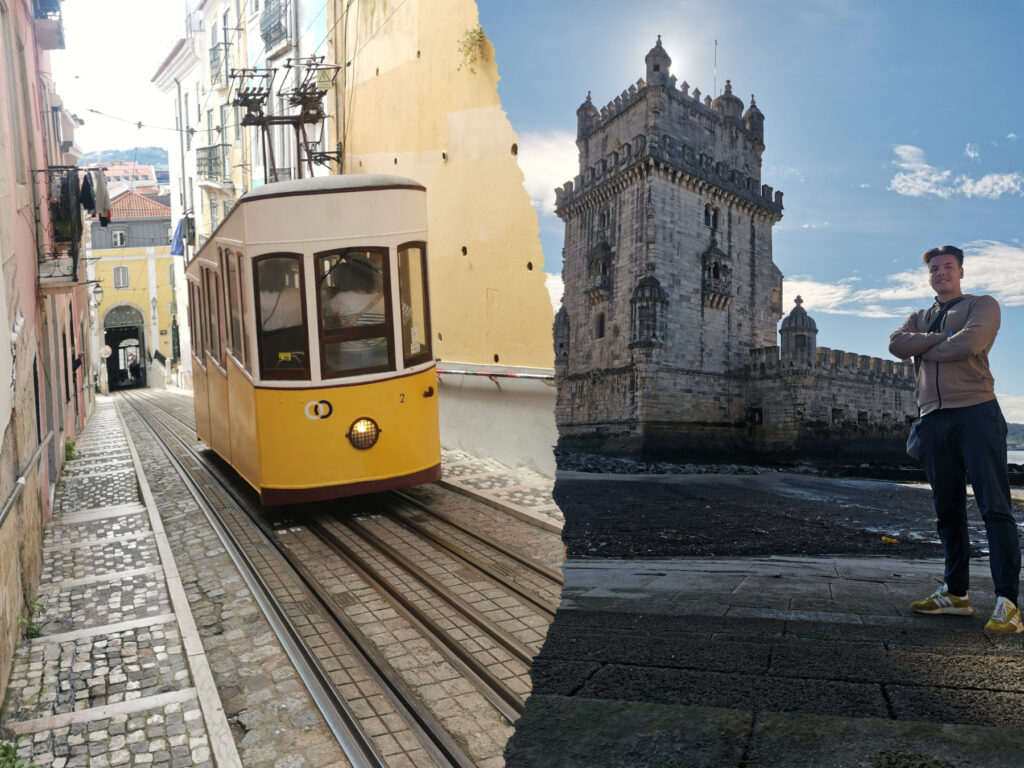

I started my next day in Lisbon at full speed. I decided to do things the exact opposite way most people do them – first heading to the very edge of the city and only then slowly working my way back to the center. That’s my system: distance first, return later.
My first stop was Portugal’s version of the Golden Gate Bridge. Officially, it’s called Ponte 25 de Abril, and yes – it was built by the same American company that worked on the Golden Gate Bridge in San Francisco. The structure is nearly identical, the color is similar, and even the overall vibe feels the same. The only difference? Instead of the Pacific Ocean flowing beneath it, you have the Tagus River (Tejo).
Standing under the bridge or looking at it from a distance, you genuinely feel like you’ve been teleported to California – just with Portuguese sunshine instead.

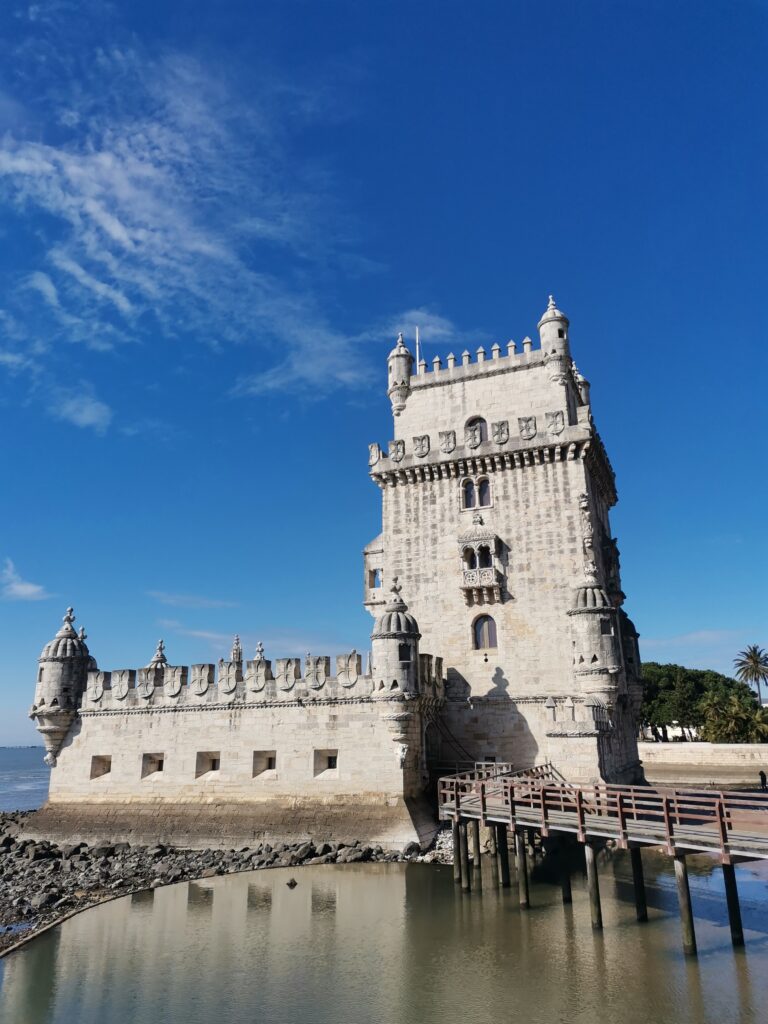
Torre de Belém – symbol of Portuguese explorers
The furthest stop of the day was Torre de Belém, one of the most iconic landmarks in Lisbon. This 16th-century defensive tower once guarded the entrance to the harbor and symbolized the very beginning of Portugal’s great Age of Discoveries. Ships carrying explorers passed right by this spot as they set sail to discover new continents.
At low tide, you can walk almost all the way to the tower along the riverbed or a low platform, which gives the place a completely different perspective than just viewing it from the shore. With the sunlight reflecting off the water and the tower standing alone by the river, it looks incredibly photogenic. Honestly, the fact that engineers were able to design and build something like this more than 500 years ago is pretty mind-blowing.

Padrão dos Descobrimentos – a tribute to the explorers
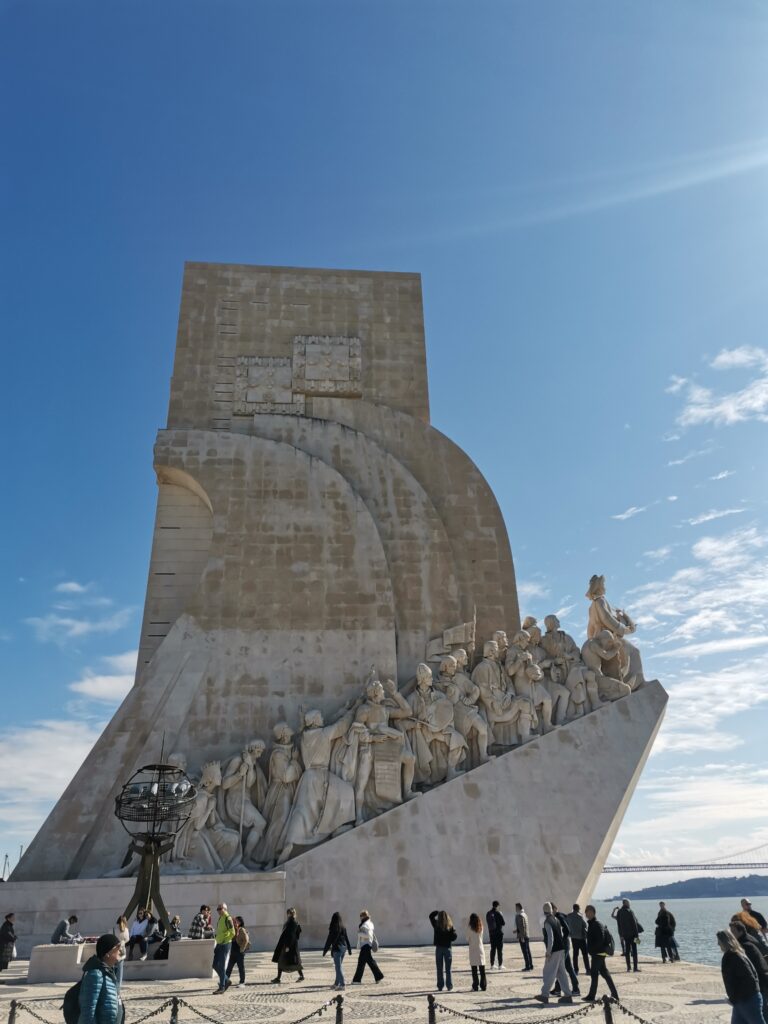
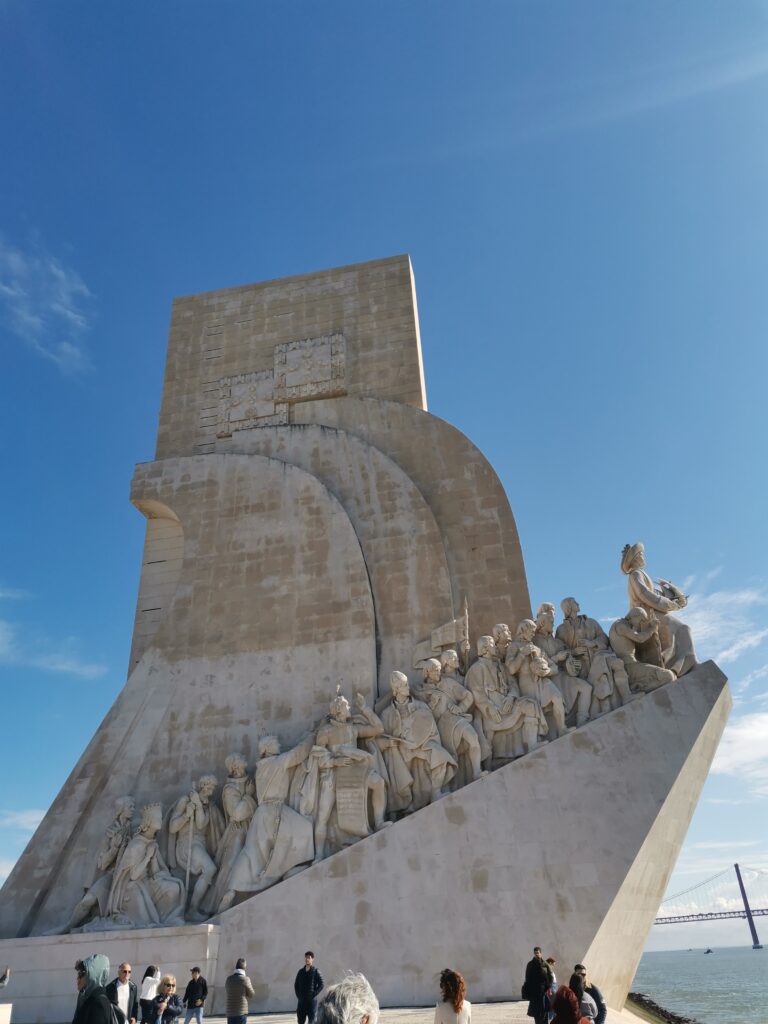
From there, I continued on foot along a small marina filled with boats and sailboats, until the Padrão dos Descobrimentos slowly appeared in the distance. This monument is shaped like a caravel (sailing ship) and is dedicated to Portuguese explorers, navigators, and visionaries who changed the course of world history.
At the front stands Prince Henry the Navigator, followed by other key historical figures — kings, cartographers, and captains. The whole monument feels grand yet calm at the same time. When I was there, there weren’t many people around, which made it the perfect spot to slow down, reflect, and simply stare at the river while thinking about history unfolding right in front of you.

Jerónimos and an unexpected disappointment in Belém
Right across the road, I noticed the Jardim da Praça do Império gardens, which I casually walked through. They’re nice, well-kept, and symmetrical—but honestly, my attention was already drawn to the monumental building just a few meters away.
That building is the Mosteiro dos Jerónimos (Jerónimos Monastery)—one of the greatest symbols of Portugal and its Golden Age of Discoveries. This 16th-century monastery, listed as a UNESCO World Heritage Site, is also home to the tomb of Vasco da Gama, the legendary explorer who was the first to sail from Europe to India by sea.
But then came the catch… it was Monday. And on Mondays, the monastery is closed.
So I could only admire it from the outside. Slightly disappointing, sure—but Lisbon follows a simple rule: if something’s closed, you move on.



The legendary Tram 25E – a ride through time
You’ve definitely seen photos or videos of Lisbon’s iconic old tram squeezing through narrow streets and rattling its way uphill. That’s exactly the one I decided to hop on.
If you want to experience it yourself, do it like this:
- go to the Campo de Ourique stop,
- get on tram number 25E,
- ride it all the way to Cais do Sodré.
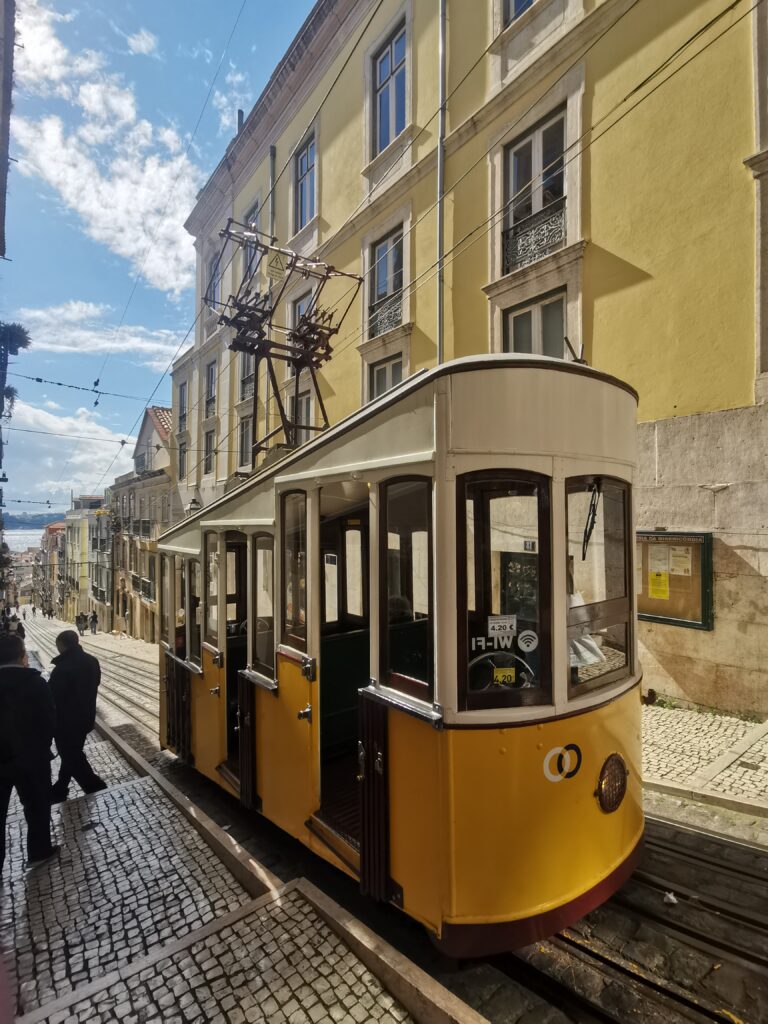
This route is basically a time machine on rails. Old wooden interiors, creaking sounds, sharp turns, houses so close you feel like you could touch the balconies—this is classic Lisbon in its purest form.
Bica Funicular – free if you know how
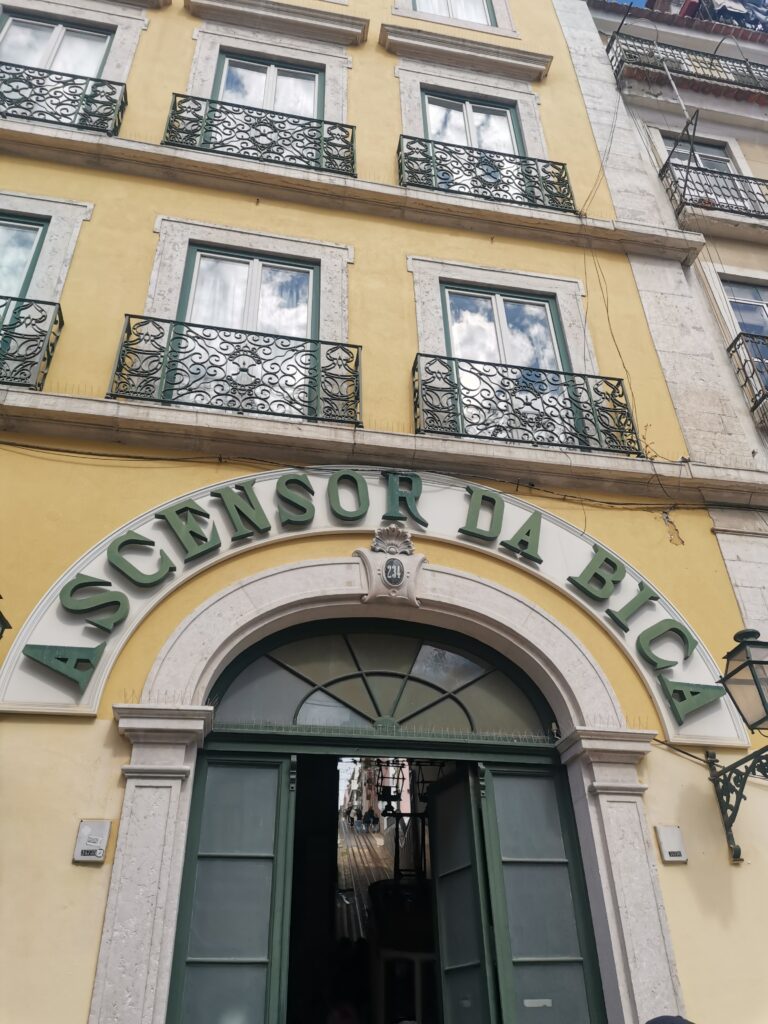
Right after tram 28E comes one of Lisbon’s most iconic sights: the steep Elevador da Bica funicular. It’s more of a scenic attraction than regular transport — a short, dramatic climb, postcard views, and that unmistakable Lisbon vibe.
Normally, a ride up and down costs around €5. BUT — and this is a big but — if you have a public transport card (like the 72-hour pass I mentioned in the previous part here), the funicular is already included.
So I:
- paid nothing extra,
- rode all the way up,
- then continued on foot, wandering the street, taking photos, and soaking in the atmosphere.
And this is exactly the kind of small travel hack that lets you move cheaper — and smarter — than most tourists.
Lunch that blew my mind – meat on a mini table grill
As I wandered through the city, hunger kicked in. Nearby, I stumbled upon a restaurant called Flor do Mundo, without having the slightest idea that I was about to eat one of the most interesting meals of the day.
I was craving meat, so I ordered Tagliata de manzo. And the way it arrived at the table genuinely surprised me.
They served the steak on a small tabletop grill, where I could finish cooking the meat myself, exactly to my liking. I had never seen anything like that in real life before — a mix of a proper restaurant and DIY grilling right at the table. Taste-wise: excellent. Experience-wise: even better.
To go with it, I had a local Portuguese beer, Sagres. Until then, I had only vaguely heard of it, but after this meal I can confidently say: perfect refreshment to pair with meat.
If you’re in Lisbon and want something a bit different, I highly recommend this — no hesitation at all.
Miradouro de São Pedro de Alcântara – Lisbon in the palm of your hand
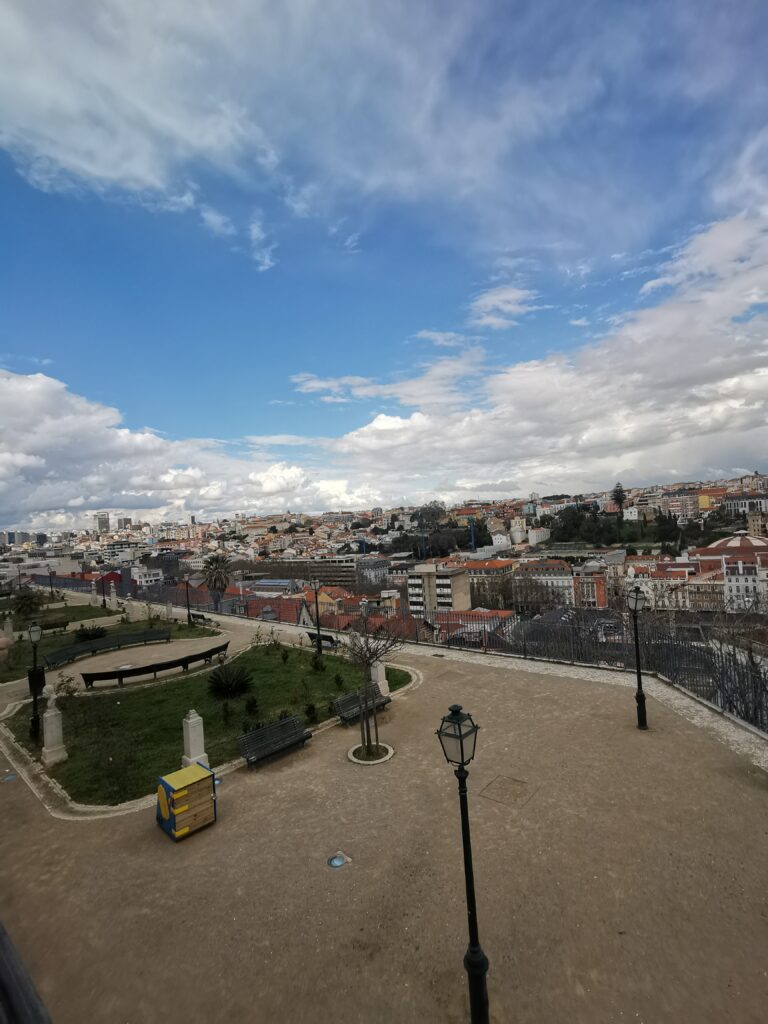
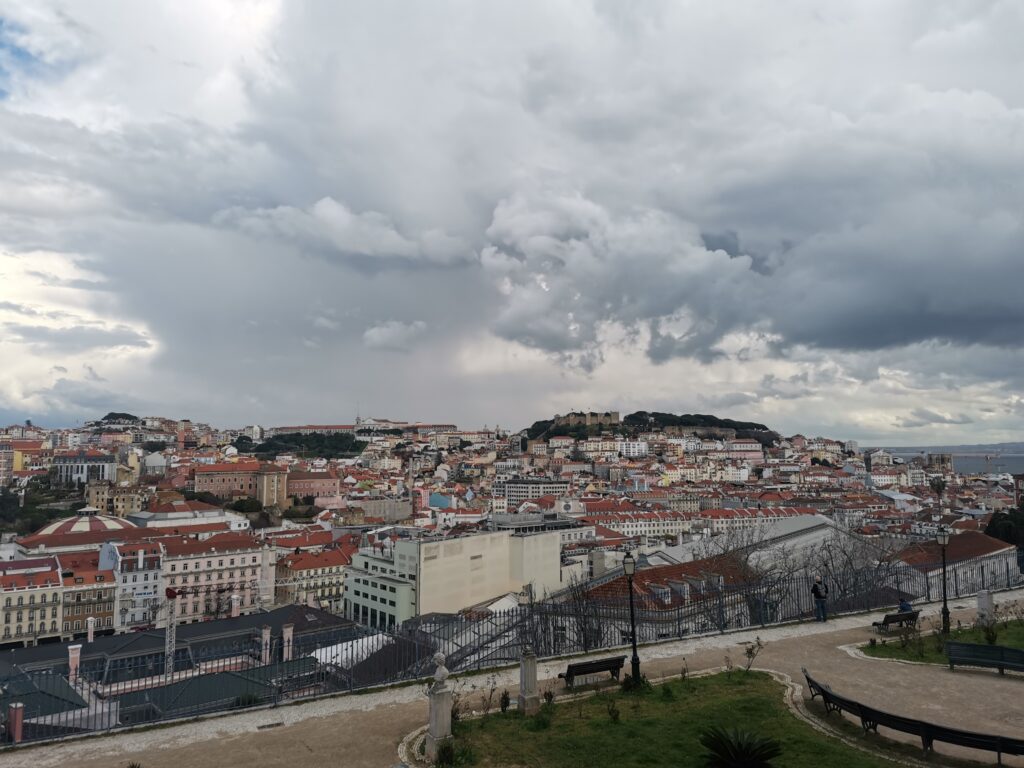
After lunch, I headed up to one of Lisbon’s classic viewpoints — Miradouro de São Pedro de Alcântara. This spot is among the most famous viewpoints in the city, and honestly, it fully deserves the reputation.
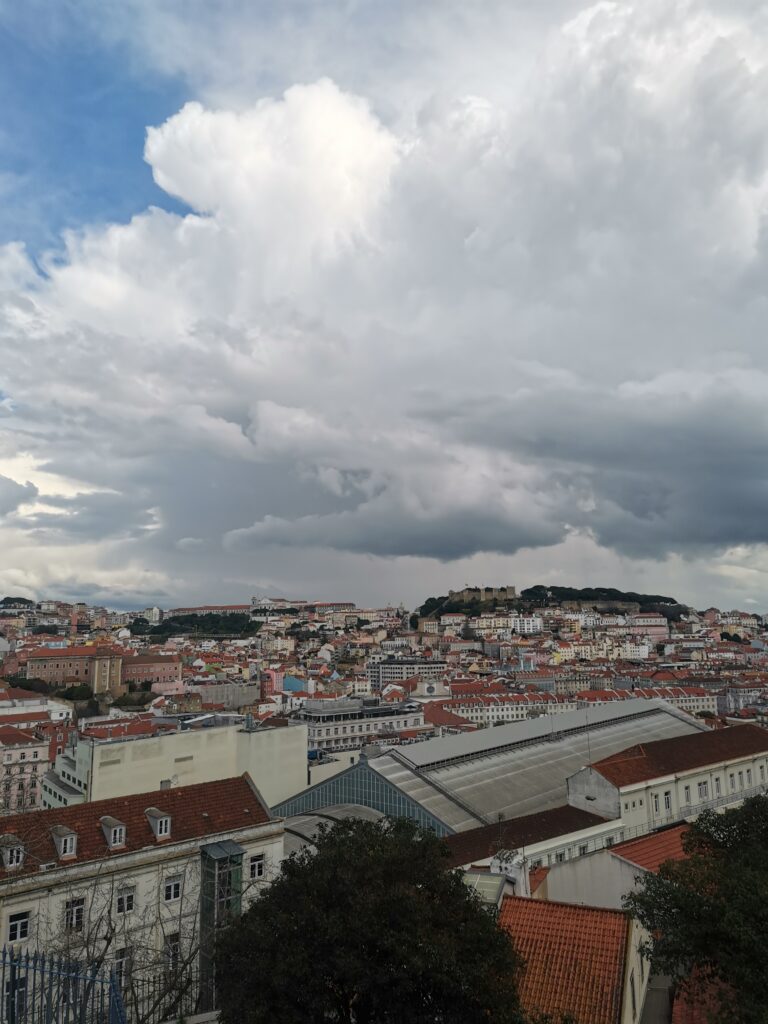
From up here, you can see the entire historic center, São Jorge Castle, the sea of red rooftops, and the Tagus Riverstretching out in the background. It’s exactly the kind of place where you stop, sit down on a bench, and just take it all in without rushing anywhere.
Lisbon looks calm, layered, and timeless from here — one of those views that stays with you long after you leave.
A flea market, an Indian shopping center, and the great bathroom struggle
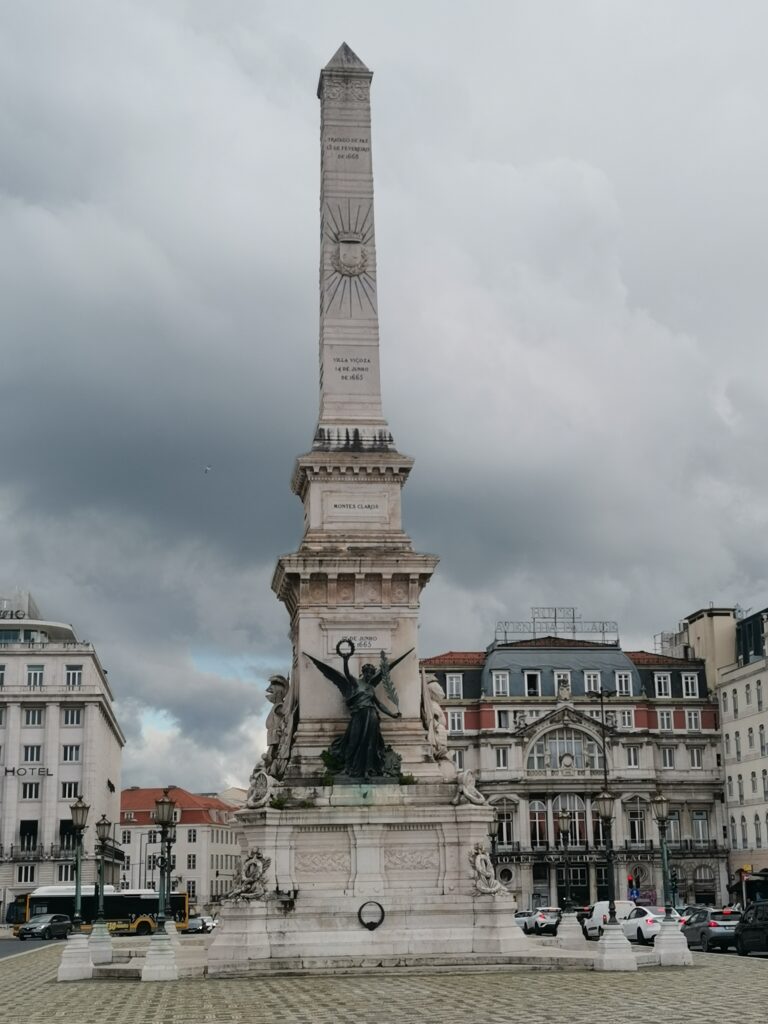
From there, I continued downhill, passed by the main train station, and made my way to Monumento aos Restauradores. The plan was simple — hit one more viewpoint and call it a solid day.
But… Lisbon had other plans.
Out of nowhere, I found myself inside what I can only describe as an “Indian shopping center” — a strange mix of a flea market, indoor bazaar, and a small maze. Stalls everywhere, random goods, people going in every direction, and zero sense of orientation.
The reason for this unexpected detour was very simple: I desperately needed a toilet.
I found one.
Locked.
End of story.
So yeah — no relief, just confusion, wandering corridors, and the quiet realization that sometimes the real challenge of traveling isn’t hills or distances… it’s finding a bathroom at the right moment.
Miradouro da Senhora do Monte – the best view of the day
In the end, step by step, I finally made it to the viewpoint I had marked from the very beginning: Miradouro da Senhora do Monte.
On the way up, I stopped at a completely random café — bathroom access for €1. And honestly? Worth every cent.
This viewpoint is easily one of the most beautiful in all of Lisbon. From here, you see the entire city laid out below you — the river, Ponte 25 de Abril, the castle, Alfama, rooftops, neighborhoods — everything at once. And compared to other viewpoints, it’s often less crowded, which makes the atmosphere even better.
If you only have time for one viewpoint in Lisbon, this should be the one.

Sé de Lisboa – the oldest cathedral in the city
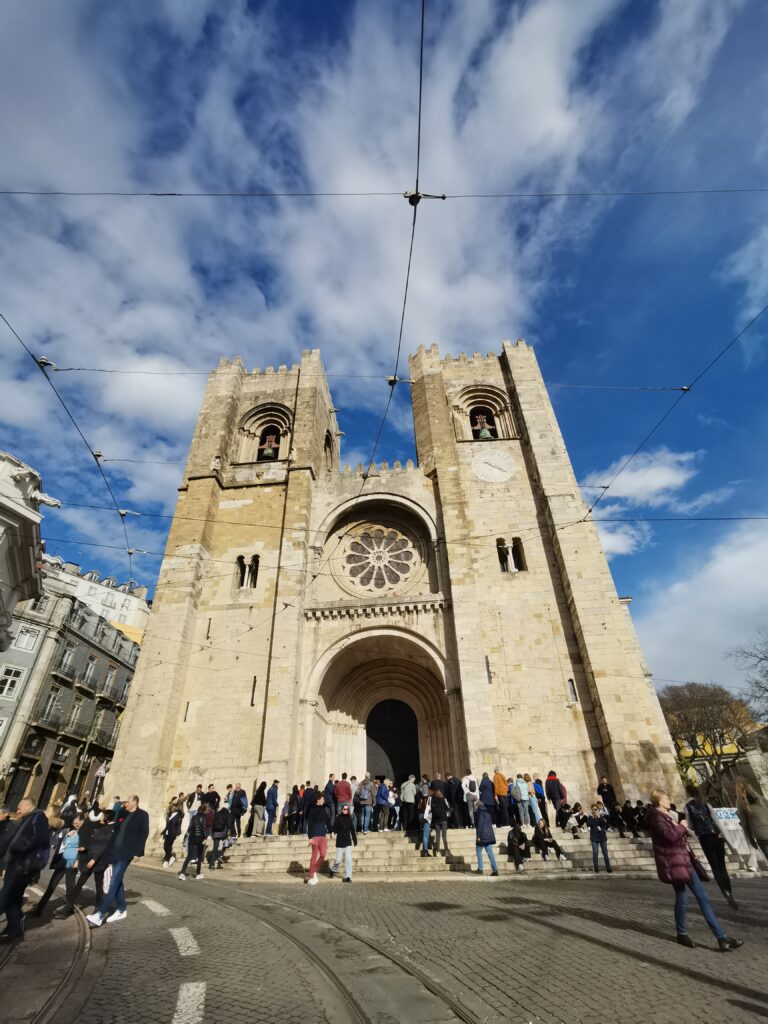
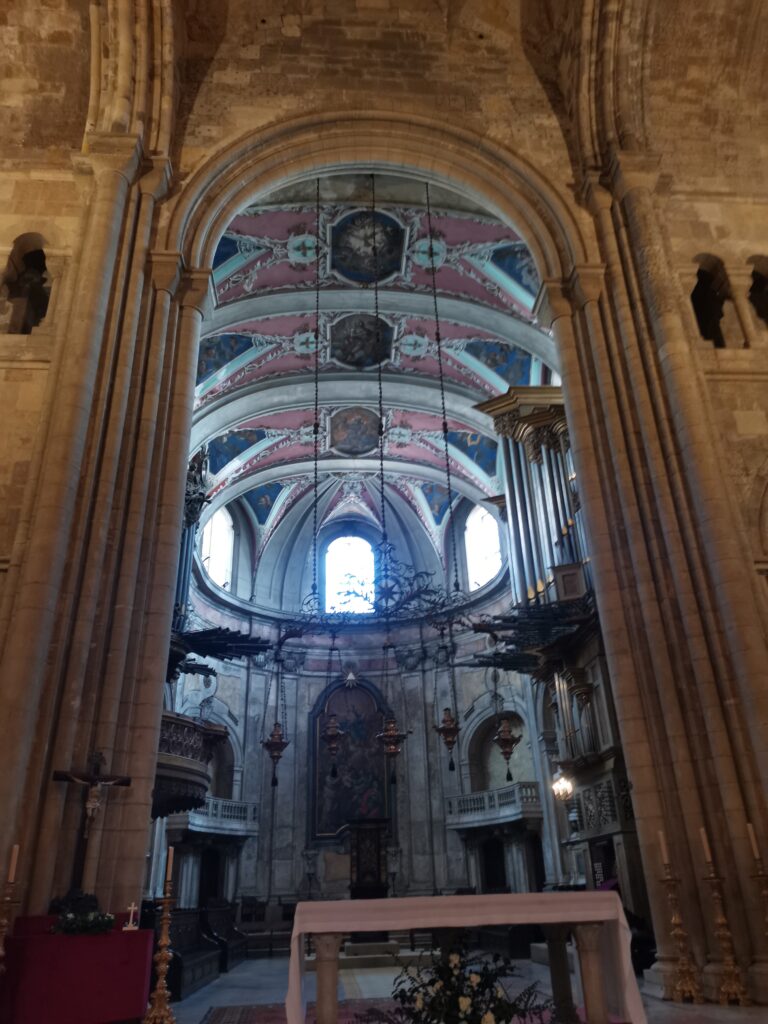
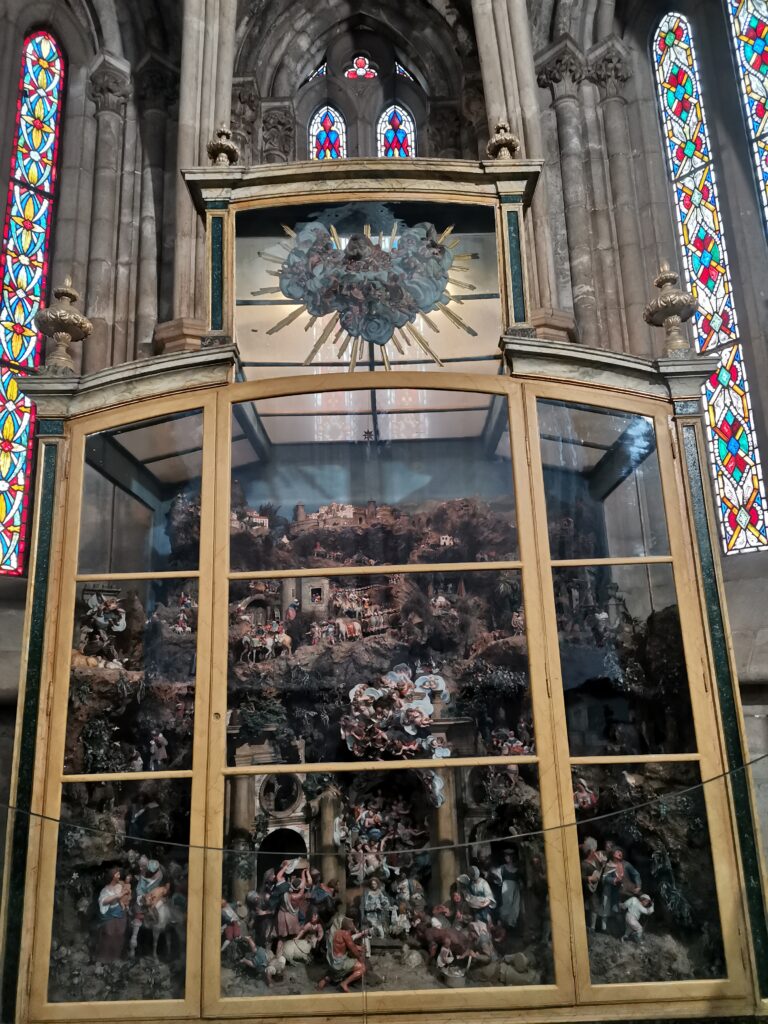
Since I still had a bit of time left, I decided to walk over to Sé de Lisboa, Lisbon’s cathedral. It is the oldest church in the city, built in the 12th century, shortly after Christians reconquered Lisbon from the Moors.
I went inside as well — the entrance fee was symbolic, and it was absolutely worth it. The interior is simpler compared to other grand cathedrals, but the atmosphere is powerful. Thick stone walls, Romanesque arches, and the feeling that this building has been standing here for centuries, witnessing everything from earthquakes and fires to countless reconstructions.
It’s one of those places where you don’t need decorations or gold to feel the weight of history.
Arco da Rua Augusta – the gateway to the city
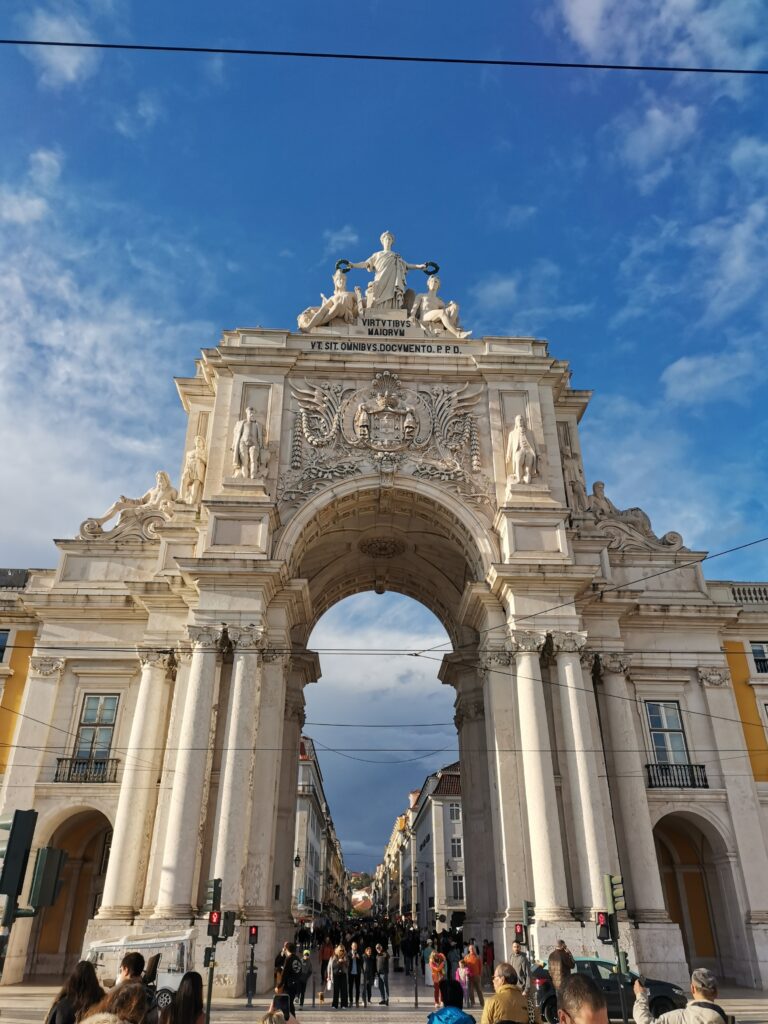
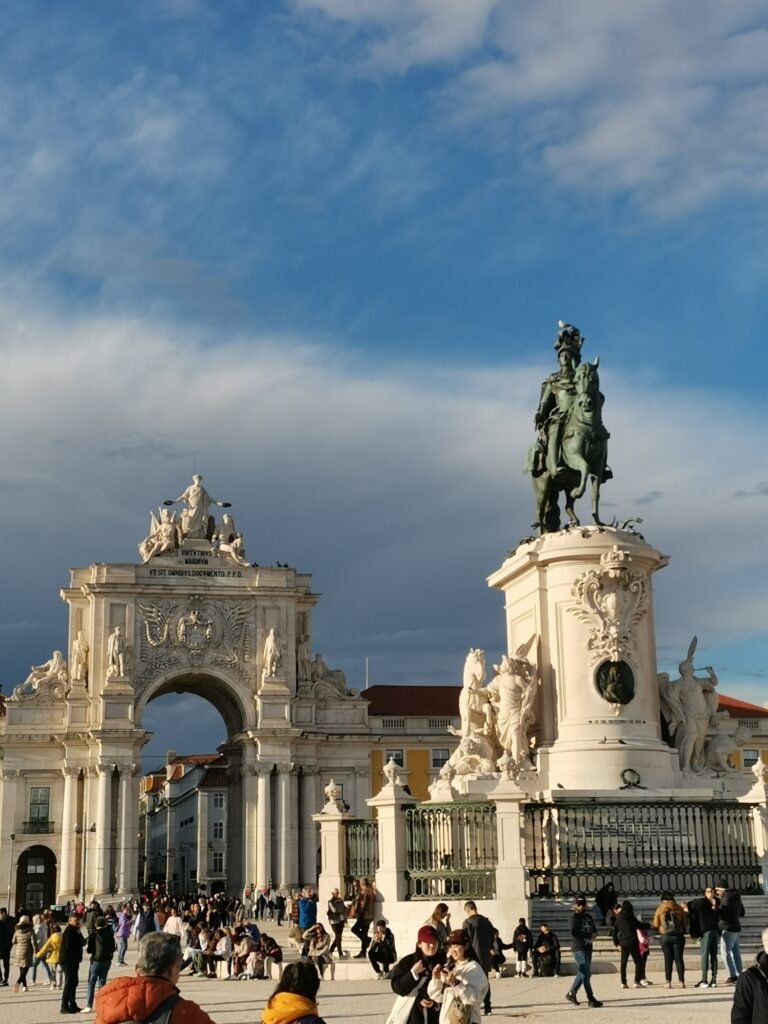
At the end of the day, two final must-see stops were waiting for me. The first one was Arco da Rua Augusta, the triumphal arch standing at the end of the main pedestrian street, Rua Augusta.
The arch was built as a symbol of Lisbon’s rebirth after the devastating earthquake of 1755. At the top, you’ll find statues of important Portuguese historical figures, and the whole structure feels like a ceremonial entrance into the historic heart of the city. You can also go up to the viewpoint on top, which offers a great perspective over the square and the river.
Praça do Comércio – a monumental square by the river
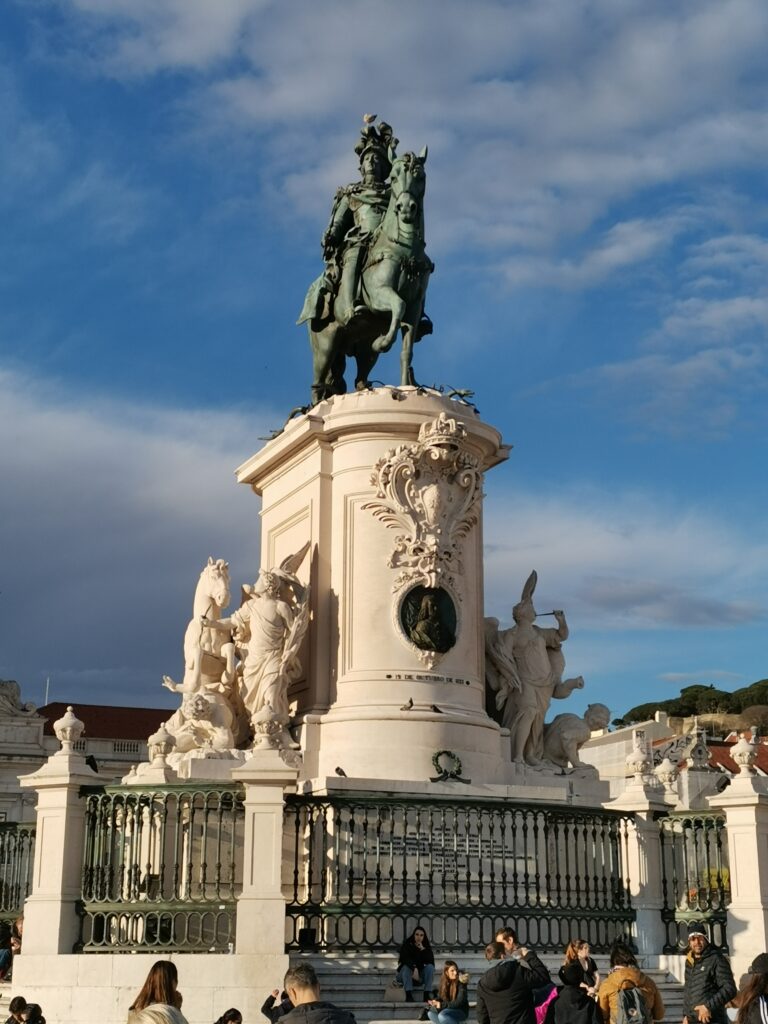
Right behind the arch opens up Praça do Comércio, one of the largest and most impressive squares in Europe. On one side, there are elegant historic buildings with arcades; on the other, the Tagus River and an open view stretching toward the Atlantic.
This square was once the center of Portuguese trade and maritime power. Today, it serves more as a symbol of Lisbon itself — spacious, bright, open, and perfect for a relaxed walk or simply sitting by the river and taking it all in.

A city destroyed by earthquakes — and still standing
Lisbon has been devastated several times by powerful earthquakes, most notably the one in 1755, which practically leveled the city center. Tens of thousands of people died, followed by massive fires and even a tsunami.
And yet, the city always rose again. It was rebuilt in a more modern, stronger, and more systematic way.
Today, Lisbon stands as a symbol that even after total destruction, it is possible to start over.
A small warning for tourists
One practical note — especially around Praça do Comércio and in the city center, you should stay alert. There are many people offering “marijuana” or other substances. For some, this can feel uncomfortable, so it’s good to be aware. If that’s your thing, do your thing. If not, just ignore them and keep walking.
A departure that genuinely surprised me
What happened at the very end, I honestly did not expect at all. I was flying from the smallest terminal at Lisbon Airport — Terminal 2, which is mainly used by Ryanair and other low-cost airlines.
And here’s the catch:
even 2 hours before departure, the system wouldn’t let me through security to the gates. It was simply closed.
Terminal 2 is extremely minimalist:
- check-in
- security control
- a few gates
- one small bar
No shops, no lounges, nothing. But then again… what do you expect from a €25 flight.
When I finally got into the departure area, there was more chaos. Even with about 47 minutes left until departure, I still didn’t know my gate number. Planes rotate quickly there, and just a handful of gates handle everything.
In the end, though, it moved fast — the gate number appeared, boarding started, and I made it home.

Where did my next adventure take me? You’ll find out in the next episode. Don’t forget to follow me on Instagram and subscribe to my newsletter so you don’t miss a thing.
Cross your boundaries – that’s where the treasure you’re seeking is hidden.
Flying Easterner
 Follow me on Instagram!


References:
Legiano Casino iPhone http://coolbuddy.com/newlinks/header.asp?add=https://liy.ke/adriene22o644
References:
Legiano Casino Code cse.google.gp
References:
Legiano Casino Jackpot http://seaforum.aqualogo.ru/
References:
Legiano Online Casino http://skin-skin1.dime0523.cafe24.com/member/login.html?noMemberOrder=&returnUrl=http://biolink.website/francescod
References:
Legiano Casino Login http://cse.google.am/url?sa=t&url=http://short.turtle.onl/tyrell33p8123
References:
Legiano Casino Auszahlungslimit m.t.napoto.cafe24.com
References:
Legiano Casino No Deposit Bonus alpha.astroempires.com
References:
Legiano Casino Deutschland https://www.allods.net
References:
Legiano Casino Erfahrungen https://cgl.ethz.ch
References:
Legiano Casino Download http://www.swadba.by
References:
Legiano Casino Einzahlung scholar.google.es
References:
Legiano Casino Registrierung http://clients1.google.co.za/
References:
Legiano Casino Auszahlungslimit clients1.google.co.za
References:
Legiano Casino seriös http://shop13.reddotcr.cafe24.com/
References:
Legiano Casino iPhone https://8.cholteth.com/index/d1?diff=0&utm_source=ogdd&utm_campaign=26607&utm_content=&utm_clickid=g00w000go8sgcg0k&aurl=https://link.1hut.ru/marshamarmon56
References:
Legiano Casino Kritik http://4geo.ru/
References:
Legiano Casino Bonusbedingungen http://abonents-ntvplus.ru/proxy.php?link=https://de.trustpilot.com/review/edelkranz.de
References:
Legiano Casino Auszahlung Dauer http://forums.playredfox.com/proxy.php?link=http://forum.darnet.ru/go.php?de.trustpilot.com/review/der-wikinger-shop.de
References:
Legiano Casino Bonus ohne Einzahlung gethuman.com
References:
Legiano Casino Auszahlungsdauer blog.fc2.com
References:
Legiano Casino Betrug anon.to
References:
Legiano Casino Anmeldung http://clients1.google.gp
References:
Legiano Casino No Deposit Bonus https://masteram.us/away?url=http://de2wa.com/valeriegraber6
References:
Legiano Casino Mindestauszahlung myseldon.com
References:
Legiano Casino Sicherheit http://toolsyep.com/de/open-graph-vorschau/?u=https://voffice.lawyers.bh/lidiaj51785105
References:
Legiano Casino Verifizierung http://www.electrik.org/
References:
Legiano Casino No Deposit Bonus http://maps.google.bf/
References:
Legiano Casino Codes http://www.hamatata.com/
References:
Legiano Casino Paysafecard http://domfialki.ru/bitrix/click.php?goto=http://dreamwar.ru/redirect.php?https://de.trustpilot.com/review/der-wikinger-shop.de
References:
Legiano Casino iPhone https://ca.do4a.pro/proxy.php?link=https://linky.pp.ua/juliod53881330
References:
Legiano Casino Registrierung http://images.google.com.ai
References:
Legiano Casino Spiele http://www.google.com.ua
References:
Legiano Casino Verifizierung alenka.capital
References:
Legiano Casino Umsatzbedingungen freesexcamca.chaturbate.com
References:
Legiano Casino Zahlungsmethoden http://forum.russ-artel.ru
References:
Legiano Casino Cashback http://wapcenter.yn.lt/load/index?url=antoniofradique.net/perrybest40710
References:
Legiano Casino Tischspiele https://gamma.astroempires.com/
References:
Legiano Casino Gratis Spins 30.cholteth.com
References:
Legiano Casino Tischspiele http://www.google.ac/url?q=http://forum.darnet.ru/go.php?de.trustpilot.com/review/der-wikinger-shop.de
References:
Legiano Casino Kritik fixbios.com
References:
Legiano Casino Sicherheit http://ville.montreal.qc.ca/portal/page?_dad=portal&_pageid=5798,43481603&_schema=PORTAL&id=9191&ret=https://de.trustpilot.com/review/edelkranz.de
References:
Legiano Casino Bonus Code images.google.im
References:
Legiano Casino Auszahlungsdauer www4.ownskin.com
References:
Legiano Casino No Deposit Bonus https://www.unifrance.org/newsletter-click/6763261?url=https://liy.ke/billiecarver35
References:
Legiano Casino Auszahlungsdauer https://comita.spb.ru/
References:
Legiano Casino Gratis Spins http://close-up.ru/
References:
Legiano Casino Promo Code https://ca.do4a.pro/proxy.php?link=http://jaluzion.ru/action.redirect/url/aHR0cHM6Ly9kZS50cnVzdHBpbG90LmNvbS9yZXZpZXcvZGVyLXdpa2luZ2VyLXNob3AuZGU
References:
Legiano Casino Paysafecard http://maps.google.com.bh/
References:
Legiano Casino seriös cn.uniview.com
References:
Legiano Casino Verifizierung google.ac
References:
Legiano Casino Spiele cse.google.cat
References:
Legiano Casino Bonus Code http://images.google.ch/
References:
Legiano Casino Spiele http://www.nashi-progulki.ru/bitrix/rk.php?goto=https://de.trustpilot.com/review/edelkranz.de
References:
Legiano Casino Kritik http://www.dsl.sk/
References:
Legiano Casino Spielautomaten https://filelist.io/redir.php?http://www.xcnews.ru/go.php?go=https://de.trustpilot.com/review/der-wikinger-shop.de
References:
Legiano Casino Auszahlungsdauer cse.google.lt
References:
Legiano Casino Codes http://shop1.naspa2017.cafe24.com/member/login.html?noMemberOrder=&returnUrl=https://de.trustpilot.com/review/edelkranz.de
References:
Legiano Casino Live Chat xvlivecams.com
References:
Legiano Casino iPhone http://notable.math.ucdavis.edu/
References:
Legiano Casino seriös https://pt.thefreedictionary.com/_/cite.aspx?url=https://de.trustpilot.com/review/edelkranz.de&word=Rengue&sources=novoPt
References:
Legiano Casino Bonus ohne Einzahlung google.com.om
References:
Legiano Casino Paysafecard http://www.google.vg/
References:
Legiano Casino Freispiele images.google.cl
References:
Legiano Casino Alternative https://schwarzreport.org/?URL=https://heres.link/melinazimmerma
References:
Legiano Casino Bonusbedingungen https://forum.home.pl/proxy.php?link=https://spd.link/franchesca
References:
KingMaker einzahlung banküberweisung https://voffice.lawyers.bh
References:
Kingmaker Casino Betrug oder seriös avyc.io
References:
Kingmaker Casino kein Einzahlungsbonus bion.ly
References:
Kingmaker Casino Live Casino wsurl.link
References:
KingMaker Casino Bonuscode Einzahlung https://moonlinky.com
References:
KingMaker Casino Neukundenbonus Einzahlung https://bmp.pw/markbradford60
References:
KingMaker Casino 20 Euro Einzahlung de2wa.com
References:
Kingmaker casino einzahlung deutschland http://maps.google.ht/url?q=https://de.trustpilot.com/review/beyondjewellery.de
References:
Kingmaker casino apple pay einzahlung https://danieldefo.ru/
References:
Kingmaker Casino Slots http://images.google.com.nf/url?q=https://de.trustpilot.com/review/beyondjewellery.de
References:
KingMaker Casino erste Einzahlung https://www.retrogames.cz
References:
KingMaker Casino Einzahlungsmöglichkeiten https://mameli.docenti.di.unimi.it/
References:
KingMaker Casino Registrierungsbonus http://cse.google.ws/url?q=https://de.trustpilot.com/review/beyondjewellery.de
References:
KingMaker erste einzahlung bonus http://clients1.google.al
References:
KingMaker Casino Einzahlungsgebühren http://www.cvbankas.lt
References:
Legiano Casino Bonusbedingungen http://www.google.ac/url?q=http://telegra.ph/Legiano-Casino-Bonus-ohne-Einzahlung-Freispiele–Promo-Codes-06-07-2
References:
KingMaker einzahlung mastercard forum.xnxx.com
References:
Legiano Casino Live Chat http://may.2chan.net/bin/jump.php?https://bridgedesign.site/wiki/Legiano_Casino_Bonus_100_bis_zu_500_200_FS
References:
Legiano Casino Erfahrungen http://images.google.dm/url?q=https://materialwiki.site/wiki/Leguano_Aktiv_Plus_in_MecklenburgVorpommern
References:
Kingmaker casino kreditkarte einzahlen https://calendly.com/
References:
Kingmaker Casino Software google.bg
References:
Kingmaker Casino Login Probleme https://iframely.pagina12.com.ar/
References:
KingMaker Casino Einzahlung Casino Bonus utmagazine.ru
References:
KingMaker Casino Cashback Bonus https://redirect.camfrog.com/redirect/?url=https://link.1hut.ru/kendrickgopink/
References:
Legiano Casino Mindesteinzahlung cse.google.pl
References:
Legiano Online Casino http://ww.visit-x.net/promo/dyn/dynchat02.php?pfmbanner=1&ver=12&clickurl=https://telegra.ph/Offizielle-Schweizer-Seite-06-07
References:
KingMaker Casino Einzahlung und Bonus m.so.com
References:
Legiano Casino Auszahlung m.en.acmedelavie.com
References:
KingMaker Casino Geld einzahlen http://images.google.com.br/url?sa=t&url=http://w09.ru/henriettacushi
References:
Legiano Casino Test https://lardi-trans.by/
References:
KingMaker Casino 20 Euro einzahlen image.google.iq
References:
Legiano Casino PayPal cse.google.ca
References:
Legiano Casino Treueprogramm https://slidesgo.com/editor/external-link?target=https://literaturewiki.site/wiki/Offizielle_Schweizer_Seite
References:
KingMaker Casino Einzahlung funktioniert nicht www2.hu-berlin.de
References:
Legiano Casino Tischspiele https://www.gcores.com/link?target=https://telegra.ph/Legiano-casino-login-konto-erstellen-wie-anmelden-06-07-4
References:
Legiano Casino Anmelden http://clients1.google.ps
References:
Kingmaker Casino No Deposit Bonus http://clients1.google.com.gi/
References:
Kingmaker casino mastercard einzahlen https://www.bookwinx.ru/proxy.php?link=https://link.epicalorie.shop/julianedhj7307
References:
KingMaker Casino Einzahlung per Neteller http://shop2.chuukr.cafe24.com
References:
Kingmaker Casino Treueprogramm downloader.la
References:
Legiano Casino Gutscheincode https://omnimed.ru/
References:
Hitnspin casino forum alt1.toolbarqueries.google.md
References:
Monro Casino Tischspiele https://www.newhydro.ru
References:
Hitnspin casino app android rufox.ru
References:
Hit and spin casino toolbarqueries.google.com.tn
References:
Monro Casino Legal slidesgo.com
References:
Hitnspin casino aktionscode http://wiki.dimeadozen.org/api.php?action=http://translate.itsc.cuhk.edu.hk/gb/de.trustpilot.com/review/der-wikinger-shop.de
References:
Hitnspin casino mit echtgeld http://kartinki.net
References:
Monro Casino Gutscheincode https://jaluzion.ru
References:
Hitnspin casino app iphone http://toolbarqueries.google.ba/url?q=http://www.fcterc.gov.ng/?URL=https://de.trustpilot.com/review/der-wikinger-shop.de
References:
Hitnspin casino kostenlos spielen https://volos-volos.ru/proxy.php?link=https://link.zhihu.com/?target=http://de.trustpilot.com/review/der-wikinger-shop.de
References:
Hitnspin casino app iphone http://image.google.me/url?q=https://beamng.com/proxy.php?link=https://de.trustpilot.com/review/der-wikinger-shop.de
References:
Hitnspin casino bonuscode mixxxx.com
References:
Hitnspin app http://researchesanswered.akamaized.net/__media__/js/netsoltrademark.php?d=login.bizmanager.yahoo.co.jp/redirector?redirectUrl=https://de.trustpilot.com/review/der-wikinger-shop.de
References:
Hitnspin login images.google.tg
References:
Hit n spin casino deutsch codhacks.ru
References:
Hitspin casino https://forum.chyoa.com/proxy.php?link=https://wordpress.com/abuse/?report_url=https://de.trustpilot.com/review/der-wikinger-shop.de
References:
Hit n spin casino online login http://www.calvaryofhope.org
References:
Hit’n’spin casino erfahrungen http://www.google.la/url?q=https://wikimapia.org/external_link?url=https://de.trustpilot.com/review/der-wikinger-shop.de/
References:
Hitnspin casino einzahlung ntedles.yoo7.com
References:
Hit n spin casino online login alginis.yoo7.com
References:
Hitnspin casino alternative kisska.net
References:
Hit’n’spin casino 25 euro bonus ohne einzahlung http://ville.montreal.qc.ca/portal/page?_dad=portal&_pageid=5798,43481603&_schema=PORTAL&id=9191&ret=https://sonnik.nalench.com/user/climbtiger29/
References:
Hit’n’spin casino 25 euro bonus ohne einzahlung spbtalk.ru
References:
Hitnspin deutschland https://www.emlakkulisi.com/reklamlar/ref_haberici_Yonlendir-43_https://peatix.com/user/29688388/view
References:
Hit n spin casino online login https://kaptur.su/
References:
Hitnspin casino forum http://forum.xnxx.com/
References:
Hit n spin casino bonus code m.so.com
References:
Hit n spin casino https://board-en.piratestorm.com/proxy.php?link=https://41-4lcpj.укр/user/congawood01/
References:
Hitnspin deutschland https://pwonline.ru/forums/fredirect.php?url=molchanovonews.ru/user/cerealgrouse1/
References:
Hit n spin casino app https://fixbios.com/proxy.php?link=https://mssq.me/vickycage
References:
Hitnspin casino einzahlung toolsyep.com
References:
Lollybet Casino Registrierung https://pwonline.ru/forums/fredirect.php?url=www.oschina.net/action/GoToLink?url=https://lollybet.com.de/
References:
Lollybet Casino Paysafecard https://my.steamchina.com/linkfilter/?url=https://plb.moomoo.com/link?target=https://blackcoin.co/list-of-casinos-in-brisbane/
References:
Lollybet Casino Mindesteinzahlung http://www.google.com.pa/
References:
Lollybet Casino App Download https://forum.mds.ru/proxy.php?link=http://app.movistar.cl/MovistarPass?adj_fallback=https://lollybet.com.de/
References:
Lollybet Casino Spielautomaten 61.pexeburay.com
References:
Lollybet Anmeldung https://link.avito.ru/go?to=https://adsandclips.com/@wilburcarden71?page=about
References:
Lollybet Casino Blackjack http://clients1.google.co.ve/url?q=https://4gameforum.com/proxy.php?link=https://lollybet.com.de/
References:
Lollybet Mirror Link http://image.google.com.af
References:
Lollybet Casino google.si
References:
Lollybet Casino Erfahrungen bookwinx.ru
References:
Lollybet Free Spins https://ntsr.info
References:
Good game sites https://adsmaz.com
References:
Canadian casinos tripleoggames.com
References:
Suffolk downs casino askmeclassifieds.com
References:
Hooters casino las vegas https://jobzalert.pk/
References:
Casino online subtitrat https://zenithgrs.com
References:
Hampton casino https://gcsoft.com.au/
References:
Harlows casino greenville ms https://halukkah.com/profile/leonafife9671
References:
William hill app android https://whoawho.com/bbs/board.php?bo_table=free&wr_id=156111
Hi! This is my first visit to your blog! We are a collection of volunteers and starting a new initiative in a community in the same niche.
Your blog provided us valuable information to work on. You have done a extraordinary job!
╬ Where Lifelong Friendships Take Flight on Colorful Feathers 🪶 ╬
I every time used to study piece of writing in news papers
but now as I am a user of net so from now I am using net for articles or reviews, thanks
to web.
Here is my homepage; สมัครหวยออนไลน์ lotto
Great article! We are linking to this particularly great article on our website.
Keep up the great writing.
Heya! I just wanted to ask if you ever have any problems with hackers?
My last blog (wordpress) was hacked and I ended up losing months of hard work due
to no data backup. Do you have any methods to stop hackers?
Hello there! I know this is kinda off topic but I’d figured I’d
ask. Would you be interested in exchanging links or maybe guest writing a blog post or vice-versa?
My website addresses a lot of the same subjects as yours and I believe we
could greatly benefit from each other. If you might be interested feel free to shoot
me an e-mail. I look forward to hearing from you!
Awesome blog by the way!
https://sceneflac.blogspot.com
This is a topic that’s near to my heart… Cheers!
Exactly where are your contact details though?
Greetings! Very helpful advice within this post! It is the little changes
which will make the biggest changes. Many thanks for sharing!
Excellent post. I will be facing a few of these issues as well..
Having read this I thought it was very informative.
I appreciate you finding the time and effort to put this informative article together.
I once again find myself personally spending a lot of time both reading and posting comments.
But so what, it was still worth it!