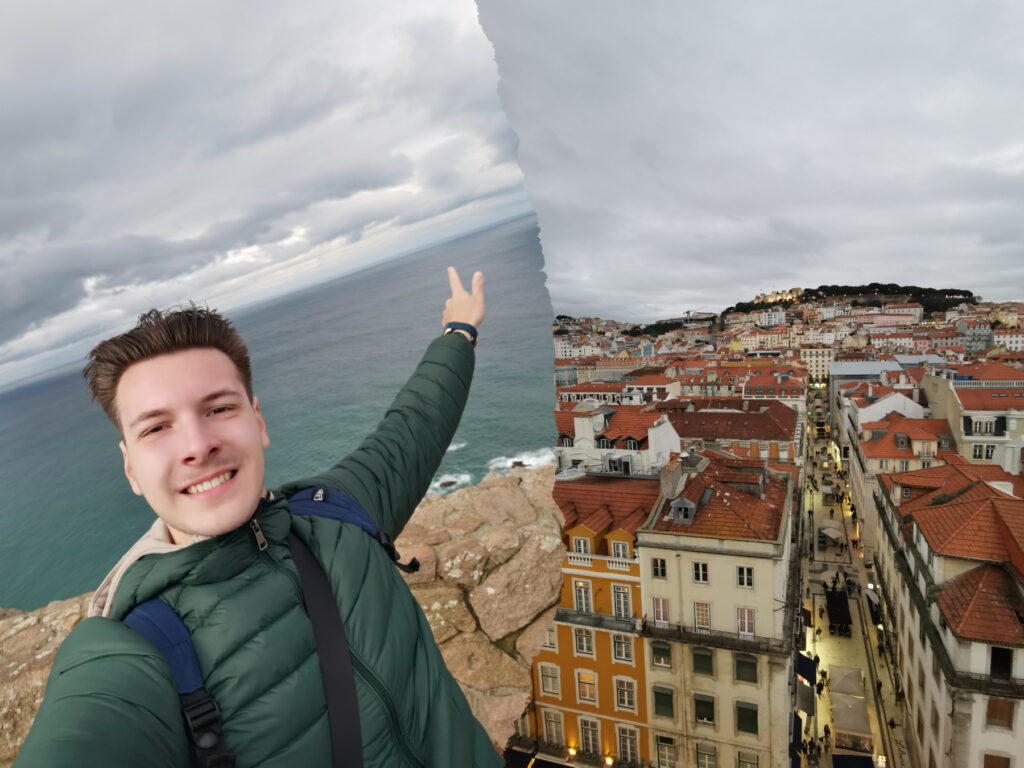

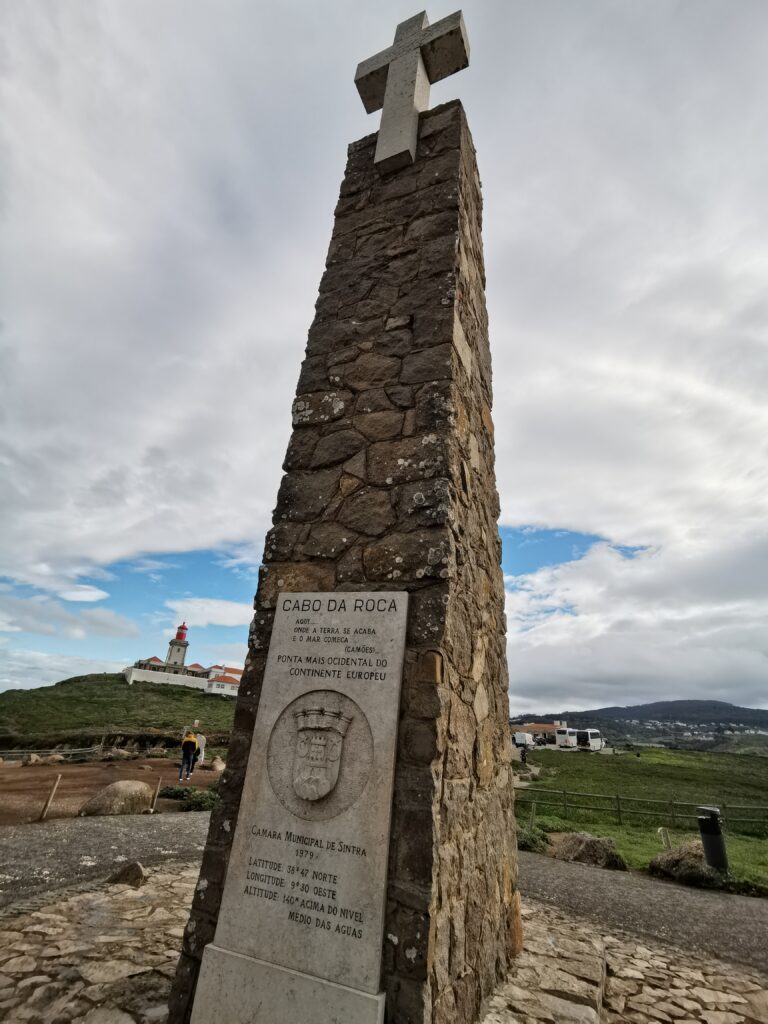
What did I do after landing in yet another country on my Pyrenean “never-stop-moving” trip? I arrived in Portugal – the country on the far western edge of Europe, washed by the Atlantic Ocean and home to one special highlight: the westernmost point of the European continent.
And that was exactly what I planned to visit the next day. But first, I had to actually make it to my accommodation.
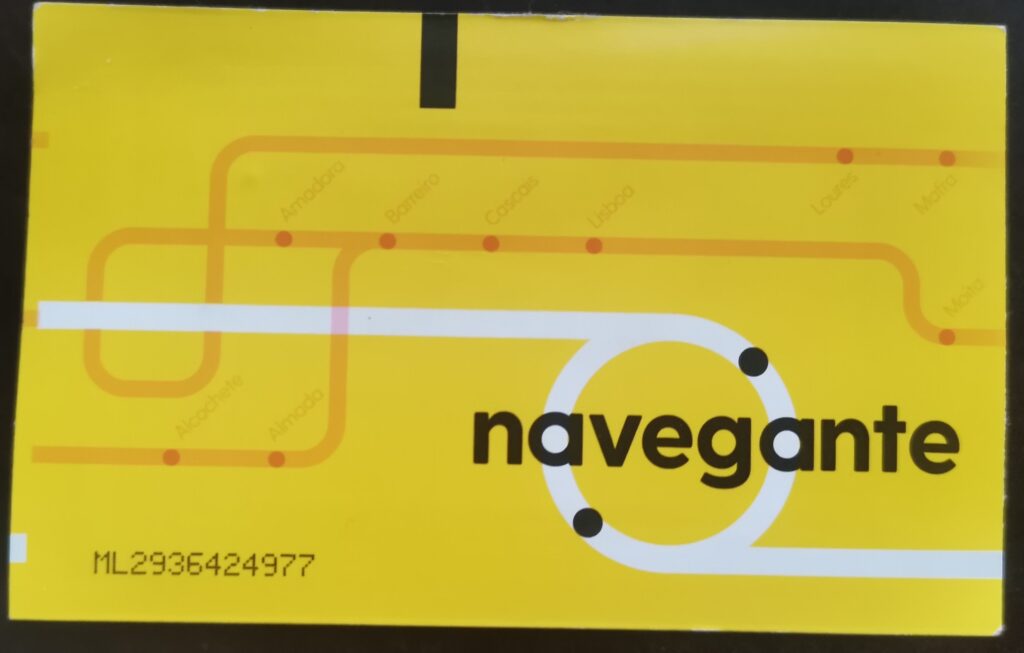
It was already late, around ten in the evening, and Lisbon’s buses were running less frequently, so the journey took a bit longer than usual. Right at the airport, I bought a 72-hour transport card, so I could move around the city without any limits during my stay.
After that, I somehow “stumbled” my way to my Airbnb – a room in an apartment owned by some guy who wasn’t even there. The terrace door was wide open, a cat was roaming freely through the place, and the keys were left for me in a mailbox that he had to guide me to step by step. Let me tell you, it felt like a mini-mission…but I made it in the end.
Morning in Lisbon and the journey to Sintra
The next day, right after waking up, I jumped straight into action. My goal was to get to Braco de Prata train station, from where direct trains run to Sintra. Since I was staying nearby, the trip was thankfully simple.
Trains to Sintra run regularly and the ride takes about 50 minutes. Soon enough, I was stepping off the train into a town that’s part of UNESCO and looks like a fairy-tale movie set — but my main destination, the westernmost point of Europe, was still far ahead.
Why? Because Cabo da Roca sits inside a huge national park, full of viewpoints, palaces, castles, and trails. And all of that was still waiting for me.
From Sintra, small minibuses and regular buses run around the entire park, taking people to the most famous spots.
By minibus to the very edge of Europe – Cabo da Roca
From Sintra, I hopped on minibus 1253, which goes all the way to the final stop: the legendary Cabo da Roca, the westernmost point of the European continent.
And let me tell you straight: hold on tight. The drivers of these minibuses operate in a style best described as brake – gas – sharp turn – gas – brake, as if they were training for a mountain stage of the Dakar Rally. The roads are narrow, the curves tight, cars pass each other with centimeters to spare… and the whole ride felt like a free adrenaline attraction.
But honestly? Totally worth it.
Cabo da Roca – the place where Europe ends
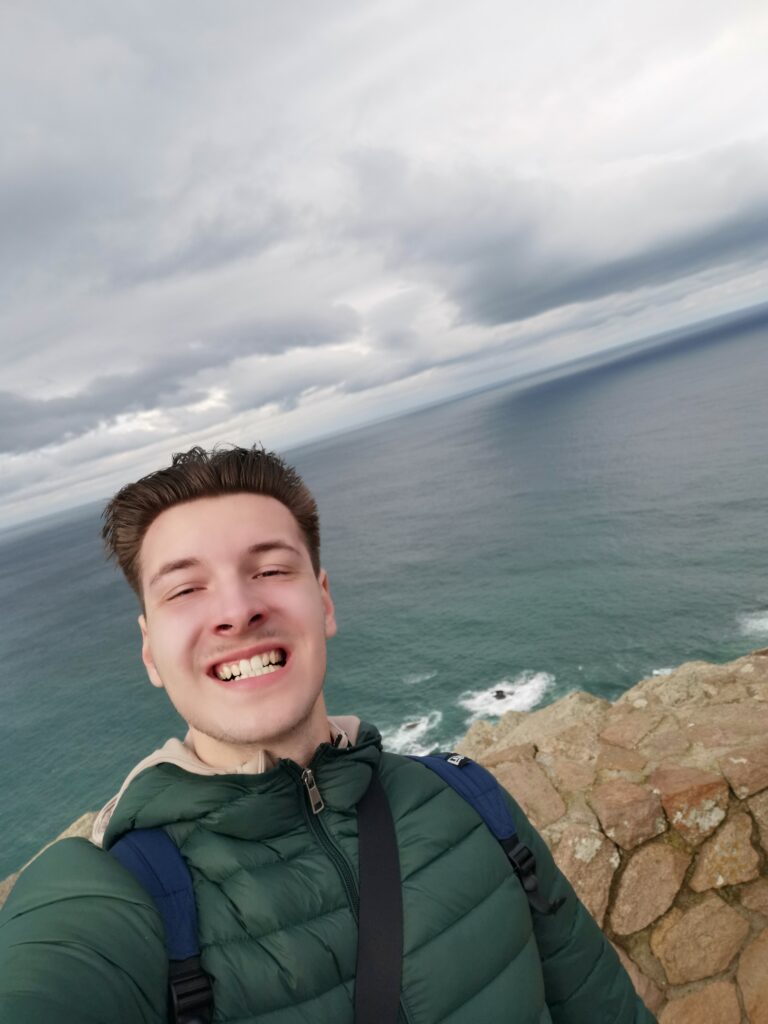
Cabo da Roca isn’t just a tourist spot with a sign. It’s a place where you stand on towering cliffs and feel the Atlantic Ocean rumbling beneath you. To the west, there’s nothing—just water, wind, and the thought that the next solid land is America.
And honestly, that’s exactly what went through my mind: “One day, I’m going there too.”
I spent quite a while on the cliffs, just staring into the distance while the wind tried its best to blow me off the edge.
Cliffs and viewpoints off the tourist path
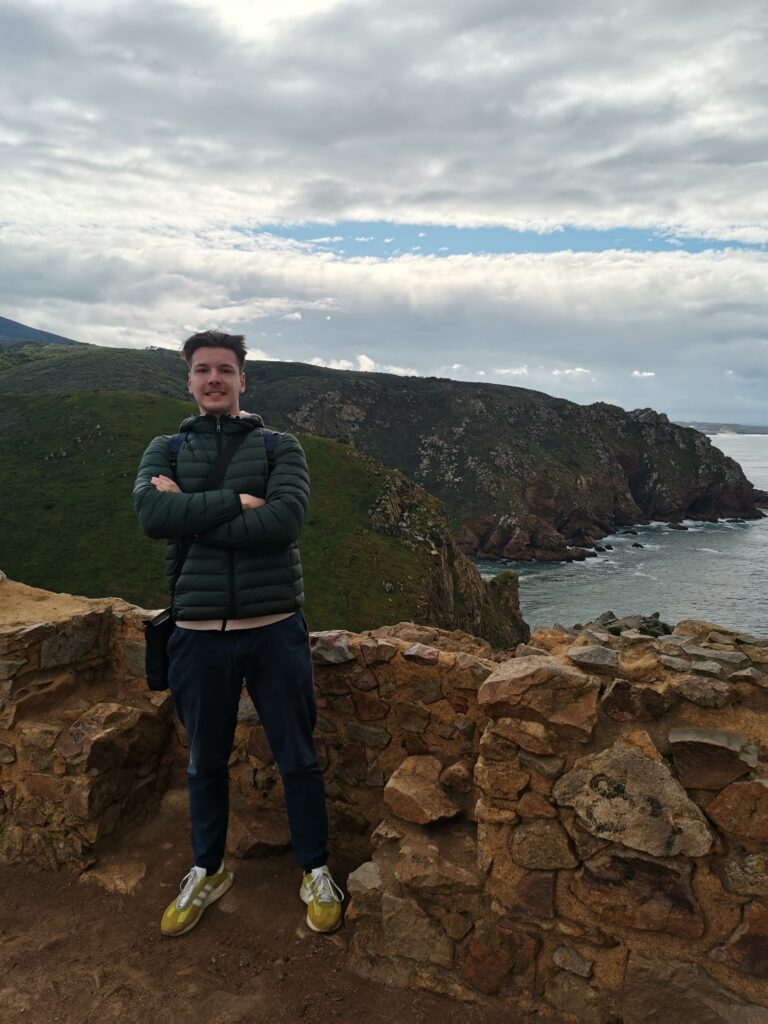
Besides the main trail, I wandered a bit off the marked paths—nothing extreme, just enough to find a quiet spot with an even better view. And trust me, the views were absolutely worth it. I headed a little further south.
The Atlantic was crashing against the rocks with a force that sounded like thunder. The cliffs are tall, dramatic, and impossibly steep—like something straight out of a fantasy film.
If you want to experience a place that makes you feel tiny, almost insignificant, this is it.
Stop by the Lighthouse and the Ministry of Defence
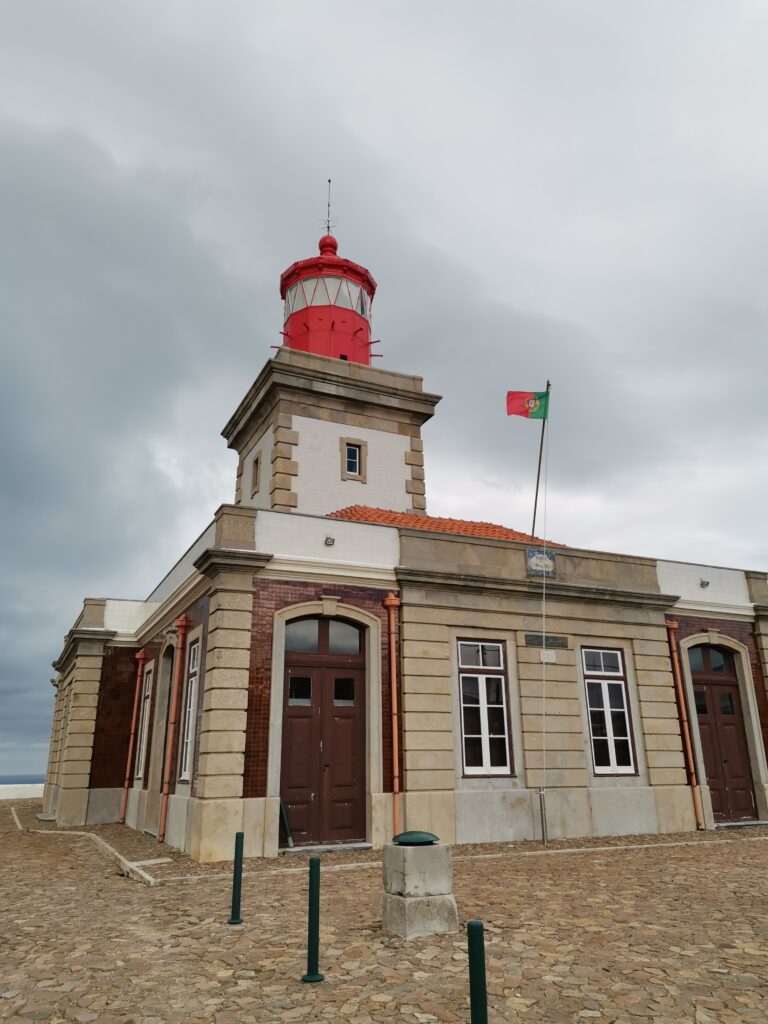
On my way back to Sintra, I made a quick stop at a spot that looked like a mix between a lighthouse and… a government complex. The sign read “Ministério de Defesa Nacional”, which is Portugal’s Ministry of Defence – so naturally, the entire area belongs to their coastal security.
The lighthouse itself felt majestic, standing tall above the cliffs, and the surrounding fields were criss-crossed with small walking paths that led me straight to another stunning viewpoint.
Praia Aroeira – a beach that feels like another world
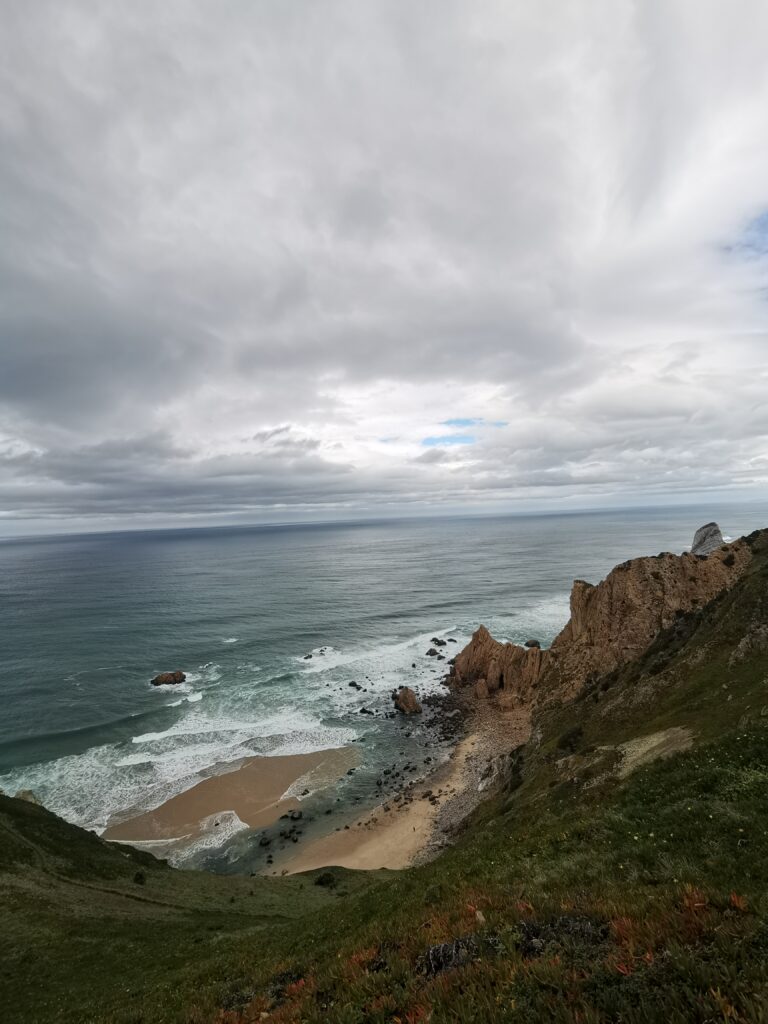
Eventually, I reached Praia Aroeira. But this isn’t the kind of beach you casually walk down to. Here, it’s more about standing high on the cliffs and looking down into the depth where the Atlantic crashes into the rocks, and you suddenly realise just how massive these cliffs really are.
The whole scenery felt like something from another universe – towering cliffs, powerful waves, strong winds, raw untamed nature. Honestly, one of the most breathtaking places I’ve ever seen.
The walk to Monserrate Palace – hills, sweat, and a small waterfall
My next planned stop was the Park and Palace of Monserrate. But getting there wasn’t as straightforward as I imagined.
The buses in the Sintra–Cascais area run in these cycle loops — first hitting the big attractions like Pena Palace and Castelo dos Mouros, then continuing all the way to Cabo da Roca, and on the way back… they switch to a completely different route.
Which meant one thing: there was no direct bus to Monserrate for me. So I had to walk. Around 30 minutes uphill, serpentines, forest trails, moss everywhere, eucalyptus trees towering above me… and on the way I even passed a small waterfall, like a free bonus from Sintra’s nature.
But eventually, I made it — and honestly? It was worth every drop of sweat.
Monserrate Palace – exotic beauty in the heart of Portugal
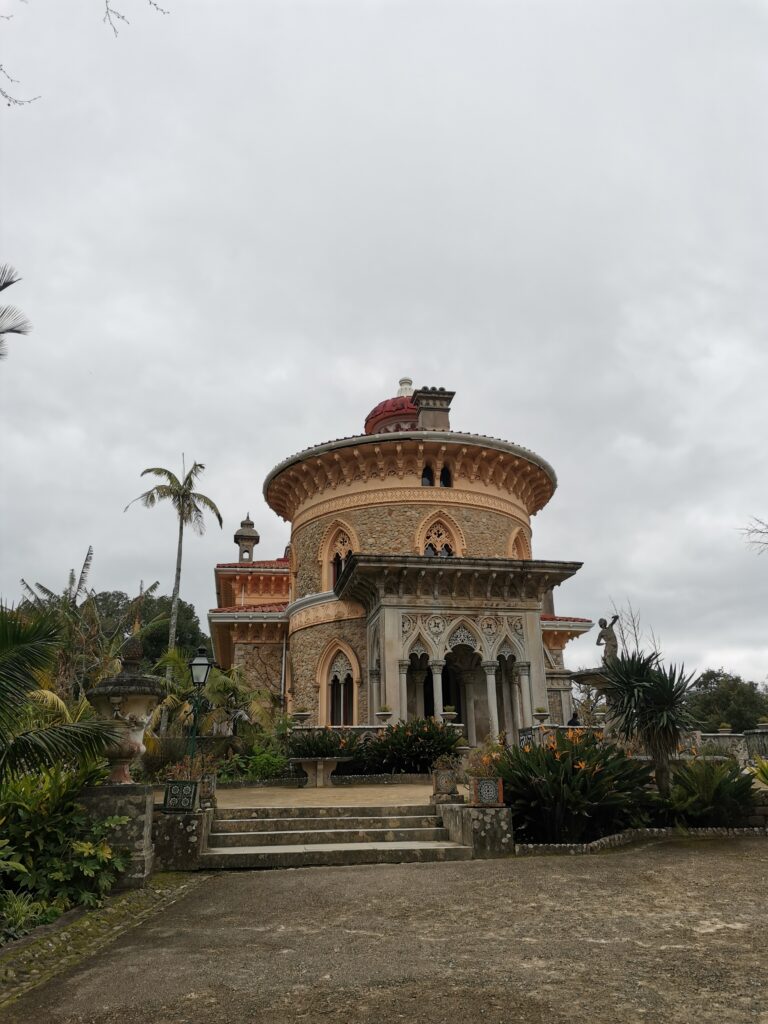
Palácio de Monserrate is easily one of the most exotic and visually striking places in all of Sintra. Built in the 19th century by British aristocrats, its architecture feels completely different from anything else in the region.
It’s a unique blend of:
- Gothic inspiration
- Indo-Muslim motifs
- Oriental details
- and the romantic spirit Sintra is famous for
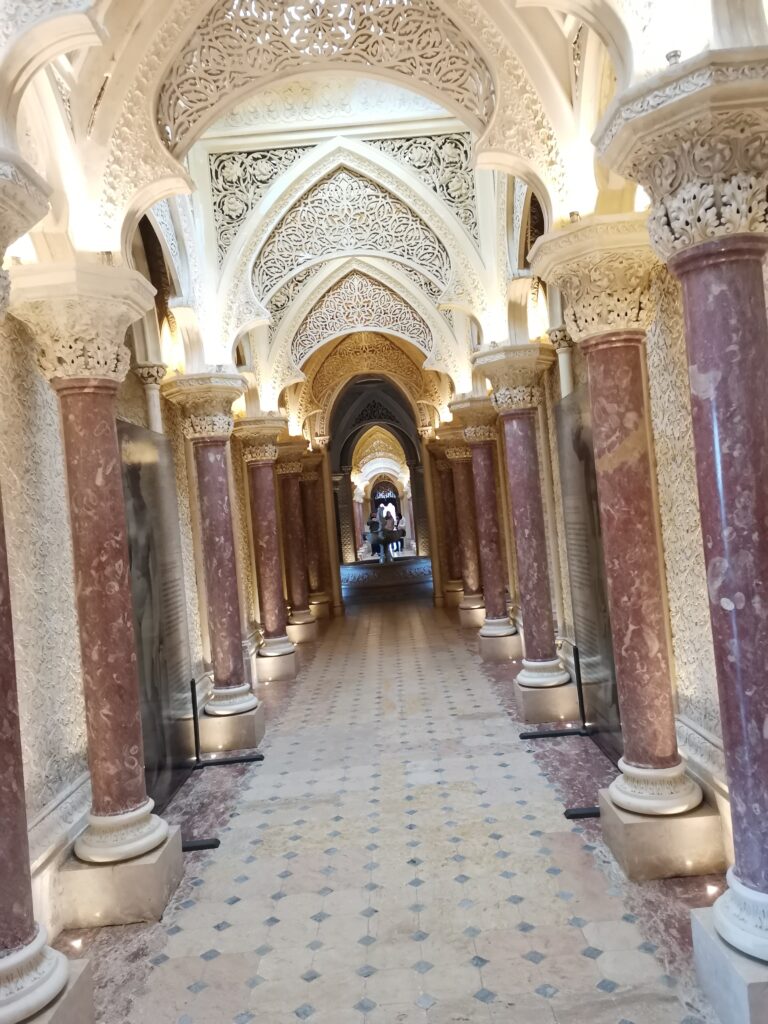
The moment I stepped inside, I felt like I had just walked into a storybook palace. The interiors are full of delicate arches, geometric patterns, carved ceilings and soft light that flows through every opening. It’s one of those buildings where you stop every few steps because something new catches your eye.
And the gardens? That’s a whole separate adventure.
Monserrate is surrounded by vast botanical grounds filled with exotic plants from all over the world — bamboo forests, rose gardens, ponds, palm trees, humid rainforest pathways… It feels like walking through a living botanical museum, except here you can wander freely through the entire estate.
I explored the full park and toured the palace itself, and honestly… the architecture blew me away. It’s a different world, a different atmosphere, and something you’ll only find a few times in Europe.
If you ever visit Lisbon, Monserrate is an absolute must-see.
Return to Lisbon and an evening walk through the historic center
After spending a few hours exploring Monserrate, I headed back to Lisbon to catch a bit more daylight. The train dropped me off at Lisboa Rossio, a station that looks more like a royal residence than a transport hub.
From there, I walked straight into Casco Histórico de Lisboa, the historic heart of the city, where one of Lisbon’s most iconic squares waits for you:
Praça Dom Pedro IV – the heart of Lisbon
Also known as Rossio Square, this is one of Lisbon’s liveliest and most historic spots. It’s where the city’s past merges with its modern rhythm — trams ringing, people chatting in cafés, tourists wandering around with half-melted pastéis de nata.
The ground is covered with the famous black-and-white wave-patterned pavement, one of the most distinct images of Lisbon. This is the exact point where Lisbon feels most like Lisbon:
Wide open spaces, elegant fountains, the tall statue of King Dom Pedro IV in the center, and historic facades surrounding the entire square.
Markets, sausage and the evening vibe
When I arrived at the square, there happened to be a street market going on. It looked a bit like Christmas markets — stalls, lights, the smell of food — except for one detail: it was early March. Portugal clearly runs on its own seasonal calendar.
I was starving, so I grabbed a sausage from one of the stalls, which honestly saved my life after an entire day on my feet. After that, I wandered around the square a bit longer, taking in the atmosphere of the old town and watching the mix of locals, tourists, and street performers blend into one big evening scene.
How to get Lisbon’s iconic viewpoint completely for free
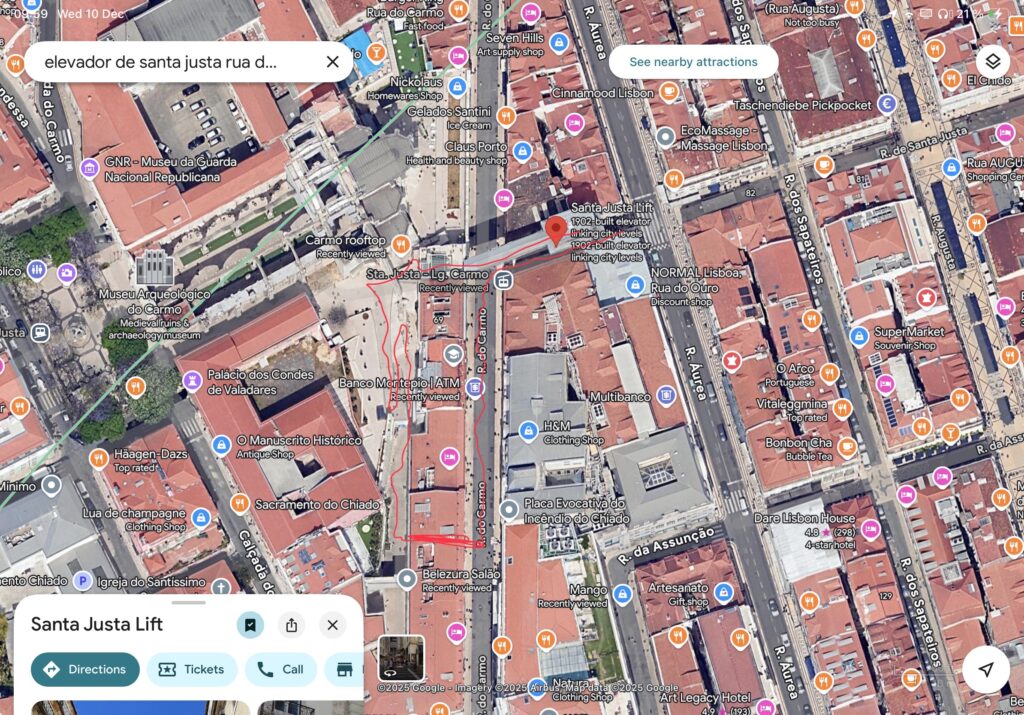
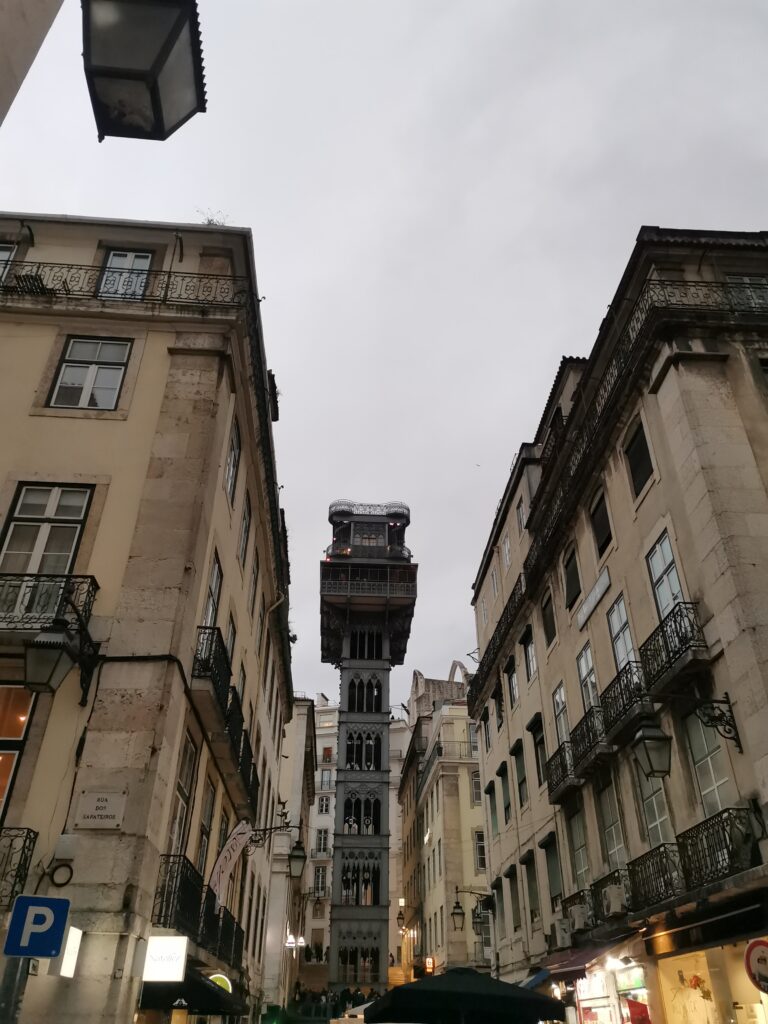
Lisbon has a famous elevator that takes you up to a viewpoint above the city. It’s called the Elevador de Santa Justa — most tourists know it, pay around €7, and then wait in a long, sweaty line.
But I’m going to show you a much better trick: how to reach the exact same viewpoint for free.
And it’s ridiculously simple:
- walk past the elevator itself,
- keep going straight,
- after a few meters turn left,
- go slightly uphill,
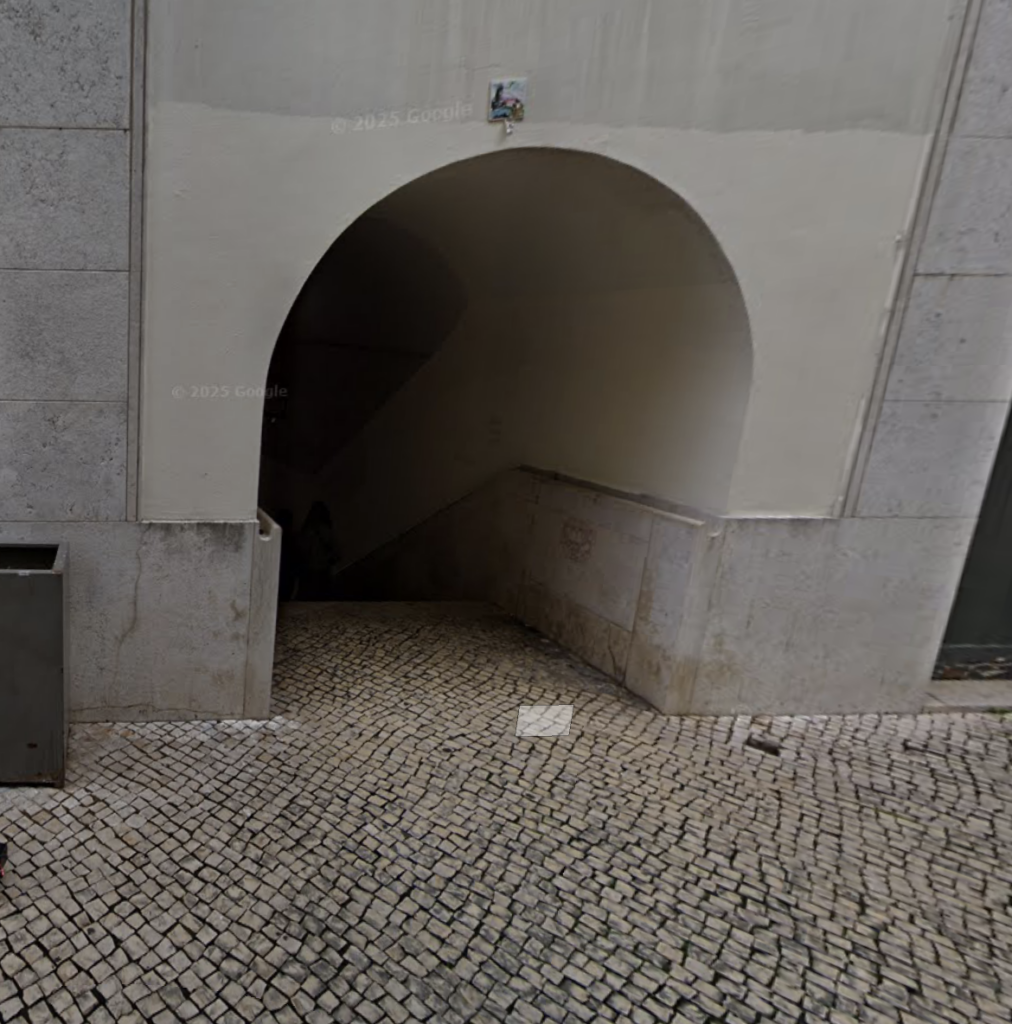
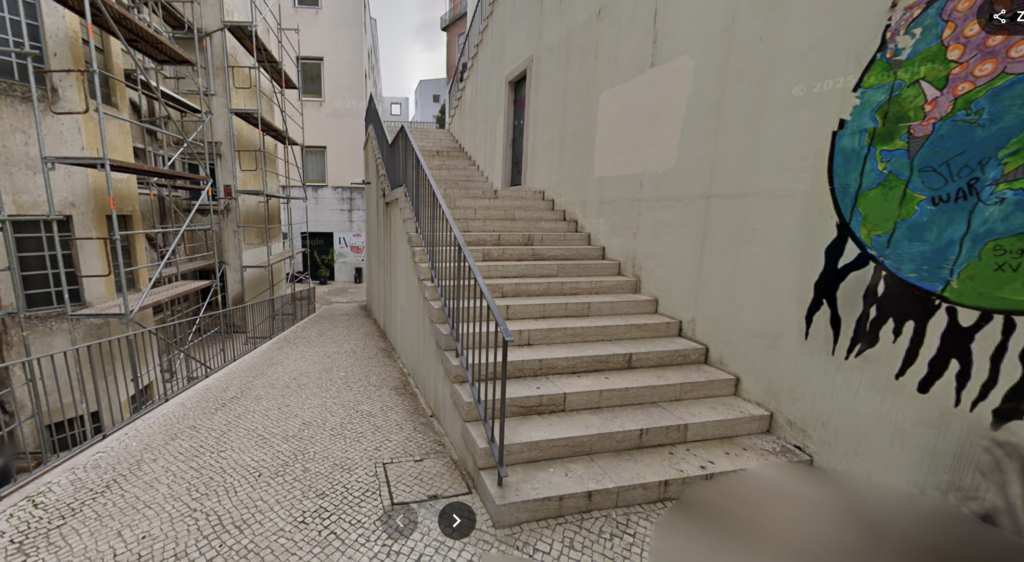
- on your right you’ll see a staircase leading into a kind of “pre-terrace” area,
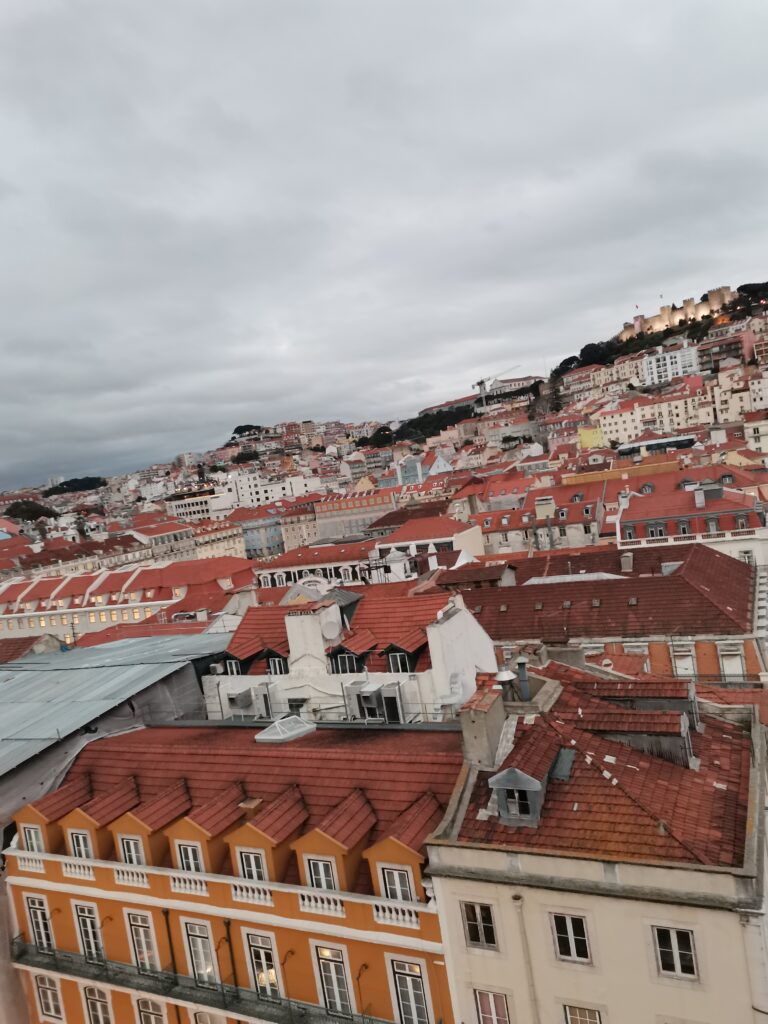
- from there just climb up to the rooftop café, which sits on the very same platform as the overcrowded elevator.
The result?
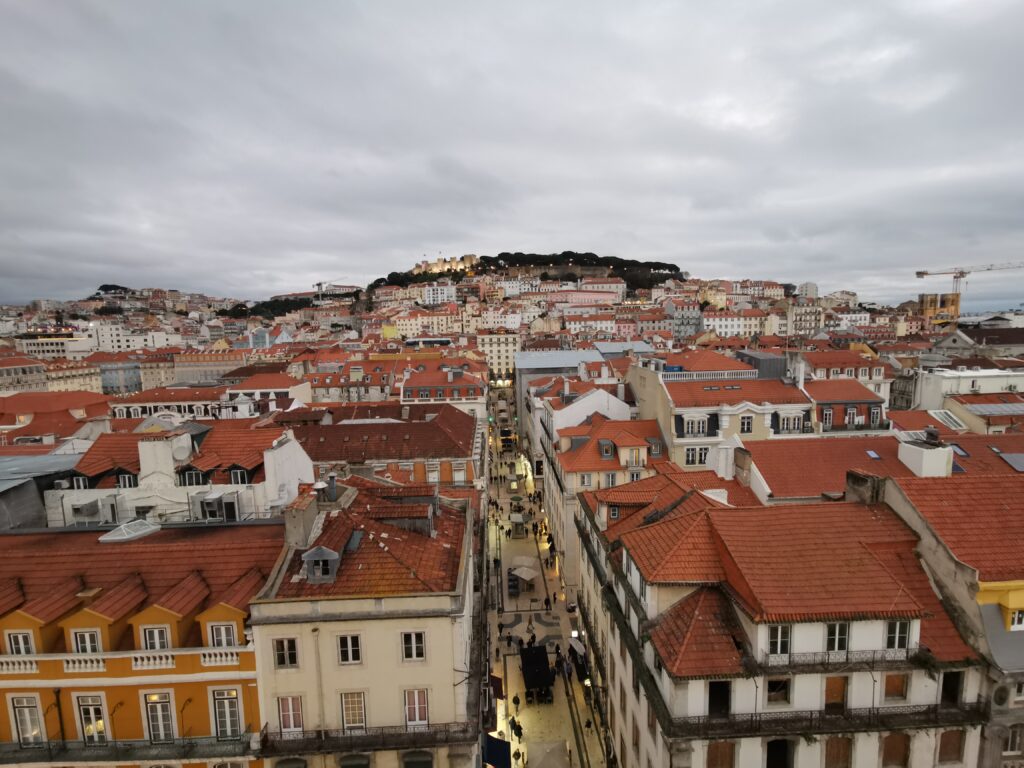
Same view.
Zero waiting.
Zero euros.
And on top of that, you get a nice seating area with a wide-open panorama of the entire city. Sometimes the best attractions are the ones you figure out on your own.
(Photos and a little map coming soon so you’ll know exactly how to get there.)
Football fans, attention – Cristiano Ronaldo in life-size
To wrap up the day, I returned to Praça da Figueira, where I stumbled upon a shop selling Portuguese football jerseys. And inside — a life-size Cristiano Ronaldo figure.
Of course I had to walk in. You’re in Portugal, and when you see Ronaldo standing there, you don’t just keep walking.
End of the day and getting ready for more exploring
After that little football detour, I headed back to my room, relaxed for a bit, and got ready for the next day. Lisbon has a lot to offer, and I still had a big part of the city left to explore.
If you don’t want to miss the next chapter, make sure to subscribe to the newsletter and follow me on Instagram.
Cross your boundaries – that’s where the treasure you’re seeking is hidden.
Flying Easterner
 Follow me on Instagram!