
How did my crazy chain of transfers across Spain continue? I’ll tell you right here. I headed back to Málaga — the city I originally flew into a few days earlier, but barely spent any time in, since I immediately ran off to Mijas (you can read about that HERE), and in the last chapter I somehow ended up all the way in Gibraltar (that one’s HERE too).
The morning after getting drenched on the Rock of Gibraltar like a wandering cactus caught in a monsoon, I woke up at my accommodation… not everything was dry, but hey, that’s life. I had to keep moving.
I hopped on the morning bus back to Málaga, which dropped me off right at the main bus station. There, I got myself a local transport card, which makes getting around Málaga cheaper, and continued straight away — heading toward Jardines de Pedro Luis Alonso, which was and wasn’t my “first stop” in the city. That’s where I got off the bus.
The climb to Mirador de Gibralfaro
I walked through Jardines de Pedro Luis Alonso, but that wasn’t my real goal. The real one was waiting a few dozen meters higher.
I wanted to get up to Mirador de Gibralfaro, a famous viewpoint with one of the best panoramas of the entire city. So I started climbing uphill — just a few minutes, but in that heat it felt like a mini version of the Camino de Santiago. A tiny pilgrimage of my own.
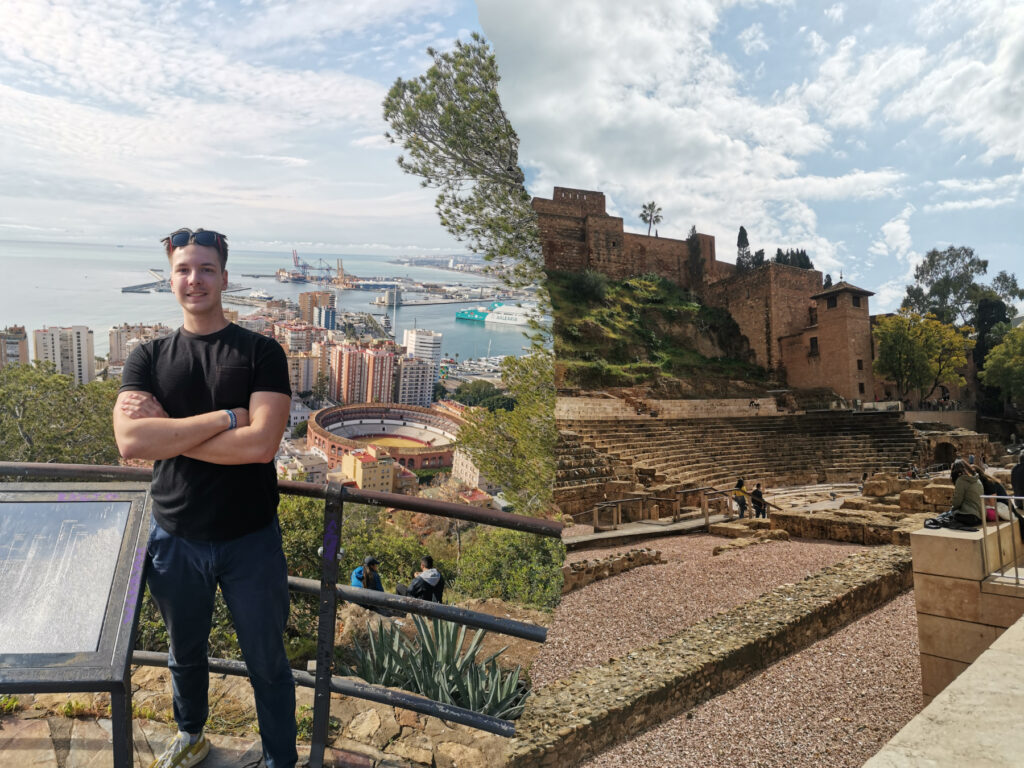
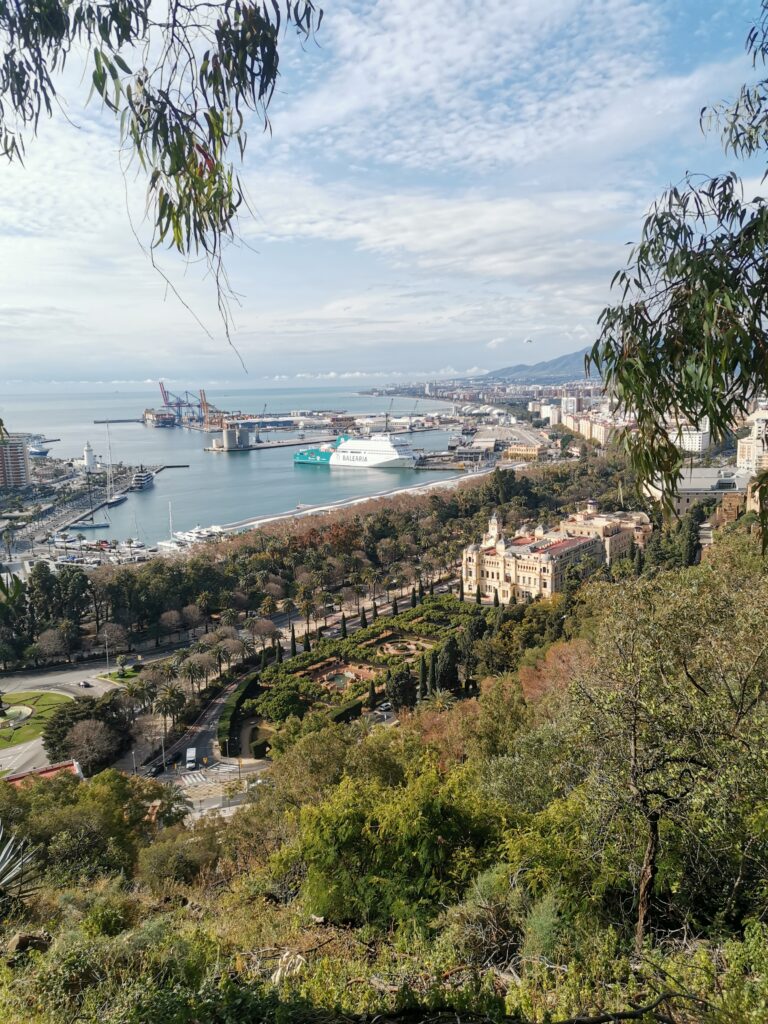
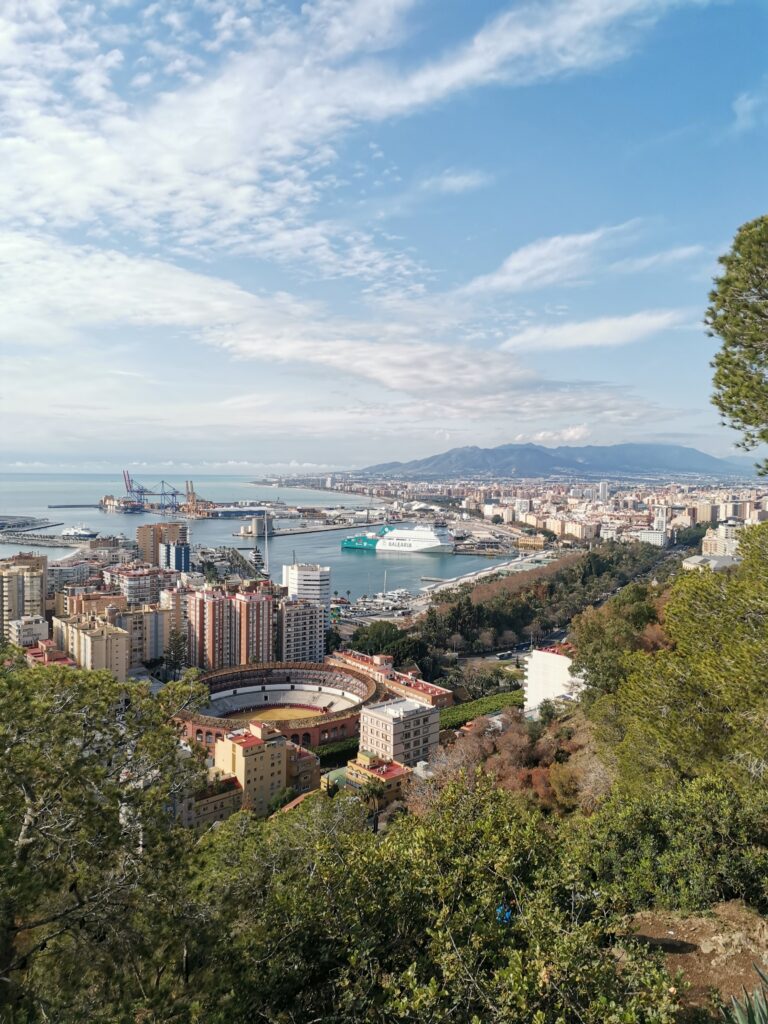
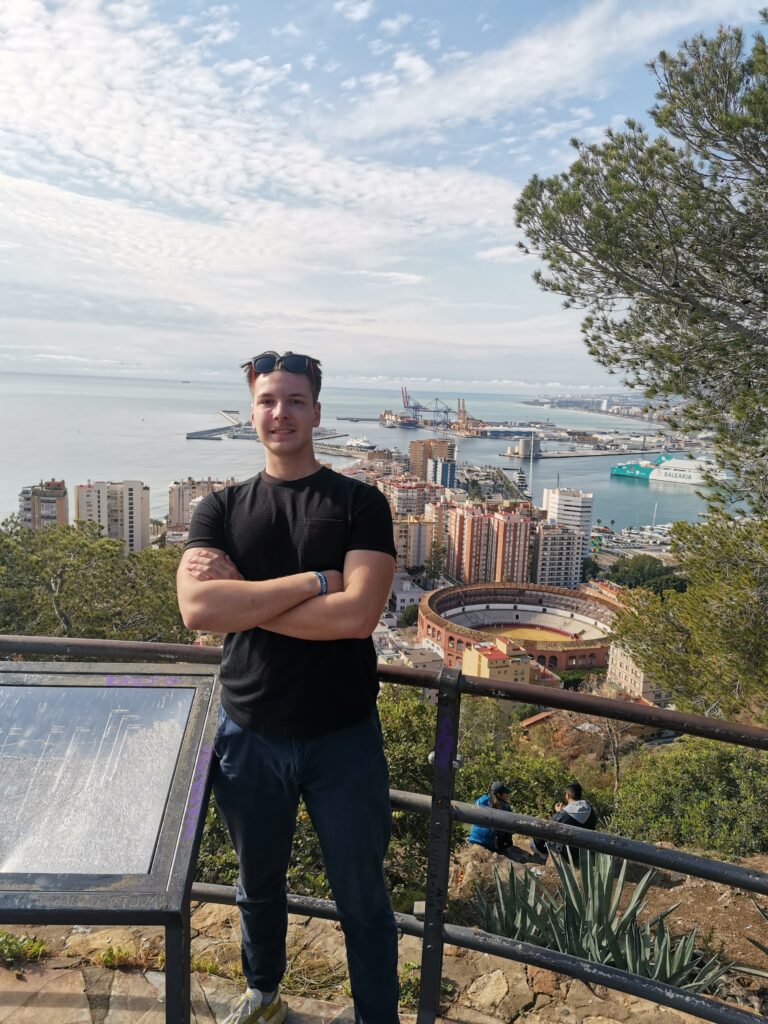
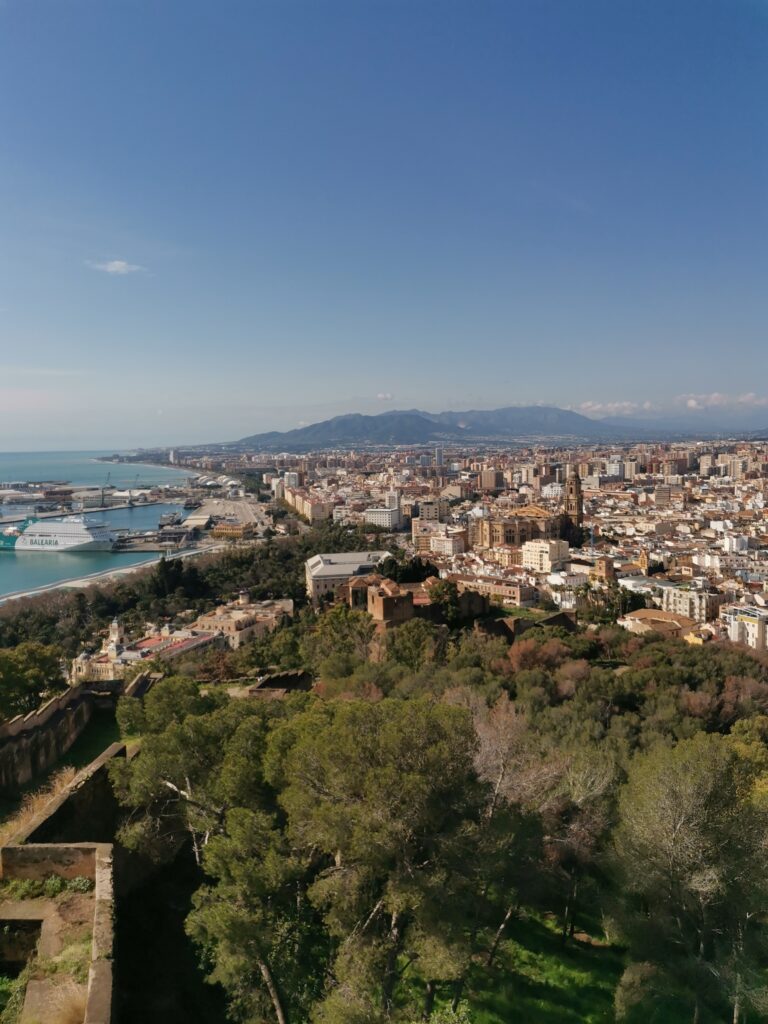
When I reached the top, the view opened up and… wow. An epic panorama of Málaga — the whole city, the port, the Bullring, sitting under the hill like a little Lego piece wedged between modern buildings.
Plaza de Toros de La Malagueta is the city’s bullring, built in the 19th century in the Neo-Mudéjar style. It used to host bullfights, but today it’s mostly for cultural events. From the Mirador you can see it perfectly from above — a big yellow ring that instantly tells you you’re in Andalusia.
Jardines de Pedro Luis Alonso
These gardens I passed earlier are built in a classic Andalusian style — full of orange trees, fountains, and small paths. They’re small but beautiful, perfect for a quick escape from the city into a green, peaceful oasis.
Gibralfaro Castle – the fortress above Málaga
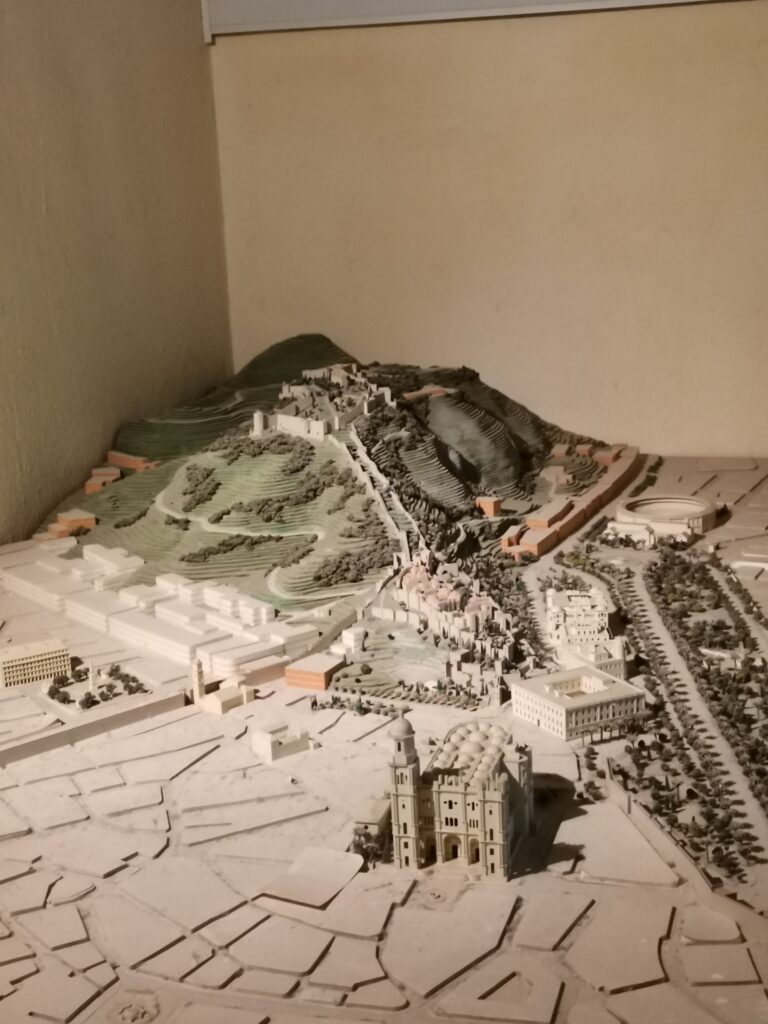
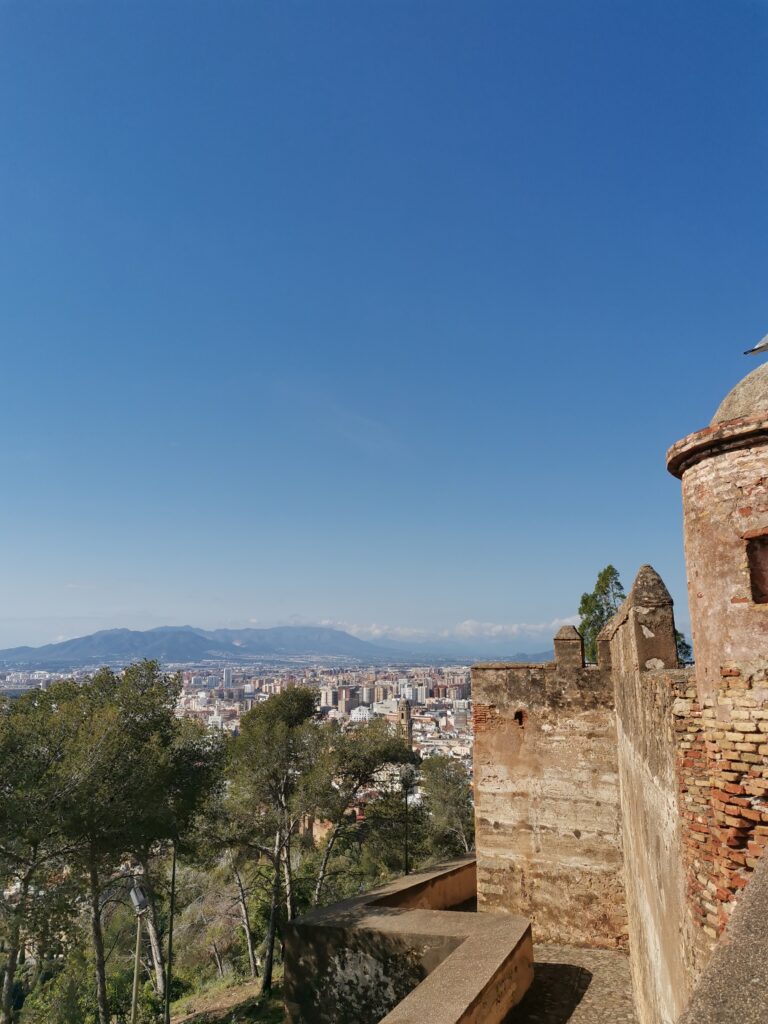
As I continued along the path and got closer to the top, the medieval walls of Castillo de Gibralfaro started to appear between the trees.
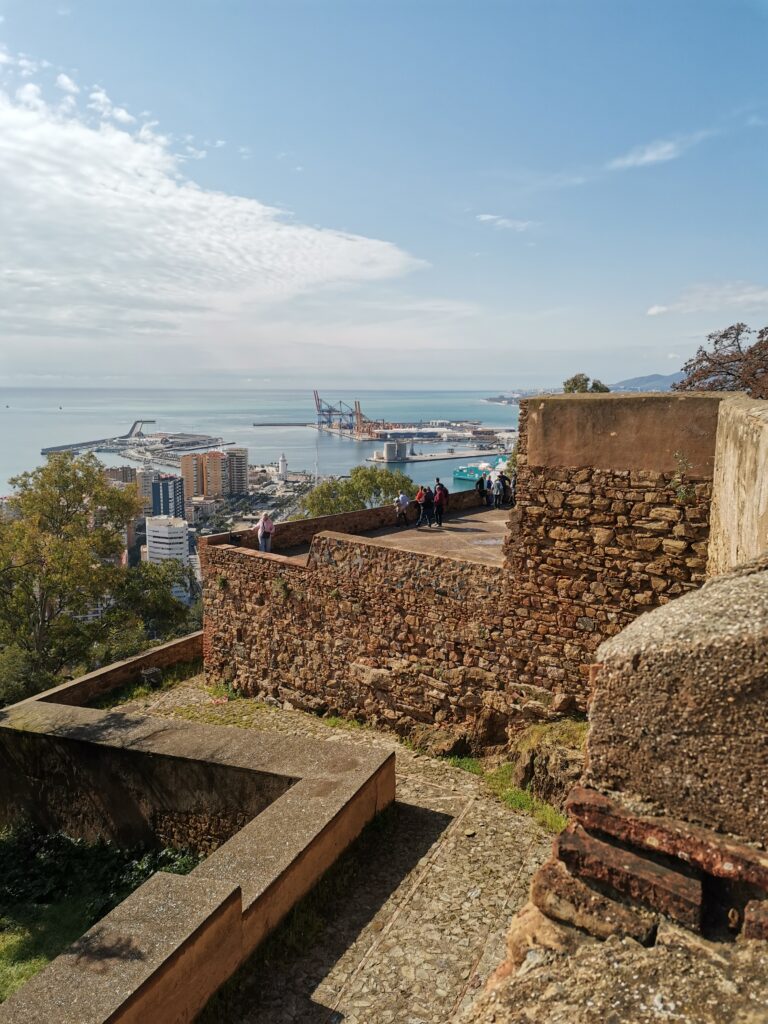
This fortress was built in the 14th century by the Moors and served as a military stronghold protecting the entire coastline. From up here, soldiers had a perfect view of everything happening in the port and the city below.
You can also go inside the castle — and trust me, it’s worth it. The entrance is around €5, but I recommend getting the combined ticket that also includes the Alcazaba at the base of the hill. That way you can make a full loop through the walls, gardens, and entire fortification system without paying twice.
Alcazaba – the Moorish fortress above the city
Alcazaba de Málaga is one of the most important landmarks in the whole city. It was built by the Moors in the 11th century and served as their main fortress — part palace, part government center, part coastal lookout.
It has all the classic features of Islamic architecture: narrow pathways, archways, little courtyards, lush gardens, flowing water, and stunning views. It’s basically a smaller version of the Alhambra in Granada. And once you spend a couple of hours inside, you completely forget you’re in a modern city — it feels like stepping straight into medieval Andalusia.
And here comes the best part: the combined ticket for Alcazaba + Gibralfaro is genuinely the best deal you can buy.
The Roman Theatre under the Alcazaba
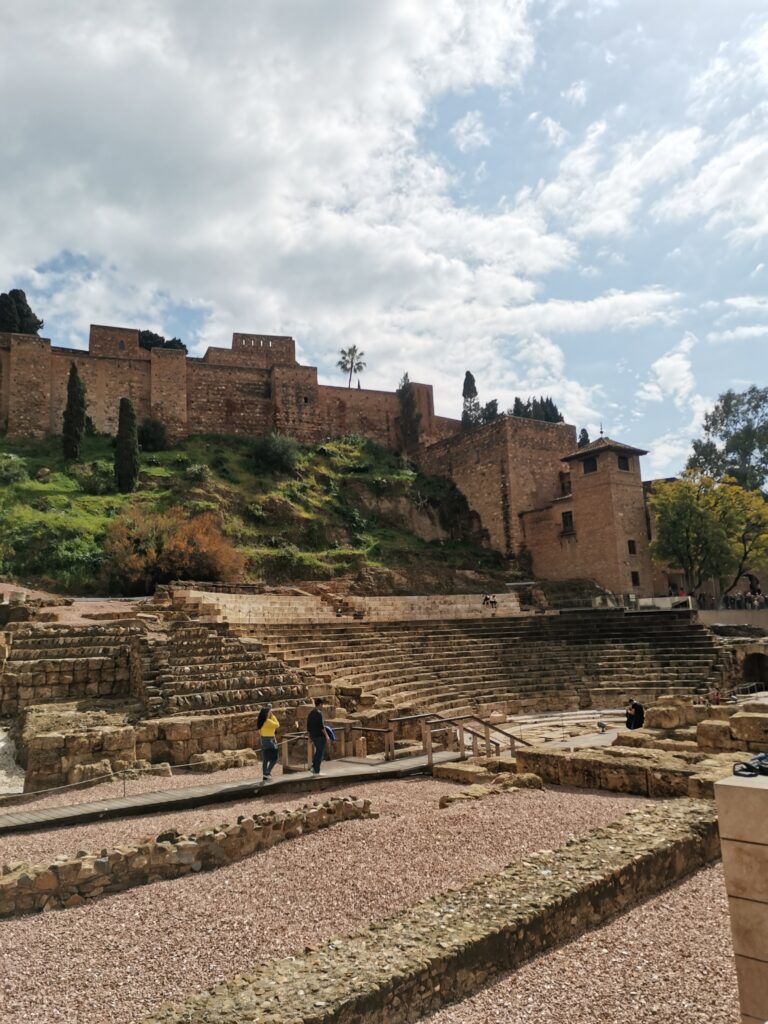
After finishing my wander around the Alcazaba, I headed back down into the city and walked straight into Teatro Romano, the ancient Roman amphitheatre. It’s been here since the 1st century AD, but for centuries it was completely buried and forgotten. It was rediscovered only in 1951, when workers renovating a nearby building accidentally uncovered the first stones.
Today it’s fully exposed, beautifully illuminated, and you can sit around it during the day or in the evening.
It’s a fascinating contrast: the Moorish fortress towering above, and the Roman theatre below — two civilizations stacked on the same hillside.
Lunch in the Heart of Málaga
After a few hours of walking around hills, fortress walls and gardens, the hunger finally hit me hard. In the city centre I found a pizzeria called V Café Negro, where I ordered a solid pepperoni pizza and a cold Alcazaba beer — staying on theme, obviously. Refueled and recharged, I was ready to continue exploring.
Málaga Cathedral – “La Manquita”
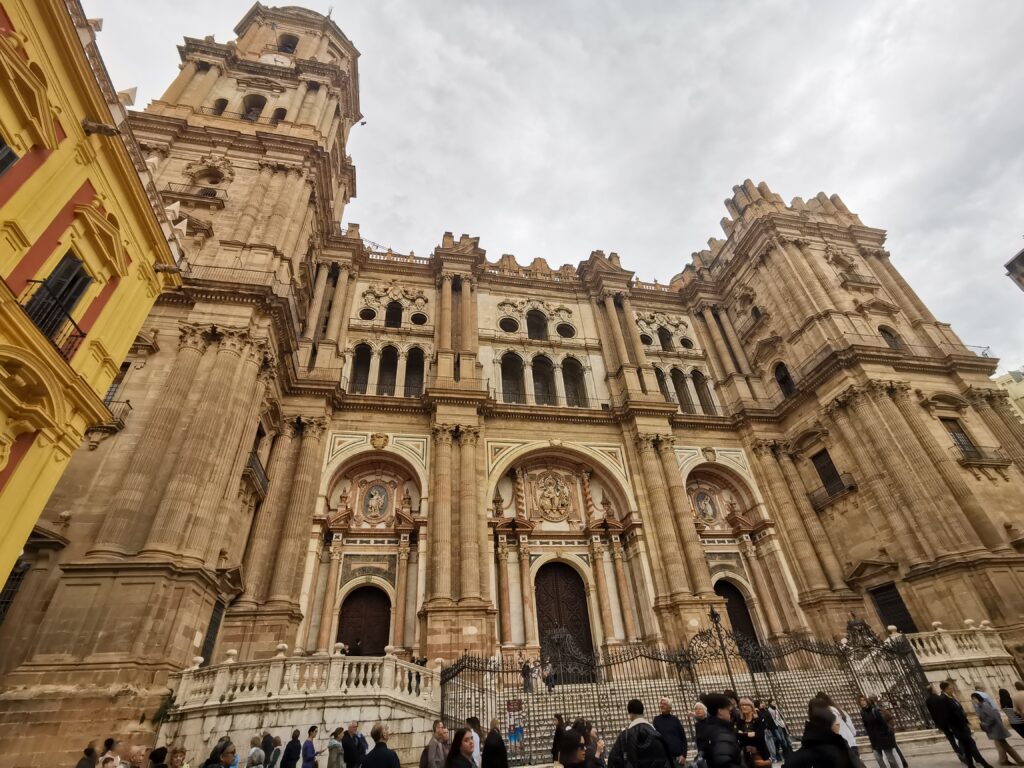
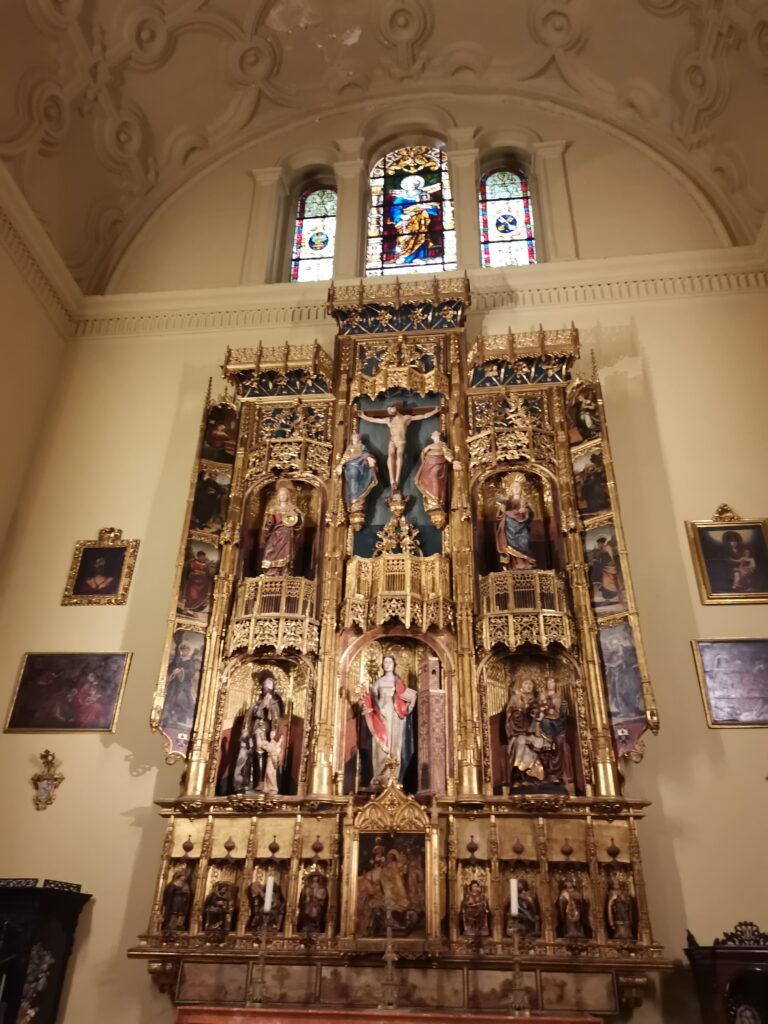
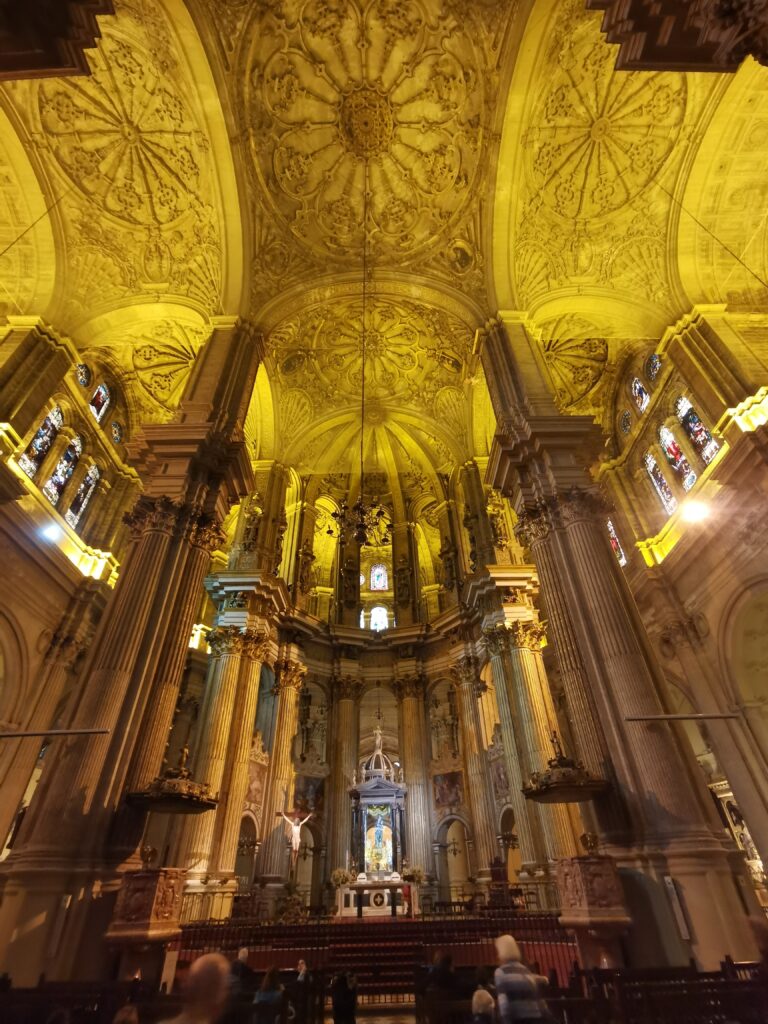
My next stop was the Santa Iglesia Catedral Basílica de la Encarnación de Málaga — one of the most beautiful Renaissance cathedrals in all of Spain. But locals simply call it “La Manquita”, meaning “The One-Armed Lady.” Why? Because one of the two towers was never completed. So to this day she stands there — majestic, but “unfinished.”
Inside, I got an audio guide on my phone. All I had to do was type in the number depending on where I was standing, and it immediately started telling me about the altars, stained-glass windows, sacred objects, the architecture… And honestly, it was really interesting.
Construction of the cathedral began in 1528, but it still hasn’t been fully completed. It’s a mix of Renaissance, Baroque, and a touch of Gothic, making it one of Málaga’s most iconic landmarks.
Somewhere in the City Centre
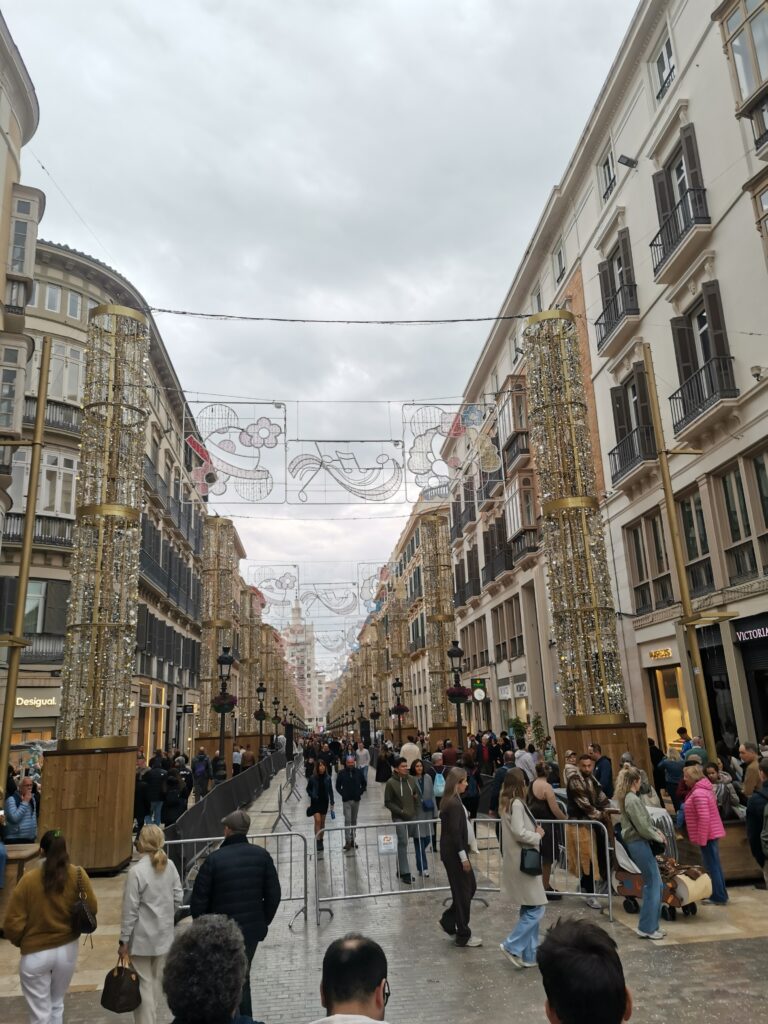
I honestly didn’t expect to catch it — but Málaga’s city centre was already getting ready for the upcoming Carnival. I was there on March 1st, 2025, and the whole place was transforming: stalls popping up everywhere, colourful garlands, posters, tents — the whole “big fiesta incoming“ atmosphere.
But… I didn’t get to experience it properly. I had to start packing my backpack because another flight was waiting for me. So I just walked through it quickly, took in the vibe, and kept moving.
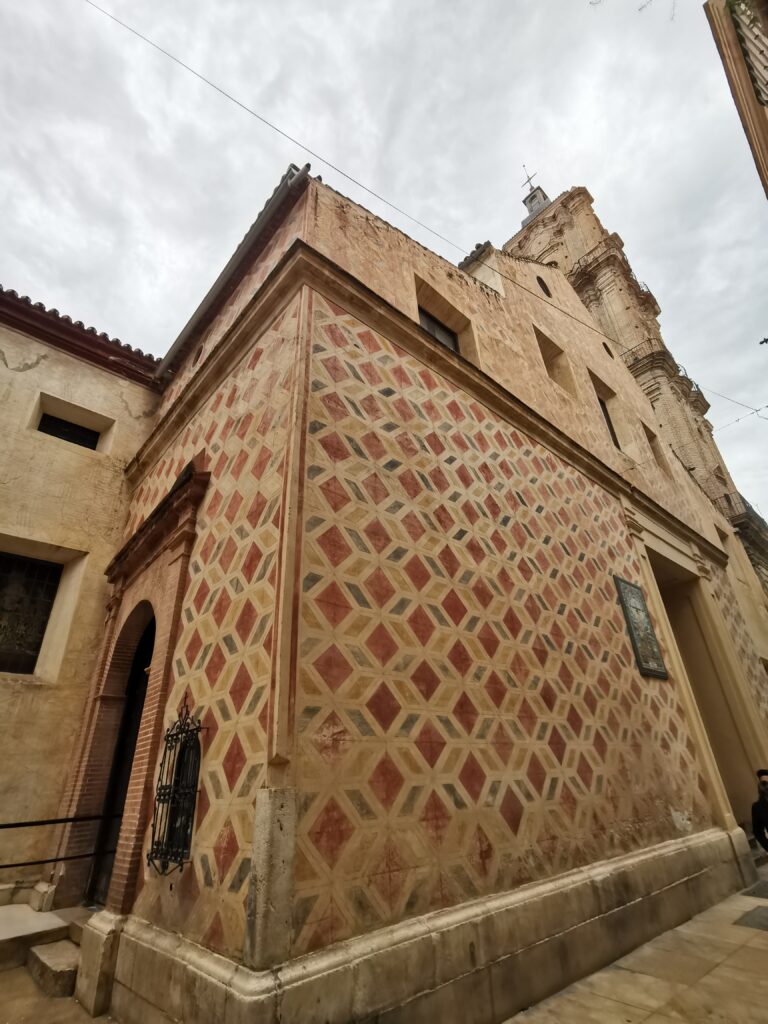
On the way, I stumbled upon an interesting building — the façade caught my eye, but I couldn’t get inside. My instincts, however, led me exactly tam, kde som potreboval ísť — straight to Málaga Airport. And from there… I was flying again. A short flight, just a little over an hour.
Where did I go? I’ll leave that as a small mystery for the next chapter.
If you don’t want to miss the next part of my Spanish adventure, sign up for the newsletter and don’t forget to follow me on Instagram.
Cross your boundaries – that’s where the treasure you’re seeking is hidden.
Flying Easterner
 Follow me on Instagram!