
In the last part, I asked you where we most frequently took the train. Do you know? No? Never mind, I’ll spill the beans anyway. Our go-to destination from La Roche-sur-Yon was Les Sables d’Olonne, mainly because of its beach. For me, it was always one of the top spots where relaxation met culture and history. And, of course, the gem of the trip couldn’t be missed—Fort Boyard.
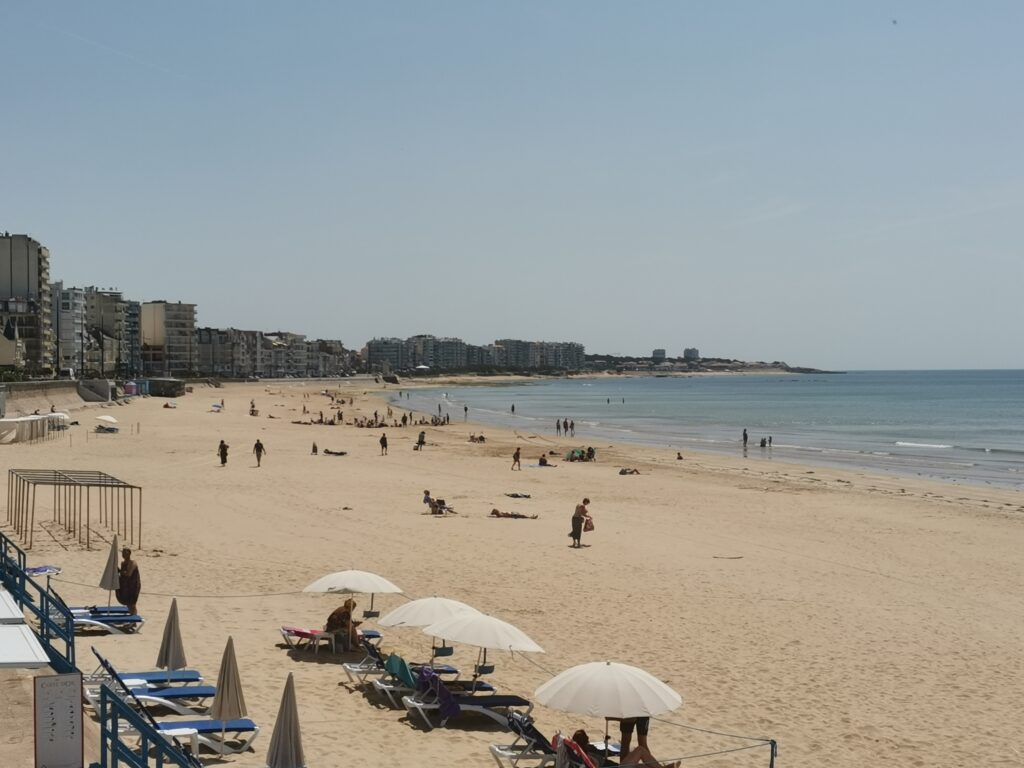
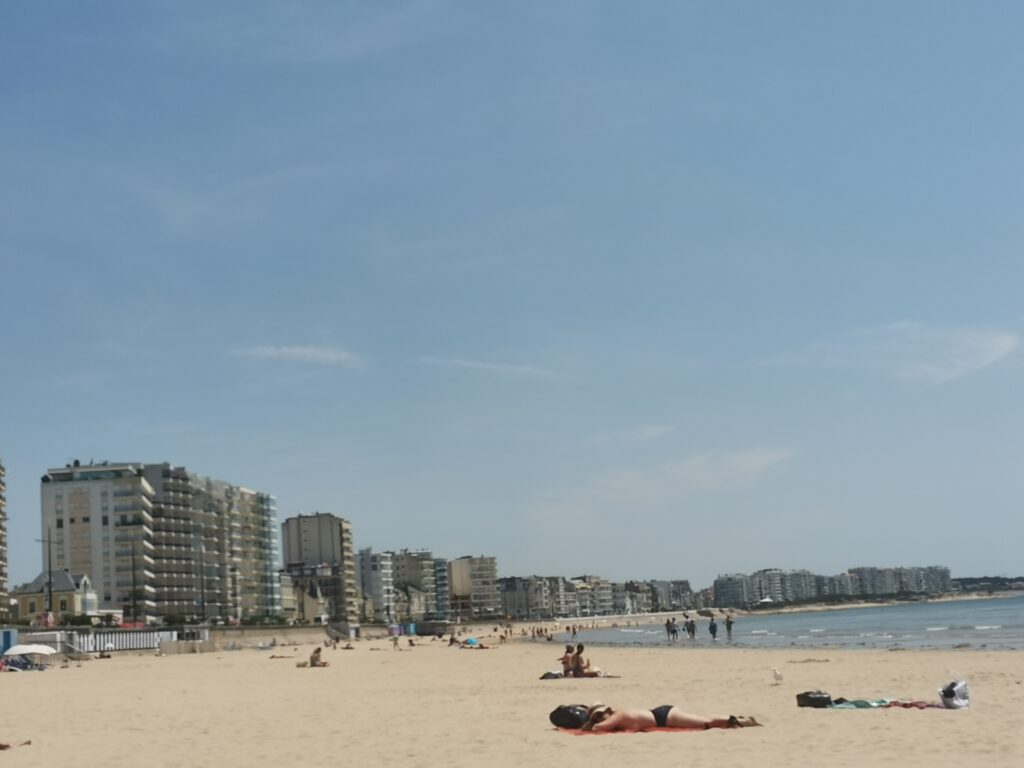
Les Sables d’Olonne is famous for its vast sandy beach, historic buildings, and as a perfect place for long walks. A one-way train ticket cost around €7, and for that price, you got to enjoy a punctual train ride (a rare luxury in some parts of the world) and arrived at the beach in just 30 minutes. Now, that’s what I call value for money!
Les Sables d’Olonne and Beach La Grande Plage
This city’s largest beach comes with a few surprises—and that’s why it’s called La Grande Plage (The Big Beach). One of its fascinating features is the tide. The beach is beautifully sandy and long enough for a relaxing walk or a lazy stretch wherever you like. But watch out for the tide! You might arrive to find a stunningly wide beach, extending up to 150 meters into the ocean. Yet, when the tide rolls in, you’ll be left with barely 20 meters of sand to sit on. Many times, we found ourselves sprinting out of the water to save our bags from being swallowed by the rising tide.
If you happen to catch low tide, head east to explore the rocky areas where small pools of seawater form—it’s a breathtaking sight. With an extreme low tide, you might even spot the “Statue d’Ulysse revient” (The Statue of Ulysses Returns) standing “in the water.” I didn’t manage to see it myself, but maybe you’ll have better luck. Let me know if you do! Just be cautious—the wet sand in that area can be tricky, and the rocks are slippery. Still, with the seaweed covering the rocks, it feels like you’ve stepped onto another planet.
When the tide is high, you can still safely wander those 150 meters into the water from the shore—it’s shallow enough to touch the bottom the entire way. It’s like walking into the ocean’s embrace!

This city is most famous for hosting the Vendée Globe, the legendary sailing race that starts and finishes right here. This extreme competition takes place every four years and is often called the “Everest of Sailing.” Participants must sail solo, non-stop, and without assistance around the entire globe, making it one of the toughest sporting challenges in the world.
During the race, the whole town transforms into a vibrant festival—promenades fill up with fans, sailors, families, and tourists, all admiring the yachts and celebrating the courage of these incredible competitors. The excitement lasts for several months!
Even if sailing isn’t your cup of tea, the electrifying atmosphere of the Vendée Globe will win you over. The 2024/25 race can be seen HERE.
La Rochelle: When Train Station Looks like a Museum
Before we started our Erasmus duties, we had a free day to explore, and our teacher was still with us. Together, we decided to visit La Rochelle, setting out with a few goals in mind but no real clue what awaited us. The train station? It didn’t look like one—it felt more like an art gallery or a museum. The French clearly have an extraordinary sense of style, and it’s evident on every corner. This first encounter with La Rochelle convinced us immediately that this city was worth the trip. And let me tell you, the rumors about French extravagance? Totally true.
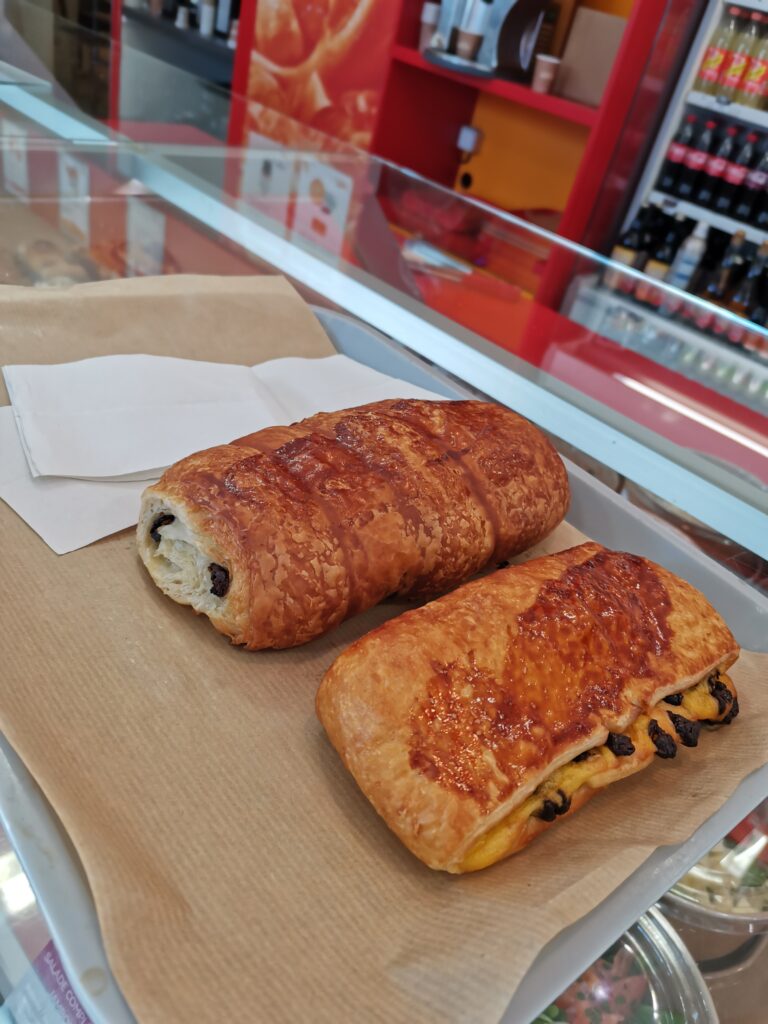
After a quick morning walk from the station, we found a local bakery for breakfast—because in France, skipping pâtisserie is basically a crime. The place was called Briocherie Sicard, and I went for a chocolate roll and a chocolate tart. Now, you might think, “Hugo, you could get those at Lidl or any supermarket back home.” But that’s like going to Italy and skipping pizza or pasta—of course, you’re going to try the real deal. And honestly, eating something Slovak abroad, like Bryndzové halušky, just wouldn’t hit the same. The €3 I spent on that heavenly pastry? Totally worth it. Better than Lidl, hands down! 😉
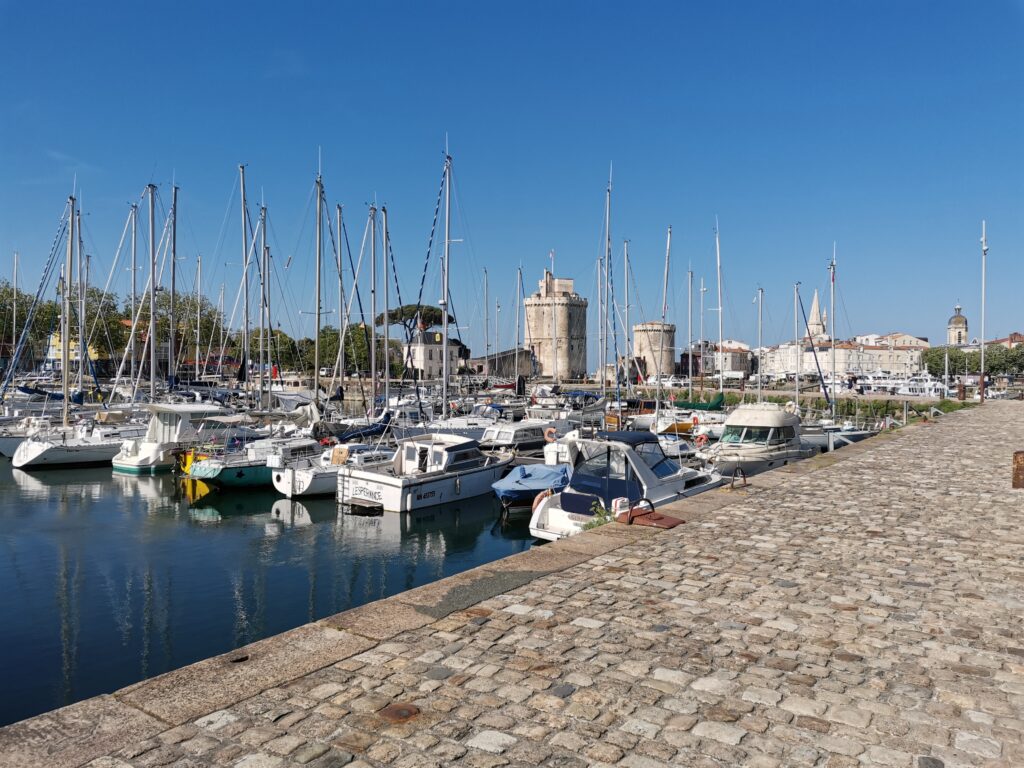

So, we strolled along the harbor, admiring the boats—some really old, and others much newer. La Rochelle actually has over three harbors, all organized by size and access to the open ocean. The larger ships, especially the ones offering tours, are docked closest to the ocean’s entrance.
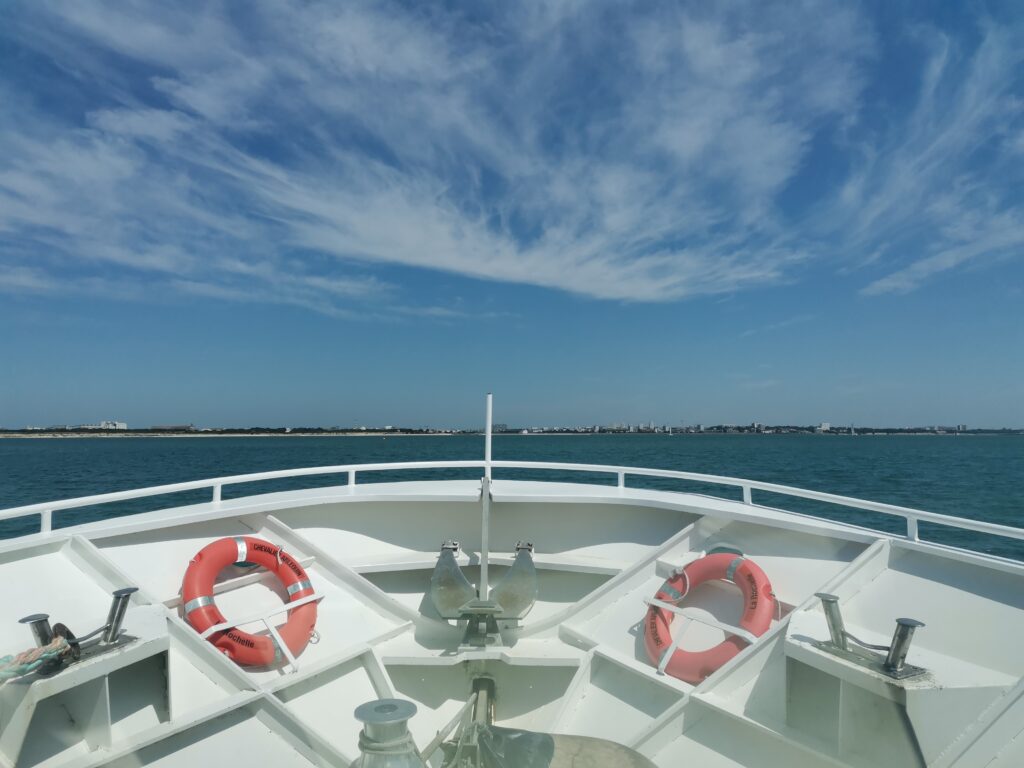
From there, we headed toward the dock where the boat that would take us out to the open sea was waiting. It felt like stepping into a movie—beautiful boats, the salty ocean breeze, and the promise of adventure ahead.
Fort Boyard: Through the Eyes of a Tourist on Board
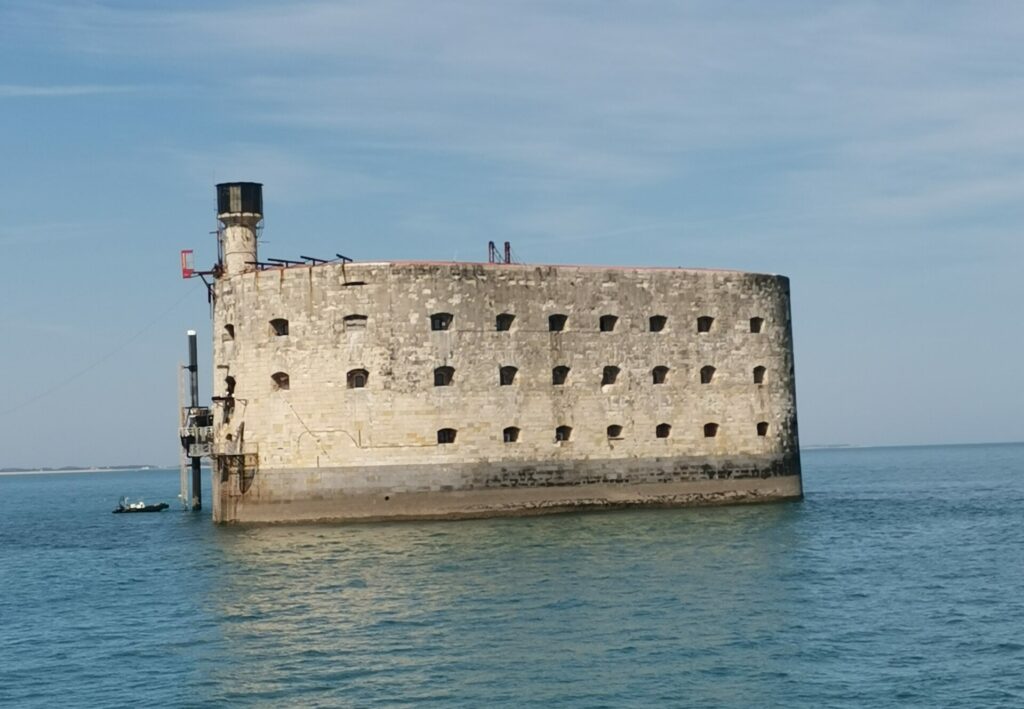
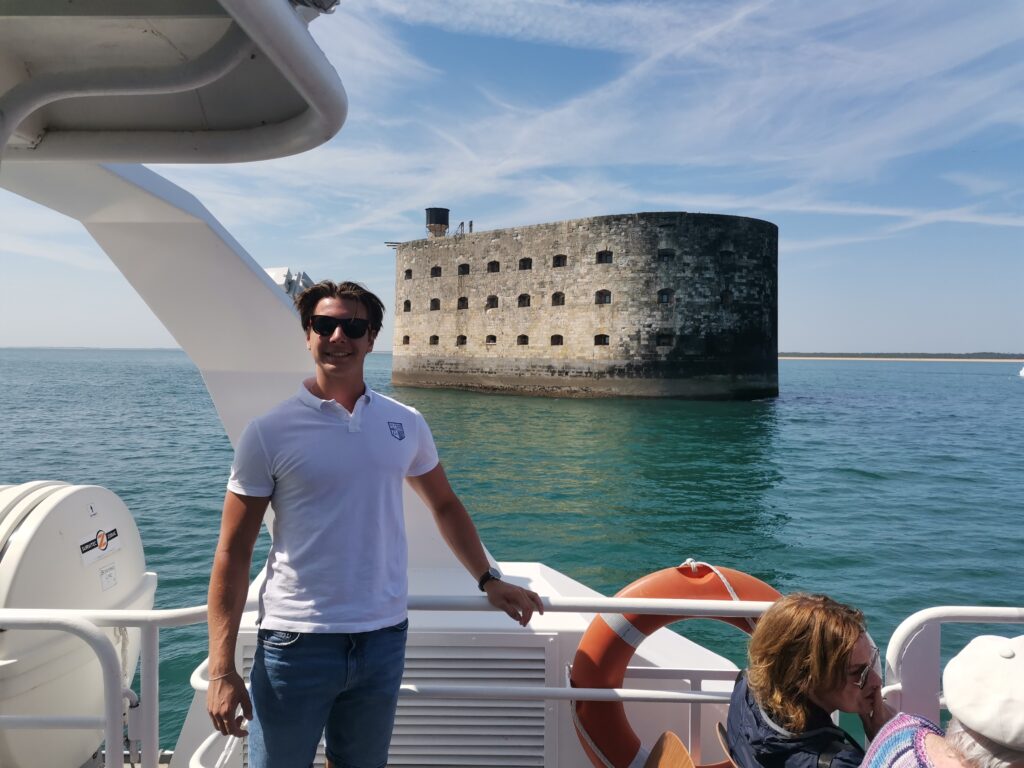
Fort Boyard was built in the 19th century by order of Napoleon Bonaparte to strengthen France’s defenses and protect the harbor of La Rochelle from potential English raids. Construction began in 1804 and wasn’t completed until 1857. Strategically located between the islands of Île-d’Aix and Île d’Oléron, its main purpose was to control the maritime routes and bolster France’s influence in the region. Despite its military intentions, the fortress was never actually used in combat.
It was originally designed to solve a major military issue—in time cannons couldn’t fire far enough to hit targets between the islands. Napoleon’s solution? “Let’s just build a fortress in the middle of the sea so we can shoot at the opponnent!” However, by the time construction was finished over 50 years later, weapon technology had advanced significantly, making the fortress obsolete. So, while it was an engineering marvel, it never fulfilled its original wartime purpose.


Fort Boyard
Today, Fort Boyard is primarily known as a tourist attraction and a symbol of its rich history. It gained fame mainly due to the popular TV game show Fort Boyard, which combines physical challenges, puzzles, and suspense. Nearly every country has filmed its own episodes with local participants. The fortress offers visitors a unique glimpse into 19th-century military architecture and its isolated location in the middle of the sea.
As you cruise around the fortress, breathtaking views unfold, and you can listen to a historical commentary right on board while capturing unforgettable moments on camera. The combination of the imposing fortress, the sea breeze, and the fascinating history creates a truly unique experience worth the visit.
The price for an adult is around 22.5 €, and for a student, it’s 17.5 €. You can purchase tickets on-site at the La Rochelle Agglomeration Tourist Office (Office de Tourisme de l’Agglomération de La Rochelle), which is located near the bakery where we bought breakfast.
Fort Boyard
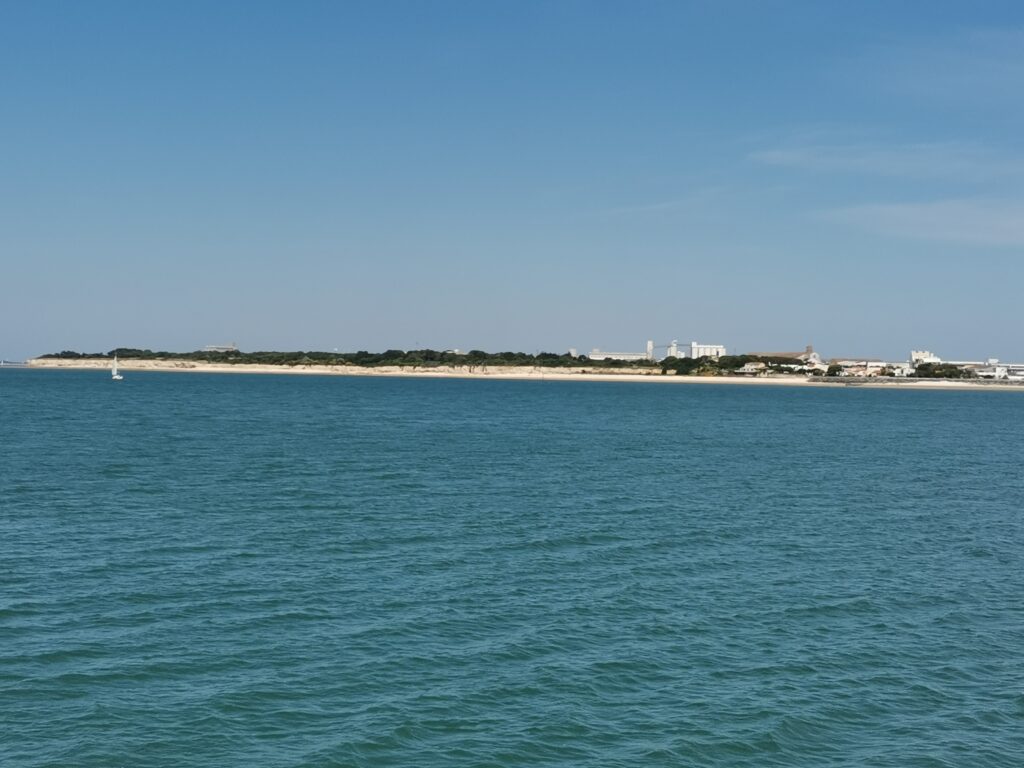
What will captivate you upon arriving at the harbor?
After we returned from the cruise and saw the majestic gates of La Rochelle on our way back, we were immediately captivated by the history these massive towers exude. Tour de la Chaîne and Tour Saint-Nicolas are two iconic structures that once protected the city’s harbor entrance. Both date back to the late 14th century. Imagine a medieval harbor full of ships, where a chain stretched between these towers regulated the entry and exit. This simple yet effective defense was one of the reasons why La Rochelle became a strategically significant city in western France.
Tour de la Chaîne, known as the “Chain Tower,” was the location where harbor access was controlled. It stands right by the water and offers a stunning view of the Atlantic. In the past, it served as a customs office and signal tower, with the task of regulating port operations. Today, visitors can climb to the top and enjoy panoramic views of La Rochelle and its harbor.
Tour Saint-Nicolas, the taller and more massive of the two towers, was originally built as a fortress and guard post. It served to protect against enemy ships and also as a vantage point for overseeing the surrounding area. Interestingly, the tower is not perfectly straight – during construction, it began to tilt due to the soft ground, giving it a unique character.

These two towers are not just symbols of La Rochelle, but also living reminders of its maritime traditions. A cruise between them will transport you back in time, to an era when the city thrived thanks to trade and naval courage. If you’re in La Rochelle, be sure to visit them or sail between them – history is alive at every turn.
Brada Restaurant: Excellent Food and an Unexpected Surprise
After our boat trip, we decided to grab a bite at Brada Restaurant, located right by the harbor with a beautiful view of the water. In this restaurant, we got to enjoy some local specialties. I had a delicious fish with a creamy sauce and beans – a real treat!
As we were paying, we gathered all our payment cards and decided that the waiter could choose one, and whoever’s card he picked would be the one to pay. Guess whose card he picked? Drumroll, please 🥁🥁, it was Luky. Haha. As a bonus, the waiter surprised us with a yellow citrus-flavored liqueur – the perfect end to an amazing meal. It was refreshing, unique, and exactly what we needed. He brought out six glasses, even though there were only five of us, and he joined us for a toast. What a guy!

Rue de la Grosse Horloge: A Shopping Street with Fascinating History
After a hearty lunch, we took a walk through the streets of La Rochelle, especially along Rue de la Grosse Horloge. This famous street is marked by a grand gate with a large clock, welcoming you into the shopping lanes and various little shops. Rue de la Grosse Horloge is bustling with locals, tourists, and street vendors, and the atmosphere, with its old houses, has a unique charm.

In the first part of the street, there is a small square with a fountain, known as Place des Petits Bancs, which once served as the main water source for the city’s residents. Surrounded by narrow streets, it’s a place where you can stop for a moment and soak in the historic atmosphere of La Rochelle.
At the end of the street, we found the bus station and the monumental Cathedral of Saint Louis, one of the city’s most significant historical landmarks. The cathedral is an important symbol of La Rochelle and offers a glimpse into the city’s history in all its glory.


La Rochelle is a city that blends history, the sea, fortresses, and unique French culture. A walk through its streets, a visit to Fort Boyard, and discovering local breakfasts is an experience you’ll remember for a lifetime. And that was just a recap of what we experienced during our month in France – next week, get ready for a new chapter from the country of…
Flying Easterner
Cross your boundaries – that’s where the treasure you’re seeking is hidden
 Follow me on Instagram!


There is a deliberate patience in your prose, where meaning accumulates naturally and quietly. The reader is invited to pause, consider subtle nuances, and experience the interplay of emotion and intellectual depth.